
Topics tagged with 'Science'

Soil could save Earth from overheating
19 Apr 2016
New research shows that changing the way we farm and manage soils so they store carbon rather than lose it would help to avoid dangerous climate change.

CONFIRMED: Over 90% of climate scientists are believers
19 Apr 2016
When the University of Queensland published a paper in 2013 finding 97 per cent scientific consensus on human-caused global warming, what was surpising was how surprised everyone was.

Climate-threatened islands now facing the Big Dry
18 Apr 2016
Almost threequarters of a sample of island groups – atolls and archipelagos that are home to more than 18 million people − are expected to become increasingly more arid under a regime of climate change.

Wasted food places heavy burden on climate
15 Apr 2016
As obesity levels soar, cutting the vast amount of food we waste could have a major impact on reducing the effects of climate change, as well as alleviating world hunger.

Blame burning fossil fuels for most sea-level rise
15 Apr 2016
Global average sea level has risen by about 17 cm between 1900 and 2005. This is a much faster rate than in the previous 3000 years.
China coal use: Here’s how to read the tea leaves
14 Apr 2016
As the largest emitter of carbon dioxide in the world, how much coal China is burning is of global interest.

Nine ways steel could build a greener economy
13 Apr 2016
Steel might be the largest industrial carbon dioxide emitter, but Britain’s troubled industry could be a big part of a cleaner, greener future.

Couch potatoes have outsized energy footprints
13 Apr 2016
It is alluringly easy to use averages, but when most of a group is far from average, they can lead us astray. This is no less true in the area of energy consumption.

Here’s a way to make carbon markets work better
11 Apr 2016
Carbon markets could play a crucial role in delivering promises made at the Paris climate conference.
Why it makes sense for offshore drilling to wait
11 Apr 2016
From chants of “Drill, Baby, Drill” to outrage over the BP oil spill, offshore drilling has been highly controversial in recent years. Some view it as a vastly underused revenue source, while others see it as a grave environmental threat.

We keep flushing valuable energy down the drain
11 Apr 2016
Every time you flush your toilet or drain the bath, you’re losing something surprisingly valuable: heat.

Drought-ravaged California is feeling the pressure
11 Apr 2016
Scientists say that storms carrying desperately needed water to California are being diverted by a band of high pressure that coincides with rainfall and temperature extremes.

Why water footprinting should be used with caution
7 Apr 2016
It seems logical that crops and goods that need lots of water should not be produced in water-scarce countries.

INDEFENSIBLE! Scientists slam Key's climate change attitude
6 Apr 2016
Scientists are calling the Government’s lack of leadership on climate change indefensible, after Prime Minister John Key said that science would solve the problem.

Plants find cool response to warming
6 Apr 2016
Everyone can breathe just a little easier about the future according to research predicting that warming may mean plants expel less carbon dioxide.

GM crops can thrive as climate warms
5 Apr 2016
Plants genetically modified to take advantage of hotter temperatures and increased carbon dioxide could cut fertiliser use and raise yields to alleviate global food shortages.

SEA-LEVEL WARNING: The Government won't listen
4 Apr 2016
New research suggesting that sea-level rise could be faster and more extreme than currently expected means that a task force to analyse the risk for New Zealand makes even more sense. So why isn’t the Government doing it?

Scientists crack secrets of wood-based glass
4 Apr 2016
Swedish researchers have developed a transparent wood-based material that could be used in future to make biodegradable windows and photovoltaic panels.

What does the science really say about sea-level rise?
1 Apr 2016
A recent high-profile study led by US climatologist James Hansen has warned that sea levels could rise by several metres by the end of this century. How realistic is this scenario?

Science grapples with climate conundrums
1 Apr 2016
New research illustrates that reactions of people, plants and animals to the changing climate are a key factor in unravelling the complexities of global warming.

Storing carbon could help to meet climate goals
31 Mar 2016
Australia's agricultural lands help to feed about 60 million people worldwide, and also support tens of thousands of farmers as well as rural communities and industries.
Does doing renewable energy demand the undoable?
29 Mar 2016
Switching to renewable energy as fast as the world needs to will require changes so massive that they are unlikely to happen, scientists say.

OUR SUSTAINABLE FUTURE: Labour lays it on the line
23 Mar 2016
Regional clusters, an overhaul of the country’s science system, and encouraging social enterprises could be part of a Labour government’s drive to develop clean-tech, sustainable jobs.

No worries, says Key, science will save the world
23 Mar 2016
Prime Minister John Key says that science will save the world from climate change.

Goodies v baddies ... why labelling is holding farming back
22 Mar 2016
It’s hard to keep wild animals out of farms. Birds, mammals and insects all affect crop yields, in positive ways (such as flies pollinating flowers) and negative ones (such as when birds damage fruit).
Energy efficiency in itself can become a market
21 Mar 2016
New research by the European Commission suggests that energy efficiency can become a “niche” market that will attract investors away from fossil fuels.

Stretching the laws of physics will make a world of difference
17 Mar 2016
Carbon-negative cars, cost-effective organic solar cells and electricity from waste treatment are possible clean energy options as scientists stretch the laws of physics.
Clean energy is a win-win for the US
16 Mar 2016
Simply implementing its Paris climate conference commitments on reducing greenhouse gas emissions could save the US billions of dollars – and save hundreds of thousands of lives.

Air NZ's looking at biofuels again ... but will they work?
15 Mar 2016
Air New Zealand is investigating biofuels again – but an international expert says it is unlikely to do much to cut the greenhouse gas emissions.

Food production threatens to overwhelm climate efforts
14 Mar 2016
Each year our terrestrial biosphere absorbs about a quarter of all the carbon dioxide emissions that humans produce.

Plastic-munching bacteria could fuel recycling revolution
14 Mar 2016
More than 300m tonnes of plastics are manufactured each year for use in everything from packaging to clothing.

New methane probe points finger at agriculture
11 Mar 2016
New research showing that agriculture, and not fossil fuels, is responsible for rising methane levels is especially important for New Zealand, says the lead researcher.

Massive sea level rise if southern ice sheet melts
11 Mar 2016
The world is on track for massive sea level rises resulting from the melting of an Antarctic ice sheet, one of New Zealand’s leading scientists is warning.

How climate denial gained a foothold in the Liberal Party
11 Mar 2016
It seems the Liberal Party is still having trouble letting go of climate denial, judging by the New South Wales branch’s demand that the Turnbull government arrange a series of public debates on climate science.

If planners understand it's cool to green cities, what's stopping them?
10 Mar 2016
Cities are getting hotter, more crowded and noisier. Climate change is bringing more heatwaves, placing pressure on human health, urban amenity, productivity and infrastructure.
The Great White Hope of climate science gets darker
9 Mar 2016
Greenland, climatology’s great white hope and the biggest block of ice in the northern hemisphere, is losing its reflectivity.

Dairy dive has message, says eco economist
8 Mar 2016
Collapsing dairy prices are a warning of what can happen when businesses live beyond their ecological means, says an expert in ecological economics.
Future food needs decisions now, says report
4 Mar 2016
The world needs to make the hard decisions now on dealing with enormous climate-related risks like food shortages that could happen after 2050, says Professor Alistair Woodward of Auckland University.
If you think this is hot, think again
4 Mar 2016
Researchers warn that more areas of the world will swelter more often in potentially lethal heatwaves unless greenhouse gas emissions are drastically curtailed.

Recycled water could help to cut the food bills
3 Mar 2016
Australians eat a lot of water – the water that is used to produce food. New findings from the Foodprint Melbourne study estimate that more than 475 litres of water is used to grow each person’s food every day.
Scientists study slow-burning trees
29 Feb 2016
Planting less-flammable trees on farms might help to stop the spread of wildfires in New Zealand as the planet warms.

Canberra backs fossil fuel 'growth centre' with $15m
29 Feb 2016
Australia's Industry, Innovation and Science Minister, Christopher Pyne, has launched a new “growth centre” for the fossil fuel industry (and uranium), to be known as National Energy Resources Australia.

Concrete innovator wins expansion money
26 Feb 2016
Concrete-block manufacturer Interbloc has been recognised for its efforts to manage the environmental effects of its products – and received $430,000 of Government money to expand its recycling project.

Scientists calculate our debt to the Earth
26 Feb 2016
Researchers in the US have found a way to put a monetary value on the multitude of vital services and assets we rely on nature to provide us cost-free.
Energy markets unlikely ally in the emissions effort
25 Feb 2016
In the aftermath of Paris climate talks, analysts lined up to point out why the celebrated agreement was simply not good enough.
Beehive shows signs of hearing business call
24 Feb 2016
The Government might be about to open the door more widely for business and other groups to have a bigger say in climate change policy.
New study finds Antarctic ice sheets vulnerable
24 Feb 2016
Antarctica’s ice sheets are more sensitive to climate change than previously thought, says a team of scientists from New Zealand, the United States, Italy and Germany.
To meet Paris goals, do we need to engineer the climate?
24 Feb 2016
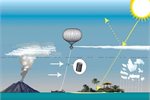
The climate talks that convened in Paris at the end of 2015 produced a historic agreement, giving negotiators and climate activists good reason to celebrate. Now the task is to ensure that the ambition shown in Paris is matched by action.

British power stations burning biomass from America
23 Feb 2016
Last year, 6m tonnes of wood pellets harvested from forests in Louisiana, Georgia, Florida, Alabama and Virginia were shipped across the Atlantic, to be burnt in renewable biomass power plants.
Carbon capture could be costly and risky
22 Feb 2016
Attempts to remove carbon dioxide from the atmosphere and store it safely are all potentially costly gambles with the current technology, scientists say.
Experts call on Govt to withdraw ‘repugnant’ legislation to block climate lawsuits
Mon 13 Jul 2026
By Liz Kivi | Lawyers and climate policy experts are calling on the Government to withdraw legislation intended to block climate lawsuits, with an adaptation expert arguing that the legislation could worsen the insurance protection gap.

Hurunui to notify climate solution plan change
Thu 9 Jul 2026
By David Hill, Local Democracy Reporter | A North Canterbury council is looking to progress "a uniquely Hurunui solution’’ to sea level rise.

$30m airline fund risks ‘burning public money’ without lasting benefit – expert
20 Mar 2026
By Shannon Morris-Williams | A $30 million government package to support regional air routes risks delivering poor value for money while increasing emissions, according to transport strategist Tim Adriaansen.

Media round-up
Thu 9 Jul 2026
In our round-up of climate coverage in local media: The Government re-wrote fast-track law after mining companies pushed for change; costs from inland flooding are expected to rise by up to 53% by 2075; and is there such a thing as a sustainable tourist?

Biodiversity credit markets need stronger safeguards – report
Wed 8 Jul 2026
By Shannon Morris-Williams | Emerging biodiversity credit markets need stronger government safeguards and public investment if they are to deliver lasting conservation benefits, according to a new report.

Inaction on shipping decarbonisation could cost NZ up to $94b by 2050, report says
30 Jun 2026
By Oli Lewis | Failing to support and enable the decarbonisation of the shipping industry could result in losses of $17.5 billion to $94.4b to the New Zealand economy by 2050, according to a report from the Aotearoa Circle.

Emissions Trading Scheme ‘stockpile’ shrinking
Thu 9 Jul 2026
By Liz Kivi | The “stockpile” of NZUs in private accounts continues to shrink, with the latest Environmental Protection Authority figures showing the number has dropped by 9.5 million since this time last year.

EU drafts 'electrification' plan to curb oil and gas use, after Iran war disruption
Mon 13 Jul 2026
The European Union plans to introduce a raft of policies and funding schemes to shift more of its economy to run on electricity, instead of oil and gas, a draft European Commission proposal seen by Reuters showed.
Carbon markets and biochar: a golden opportunity for NZ?
1 Jul 2026
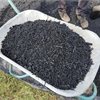
By John O’Brien | COMMENT: New Zealand’s abundant and increasing forestry waste could become a multi-billion dollar opportunity for biochar carbon sequestration – as long as the right policies, programmes, and incentives are in place.

Coal is back in Australian Super’s portfolio. What happened to that net zero pledge?
Mon 13 Jul 2026
In 2020 Australia’s biggest super fund dumped its Whitehaven shares. Fast forward to 2026 and it is now the coalminer’s single biggest investor.

Politicians need to lead on climate: Carr
30 Jun 2026
As the election campaign heats up, former Climate Change Commission chair Rod Carr has a list of actions he's hoping to see from our aspiring leaders, which includes confronting climate denial as well as refusing funds or policy advice from vested interests.

EMA pushes for steady hand on energy and regulation
Mon 13 Jul 2026
By Shannon Morris-Williams | The Employers and Manufacturers Association wants the next government to commit to a long-term energy plan and allow faster investment in renewable generation, at the same time as slowing the pace of policy change and providing businesses with greater certainty.

What Magyar’s defeat of Orbán in Hungary means for climate and energy
21 Apr 2026
Hungary has played a disproportionate role in EU climate and energy policy in recent years, by repeatedly vetoing climate action and by delaying the phaseout of Russian fossil-fuel imports.

Don’t gut flagship green rules, Sweden tells EU
Mon 13 Jul 2026
Sweden has vowed to block any effort to dilute the EU's proposed decarbonization scheme ahead of a policy showdown next week that is pitting capitals against each other.

Environmental groups call for ETS reform
20 Feb 2026
Several environmental organisations are calling on political parties to make climate and biodiversity central to the 2026 election campaign, with reforming the Emissions Trading Scheme seen as a key priority.

Who should pay for adaptation? Local Govt NZ calls for clarity
Mon 13 Jul 2026
By Liz Kivi | Local Government New Zealand wants more clarity from central government on the vexed issue of ‘who pays’ for climate adaptation, with the organisation hitting back at comments from the Climate Change Minister that local councils are spending too much on climate resilience.

Tarakihi on verge of extinction: Stock collapse exposes major fisheries management failings
3 Jul 2026
Media release: Environmental Defence Society | Fisheries NZ is consulting on new sustainability measures for the country’s two tarakihi stocks.

Seymour ‘imploring’ council to go easy on foresters is abuse of authority: EDS
7 Jul 2026
By Liz Kivi | The Environmental Defence Society says that Regulation Minister David Seymour’s attempt to influence Gisborne District Council to ‘go easy’ on forestry companies in enforcing environmental laws is a clear abuse of ministerial authority.

'Get on with it': Greens push for pre-election solar law
Thu 9 Jul 2026
By Shannon Morris-Williams | The Green Party is calling on Parliament to pass legislation enabling low-cost household solar finance before the election, arguing there is now cross-party support following Labour's SolarSaver announcement and National's earlier Home Energy Fund pledge.

'Electric election': Labour promises $160m SolarSaver scheme funded by gas investment cuts
Wed 8 Jul 2026
By Oli Lewis | Labour is promising to reprioritise $160 million from the Gas Security Fund to pay for its new SolarSaver policy, designed to accelerate the roll-out of household solar.

Contact: Protected geothermal fields must be opened to meet 2040 goal
6 Jul 2026
By Oli Lewis | A goal to double geothermal energy generation by 2040 using existing technologies is unachievable unless some protected fields are reclassified for development, Contact Energy says.

How will the World Bank’s abandoned finance goal affect climate action?
7 Jul 2026
The World Bank has abandoned a target for 45% of the funding it gives developing countries to be “climate finance”, following months of pressure from the Trump administration in the US.
Conservation bill risks climate goals, lawyers say
1 Jul 2026
By Shannon Morris-Williams | Lawyers for Climate Action NZ says the Government's plan to change the law to encourage economic development on conservation land could undermine New Zealand's climate goals by weakening the land's ability to store carbon, as well as allowing new sources of emissions such as mining.

Govt climate claims don't match reality, lawyers say
17 Jun 2026
By Shannon Morris-Williams | Lawyers for Climate Action has accused the Government of presenting an overly positive picture of New Zealand's climate progress at the United Nations climate summit in Bonn, arguing key claims on emissions reductions and support for the Paris Agreement's 1.5°C goal are not reflected in domestic policy.
Lake Onslow pumped hydro consortium secures funding for consent push
26 Jun 2026
By Oli Lewis | The consortium behind Lake Onslow pumped hydro has secured funding to finalise its resource consent application, aiming to lodge it under the fast-track process before 2027.
Ballance secures gas for 2026 as it progresses energy transition plan
16 Jun 2026
By Oli Lewis | One of the largest industrial gas users in New Zealand is working on an energy transition plan to futureproof domestic fertiliser manufacturing, while continuing to secure ongoing gas supply contracts.

Former West Coast Regional Council chair slams new flood report
Mon 13 Jul 2026
By Vihan Dalal, Local Democracy Reporter | A West Coast regional councillor has criticised a new report by Earth Sciences New Zealand as "a fraud" after it suggested the West Coast faces up to $24 million worth of flood damages to infrastructure by 2075.

Climate law change spanner in the works for Waitangi Tribunal Inquiry
19 Dec 2025
By Liz Kivi | The Government’s controversial changes to New Zealand’s legal framework for climate policy have thrown a spanner in the works for a long-running Waitangi Tribunal Inquiry into climate change.
Ugandan farmers launch UK court case against East African oil pipeline
Thu 9 Jul 2026
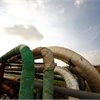
Four Ugandan farmers filed a case with London’s High Court aiming to stop the East African Crude Oil Pipeline from starting to operate by asking the court to apply Uganda’s laws against the project’s UK-registered company.

Commissioner ‘unconvinced’ LNG is the best dry-year solution
26 Jun 2026
By Liz Kivi | The Parliamentary Commissioner for the Environment has told the Energy Minister he is “unconvinced” the government’s proposed LNG import terminal is the best ‘dry year’ solution for the country, and criticised the Government’s “extremely limited” options analysis.

Govt backs hydrogen with national industry summit
Thu 9 Jul 2026
By Oli Lewis | The Government is convening a major hydrogen conference to promote awareness and uptake of the alternative fuel.
Climate risks could reshape business finances, new guidance warns
15 Apr 2026
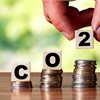
By Shannon Morris-Williams | New guidance warns climate change is set to fundamentally reshape financial outcomes for businesses, including difficult-to-model climate “tipping points” – irreversible changes such as ice sheet collapse or ocean circulation shifts – which threaten severe and sudden financial impacts.

UN chief says fossil fuel industry must cut methane for warming “relief”
25 Jun 2026
UN chief António Guterres called for stronger action to cut emissions of planet-heating methane, taking aim at the fossil fuel industry’s practices and profits, and pointing to coal, oil and gas as the root of today’s climate and energy crises.

Fifth new petroleum application targets Taranaki
Wed 8 Jul 2026
Media release: New Zealand Government | An application targeting frontier deepwater in the Taranaki Basin marks the fifth permit application to prospect or explore for petroleum since the removal of the exploration ban, Resources Minister Shane Jones says.

'Extreme' marine heatwave expected for parts of UK
Thu 9 Jul 2026
A marine heatwave could reach "extreme" levels around parts of the UK later this week, according to the Met Office, raising concerns for marine life.

Carbon capture and the need for ‘net zero oil’
16 Jun 2026
By Pattrick Smellie | The answer to making carbon capture and storage work is to make fossil fuel producers responsible for making it happen rather than consumers, says Oxford University climate change policy expert, Professor Myles Allen.

A real ‘intergenerational equity’ budget would address Australia’s unceasing environmental decline
15 May 2026
Labor has unveiled a budget designed to tackle intergenerational equity in Australia through bold tax reform.

UN plastics pact talks restart amid fears production curbs will be left out
2 Jul 2026
Diplomats reconvene a year after negotiations collapsed, but campaigners fear the agenda risks burying tricky discussions on key elements.

Northern Thai residents march for action on polluted rivers. ‘This is an emergency’
9 Jun 2026
More than 600 residents of Chiang Mai and Chiang Rai provinces embarked May 31 on a roughly 68-kilometer, six-day ‘peace walk’ to demand the Thai government take action on the river pollution crisis that has seen Thai rivers polluted with heavy metals.

Swarbrick slams $50m critical minerals funding as 'Trump's war machine' subsidy
7 Jul 2026
By Shannon Morris-Williams | The Green Party has criticised the Government's investment into two West Coast critical minerals projects, claiming the funding could ultimately support the United States defence industry rather than New Zealand's clean energy transition, while Shane Jones dismissed opponents as "flat earth idiots".
Fast-track panel backs proposed Haldon Solar Farm
6 Jul 2026
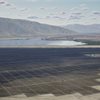
By Shannon Morris-Williams | The proposed Haldon Solar Farm in the Mackenzie Basin has moved to the final stages of the Fast-track Approvals Act process after the Fast-track Panel proposed granting approval for the project.

Low-cost loans for solar panels could save households hundreds on bills – thinktanks
Thu 9 Jul 2026
Millions of UK households could save hundreds of pounds a year on their energy bills if the government were to approve low-cost loans for solar panel installation, research has found.

Carbon trading schemes cut more emissions than carbon taxes, according to global study
20 Mar 2026
By Shannon Morris-Williams | Carbon trading schemes are more effective than carbon taxes at reducing emissions, cutting fossil fuel use, and accelerating the shift to renewable energy, a global study has found.

Microsoft emissions surge 27% as AI buildout crimps climate goals
Mon 13 Jul 2026
Microsoft's greenhouse gas emissions jumped 27 percent in its latest fiscal year, the tech giant disclosed Thursday, adding to a wave of worsening environmental reports from an industry racing to build AI infrastructure.

Pacific climate response in question as NZ finance remains unclear
19 Dec 2025
By Shannon Morris-Williams | With New Zealand's $1.3 billion international climate finance commitment set to end with no clarity on what follows, the Auditor-General says oversight of that funding remains patchy and long-term outcomes are unclear.

‘Those blocking climate science are not our friends': Pacific leaders warn at Bonn talks
23 Jun 2026
Pacific nations and civil society groups have united at UN climate talks, pushing back against efforts to weaken agreed language on global temperature limits as negotiations continue behind closed doors.

Next Govt must restart action on plastic pollution
1 Jul 2026
Media release - Zero Waste Aotearoa | Plastic Free July begins with an urgent call to put plastic pollution back on the political agenda. Plastic Free July is a worldwide campaign to reduce plastic waste and eliminate single use plastics.

Greens announce water policy, including nitrogen fertiliser phase-out
7 Jul 2026
By Liz Kivi | The Green Party announced its water policy yesterday, promising to phase out synthetic nitrogen fertiliser, as well as destructive fishing methods, if the party is elected in November.

Experts sound alarm over escalating climate impacts
Wed 8 Jul 2026
By Shannon Morris-Williams | Scientists are warning climate impacts are accelerating across our region after a World Meteorological Organization report found last year was the South-West Pacific's second-warmest on record, with impacts including rising seas, marine heatwaves and extreme weather.

Faster consenting, harder trade-offs
7 Jul 2026
Faster consenting is starting to produce results, but this week's decisions show speed has not removed the harder trade-offs around electricity security, conservation, ecology and climate liability.
