
Carbon Finance Program upscales efforts to close climate investment gap in climate vulnerable nations
22 Oct 2025

Media release | The Climate Vulnerable Forum and its V20 Finance Ministers (CVF-V20) will work with the Voluntary Carbon Markets Integrity Initiative (VCMI) to upscale the Carbon Finance Program in reach and impact, supporting more climate-vulnerable countries to host high-integrity carbon projects that yield tangible climate, nature, and sustainable development benefits.
“This marks a pivotal step in restoring climate equity. High-integrity carbon markets have the potential to unlock billions in private finance, precisely the scale of investment needed by climate-vulnerable nations. Therefore, it is essential to empower these nations to leverage carbon markets effectively to close the climate finance gap,” H.E. Mohamed Nasheed, CVF-V20 Secretary-General and former President of the Maldives, said.
Launched in June 2024, the Carbon Finance Program supports CVF-V20 member countries to leverage high-integrity voluntary carbon markets to finance their Climate Prosperity Plans—multi-phase national strategies for investment and technology access designed to transform climate risks into bankable opportunities. The program has already provided policy guidance and capacity building on carbon markets across Benin, Kenya, and Bhutan.
The partnership identifies carbon markets as one of several key levers to help unlock an additional US$20 billion in annual financing for V20 countries, which can be used to support the implementation of Climate Prosperity Plans, boost nature-based solution investments, strengthen climate resilience, and advance broader sustainable development goals.
To enhance V20 nations’ access to these fiscal revenues, the Carbon Finance Program will be scaled to reach more countries and broaden technical support. The announcement was made during the 2025 Annual Meetings of the World Bank Group and the International Monetary Fund, a month before COP30, where carbon markets, including the implementation of Article 6 of the Paris Agreement, are expected to be high on the agenda.
“For too long, the architecture of international climate finance has marginalised those on the frontlines of the climate crisis. This expanded Carbon Finance Program aims to reverse that paradigm—empowering climate-vulnerable nations which have the natural resources to actively participate in high-integrity carbon markets, uphold their agency, and fully capture the benefits they deserve. This is critical as we note that there is still a significant gap in the ability of Small Island Developing States (SIDS) like Barbados to reap the benefits from these instruments since many SIDS do not have the scale of terrestrial natural capital like forests, and efforts related to marine carbon dioxide removal (Blue Carbon) remain difficult due to inherent challenges in pursuing conservation and restoration in the marine space, paired with lower levels of access to finance for these projects.” H.E. The Most Honorable Elizabeth Thompson, Ambassador Extraordinary and Plenipotentiary Climate Change, Small Island States (SIDS) & Law of the Sea, Barbados and Sherpa to Prime Minister Mia Amor Mottley, S.C. M.P., Chair of the CVF-V20, explained.
By enabling vulnerable countries to leverage their natural wealth and climate potential, the program fosters resilience, accelerates sustainable growth, and promotes both climate justice and shared prosperity. Through the Carbon Finance Program, V20 nations will gain access to tailored guidance that aligns with their specific needs, priorities, and strategic goals. This strengthened partnership will also empower climate-vulnerable countries to advance the development and implementation of robust climate finance strategies and policy frameworks through high-integrity carbon markets.
The Carbon Finance Program extends its support to climate-vulnerable countries through 2028, offering policy advice, carbon credit transaction support, climate finance mechanisms, and measures to aggregate demand across voluntary, compliance, and Article 6 markets.
“The world cannot achieve its climate targets without dramatically scaling up flows of finance to climate vulnerable nations, which are home to many of the world’s natural carbon sinks as well as being ripe for climate-positive innovation and prosperity. As carbon markets grow, it is vital that climate vulnerable nations are supported to leverage these channels of finance to support domestic priorities and global goals, and I am delighted that the VCMI and CVF-V20 Carbon Finance Program has been launched to deliver expert support to CVF-V20 member states,” said Usha Rao-Monari, VCMI Steering Committee Chair and former Under-Secretary General to the United Nations Development Programme (UNDP).
The expansion of the Program is a crucial step toward building the in-country capacity and expertise of V20 nations to effectively harness growing carbon markets in support of national priorities and global climate goals.
About CVF-V20
The CVF-V20 represents 74 member-countries from small island developing states (SIDS), least developed countries (LDCs), low-to-middle income countries (LMICs), landlocked developing countries (LLDCs), and fragile and conflict-affected states (FCS). Working together, the CVF-V20 aims to achieve climate justice through the realization of Climate Prosperity Plans, which contain ambitious economic and financial resilience strategies designed to attract investment and resources that advance the attainment of the Sustainable Development Goals (SDGs), 30×30 Global Biodiversity, and help keep the average global temperatures to the Paris Agreement’s 1.5°C safety threshold.
print this story

Dry-year reliability obligation should fall on generators, not major electricity users – MEUG
Thu 23 Jul 2026
Media release | The Major Electricity Users' Group (MEUG) is urging the Government to redesign its proposed dry-year reliability obligation so responsibility for securing New Zealand's electricity supply rests with generators rather than major electricity users.

Greenpeace launches legal challenge against US$2.5bn expansion by Premier Beehive parent company JBS
Thu 23 Jul 2026
Media release | Greenpeace Netherlands has petitioned a Dutch court seeking to compel the world’s largest meat company JBS, to disclose information, in order to challenge its business policies in court. This includes its planned US$ 6 billion global expansion, of which almost half is earmarked for Nigeria.

Select committee report on resource management guts environmental protections
Wed 22 Jul 2026
Media release | Forest & Bird says the Environment Committee report on the biggest overhaul of resource management law in Aotearoa New Zealand in a generation is bad news for nature.
Open Letter: Exercise restraint on LNG import facility decision ahead of the election
Tue 21 Jul 2026
The Smart Energy Alliance respectfully urges the Government not to enter into a binding commercial agreement for a liquefied natural gas (LNG) import facility in the period immediately preceding the General Election.

Tauranga secures international funding to support rangatahi climate action
16 Jul 2026
Media release: Tauranga City Council | Tauranga has been selected as one of 300 cities worldwide to receive funding through the Bloomberg Philanthropies Youth Climate Action Fund, creating new opportunities for local rangatahi to turn their climate action ideas into reality.

University launches worldwide search for nature-focused researchers
15 Jul 2026
Media release | As governments and businesses around the world grapple with climate change and biodiversity loss, Waipapa Taumata Rau, University of Auckland is launching an international search for ten PhD researchers to help shape a more nature positive economy.

New entrant seeks to expand exploration portfolio
14 Jul 2026
Media release | Resources Minister Shane Jones has welcomed further investment interest in New Zealand's petroleum sector, with a recent new entrant seeking to expand its exploration interests in the offshore northern Taranaki Basin.

Fifth new petroleum application targets Taranaki
8 Jul 2026
Media release: New Zealand Government | An application targeting frontier deepwater in the Taranaki Basin marks the fifth permit application to prospect or explore for petroleum since the removal of the exploration ban, Resources Minister Shane Jones says.
Government supporting Wairarapa farmers after heavy rain
6 Jul 2026
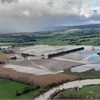
Media release | The Government is working closely with farmers and rural communities in the Wairarapa to assess the impacts of recent heavy rain, which has damaged local roads and bridges and caused significant erosion on hillside farms.
Tarakihi on verge of extinction: Stock collapse exposes major fisheries management failings
3 Jul 2026
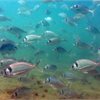
Media release: Environmental Defence Society | Fisheries NZ is consulting on new sustainability measures for the country’s two tarakihi stocks.
