
Topics tagged with 'Science'

Species extinction threatens the livelihoods of billions: new report
12 Jul 2022
With billions of people depending on wild flora and fauna for food, medicine, and energy, a million species are at risk of extinction due to the combined impacts of climate change, other forms of pollution, overexploitation, and deforestation, warns a new report backed by the United Nations.

Scientists puzzled by soaring global methane levels
12 Jul 2022
Methane concentrations in the Earth's atmosphere are soaring—and the exact causes of the "frightening" increase are puzzling scientists

How climate change is making extreme weather a regular occurrence
12 Jul 2022
Torrential rains in Japan, record-breaking heatwaves in Europe, and recurring droughts in the western US. For the second year in a row the start of summer in the northern hemisphere has been marked by extreme weather. To what extent is global warming to blame?

New study identifies rapidly emerging threats to oceans
11 Jul 2022
A globe-spanning study outlines new, potentially unexpected threats to ocean ecosystems and vulnerable coastal communities within the next five to 10 years that will come on top of the already harmful effects of overfishing, pollution and global warming.

Best by the rest…
8 Jul 2022
In our weekly round-up of the best climate coverage in the local media: Offshore oil and gas exploration goes ahead despite bans; indigenous forests’ carbon sequestration superpowers; and is romanticising New Zealand’s colonial past hindering our climate response?

Waikato student wins scholarship to study Antarctic carbon release hotspots
7 Jul 2022
A Waikato student has won a $20,000 scholarship to study possible carbon dioxide release hotspots in the Southern Ocean.

How much is a mangrove forest worth? In some places, $850,000 per hectare
7 Jul 2022
While proponents of environmental restoration often talk about ecological benefits, people controlling the purse strings think in dollars and cents.

Climate change forcing nature reserves to adapt, warns new report
7 Jul 2022
Projects to help wildlife adapt to habitats affected by climate change will become more commonplace, warned a new report.

Methane emissions reach new highs despite pandemic—four times more sensitive to climate change than first thought
7 Jul 2022
Eliminating emissions of CO₂ is high up the environmental agenda—but the world should not lose sight of the threat from methane. There has been a disturbing recent surge in atmospheric methane, which is more than 25 times more potent as a greenhouse gas over the course of a century than CO₂.

Restoring nature is not a silver bullet for global warming, we must cut emissions outright
5 Jul 2022
Restoring degraded environments, such as by planting trees, is often touted as a solution to the climate crisis. But our new research shows this, while important, is no substitute for preventing fossil fuel emissions to limit global warming.

How AI can have a positive and negative impact on climate: study
4 Jul 2022
A study published last month in the peer-reviewed journal Nature Climate Change sought to understand the potential impact of artificial intelligence on climate change.

Technofixes are the elite's attempt to sidestep blame for the climate crisis
4 Jul 2022
Science has a resistance to ill-founded assertions embedded deep in its bones. Carl Sagan called this “baloney detection.” But in the face of climate change, arguably our largest science-related crisis, these baloney detection capabilities haven’t kept our leaders honest.

The benefits of growing brocolli beneath solar panels
1 Jul 2022
Despite being “yucky” according to some picky eaters, broccoli is well-suited to grow alongside solar panels, according to a new study.

Climate impact of food-miles up to 7 times higher than previously thought: study
30 Jun 2022
Fresh research suggests transport accounts for one-fifth of total food-system emissions, with fresh fruit and vegetables amongst the most carbon-intensive.

Tropical cyclones now ‘13% less frequent’ due to climate change
29 Jun 2022
Tropical cyclones are complex phenomena, which only form under specific atmospheric and oceanic conditions. Research suggests that, as the climate warms, changing conditions are making tropical cyclones less frequent. However, a lack of long-term cyclone data makes this trend difficult to quantify.

Seaweed startup raises $7 million to reduce ruminant methane emissions
29 Jun 2022
US startup Symbrosia* has raised $7 million in new funding as it makes progress on its seaweed feed additive that reduces methane emissions from livestock.
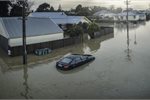
NZ not doing enough to prevent deaths from extreme weather worsened by climate change
28 Jun 2022
Negative health consequences from extreme weather in New Zealand could increase because of climate change and the country needs to do more to prevent and manage these threats, researchers say.

Climate change affecting children even before birth
28 Jun 2022
Climate change affects everyone, but studies have shown infants and children to be most vulnerable.

London could feel as hot as Barcelona by 2050
28 Jun 2022
A major climate change study has found that London's weather could feel more like Barcelona's by 2050. Even though this might sound like a dream at first to Londoners, the change could turn into a nightmare as it would be accompanied by stretches of severe drought as well as heavier downpours in the wet months, potentially challenging many aspects of life in the city.

Sun Cable clears new hurdle for world’s biggest solar and battery project
27 Jun 2022
Sun Cable’s Australia-Asia PowerLink, the massive solar and battery project backed by Australia’s two richest men, Andrew Forrest and Mike Cannon-Brookes, has cleared another important hurdle with a ringing endorsement of its economic merits from Infrastructure Australia

Climate damage caused by space tourism needs urgent mitigation: study
27 Jun 2022
A formidable space tourism industry may have a greater climate effect than the aviation industry and undo repair to the protective ozone layer if left unregulated, according to a new study led by UCL Earth’s Future.

Economists assume the desire for wealth is insatiable. What if they’re wrong?
23 Jun 2022
The majority of people surveyed in 33 countries around the world say their lifestyle dreams could be fulfilled with a finite—and often relatively modest—amount of money. The findings call into question a founding principle of economics, and suggest unexpected opportunities for achieving sustainable societies.

Warming climate upends Arctic mining town
23 Jun 2022
Tor Selnes owes his life to a lamp. He miraculously survived a fatal avalanche that shed light on the vulnerability of Svalbard, a region warming faster than anywhere else, to human-caused climate change.

Mysterious climate behaviour during Earth’s most severe mass extinction event explained
22 Jun 2022
Media Release - The end-Permian mass extinction is the most severe mass extinction event ever recorded, during which ~80% of marine species went extinct.

How climate change is knocking natural events wildly out of sync
22 Jun 2022
Climate change is throwing off the timing of key events in the natural world, from the flowering of plants to the migrations of birds and mammals. Now, ecologists are warning that this could spiral out of control and cause whole ecosystems to break down.

Emissions from agriculture threatens health and climate: US study
22 Jun 2022
A new US study analyses the cost of reactive nitrogen emissions from fertilized agriculture and their risks to populations and climate.

What 18 independent studies all concluded about the use of hydrogen for heating
22 Jun 2022
A total of 18 independent studies produced since 2019 — including by the IPCC, IEA and McKinsey — have ruled out hydrogen playing a major role in the heating of buildings, according to a list compiled by renowned energy expert Jan Rosenow.

Ibrahim Thiaw appointed interim UN Climate Change head
22 Jun 2022
The head of the UN Convention to Combat Desertification will head UN Climate Change from 17 July and until a permanent replacement to Patrica Espinosa is found.

‘Food miles’ have larger climate impact than thought, study suggests
21 Jun 2022
Global “food miles” emissions are higher than previously thought – accounting for nearly one-fifth of total food-system emissions – new research suggests.

Could space bubbles fight climate change?
21 Jun 2022
Architect Carlo Ratti is among a group of MIT researchers exploring the feasibility of fighting climate change with a conglomeration of "space bubbles" that would float above the Earth to reflect the sun's rays.
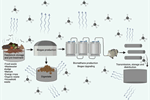
Methane emissions throughout supply chain underestimated: study
21 Jun 2022
Researchers at the Imperial College London have discovered that biogas and biomethane leak up to twice as much methane as previously thought, despite being more climate-friendly.

Is moss a climate change superhero in disugise?
21 Jun 2022
Ask most gardeners what they think of moss and the chances are you will get a string of expletives in return.

Climate change leading to earlier and earlier heatwaves, scientists say
20 Jun 2022
As France grapples with a particularly intense heatwave this weekend, with temperatures reaching 40 degrees Celsius in many parts of the country, meteorologists say the increasingly early arrival of heatwaves is directly linked to global warming due to human activities.

New England Medical Journal weighs in climate change
17 Jun 2022
The New England Journal of Medicine kicks off a series of articles Thursday with an examination of the effects of air pollution on children’s health.

This enzyme-coated cotton offers a low-tech way to capture CO2
17 Jun 2022
Long met with skepticism, the idea of capturing carbon dioxide from air and from industrial smokestacks is now accepted as necessary to avoid the worst impacts of climate change. Capturing carbon at low cost on a large scale will require innovative solutions.

Mapping carbon reserves to fight climate change
16 Jun 2022
Carbon storage capacity in forests across the globe is only at 88% of its potential, according to a study published in Proceedings of the National Academy of Sciences (PNAS), which sets out to help prioritize locations for increasing reserves.

This CRISPR pioneer wants to capture more carbon with crops
15 Jun 2022
Plants are the original carbon capture factories—and a new research program aims to make them better ones by using gene editing.

How much can e-bikes reduce carbon emissions?
15 Jun 2022
E-bikes could take the place of enough car trips to cut transportation emissions in England by as much as 24.4 million metric tons of carbon dioxide per year, according to a new study. What’s more, the greatest per capita benefits of e-bikes—with the potential to shave more than 750 kilograms of carbon dioxide off a person’s annual carbon footprint—are seen in rural and exburban areas.

Tasmania's native forest logging sector the state's highest carbon emitting industry: report
15 Jun 2022
Based in Tasmania's Derwent Valley, Fiona Weaver's adventure tourism business trades on the reputation of Tasmania's pristine wilderness.
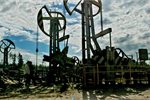
Plugging methane leaks is a powerful climate fix, so why aren't we doing it?
14 Jun 2022
The oil and gas industry is choking the atmosphere with a heat-trapping gas stronger than CO2 — despite cheap, fast and easy fixes.

Offshore methane gas leak spotted from space
13 Jun 2022
Scientists have for the first time used satellite data to detect a major offshore leak of the potent greenhouse gas methane, according to peer-reviewed research.

Carbon and health taxes on food can contribute to net-zero targets and improve quality of diets
10 Jun 2022
Combined carbon and health taxes on food products could significantly contribute to net-zero targets, while improving the quality of diets, a major new study shows.

Using Indigenous knowledge and Western science to address climate change impacts
9 Jun 2022
Traditional Owners in Australia are the creators of millennia worth of traditional ecological knowledge—an understanding of how to live amid changing environmental conditions. Seasonal calendars are one of the forms of this knowledge best known by non-Indigenous Australians. But as the climate changes, these calendars are being disrupted.

“Limited time:” World will lock in 1.5°C warming by 2025 without big emissions cuts
8 Jun 2022
The world faces a greater than 50 per cent chance of locking in global warming of more than 1.5°C unless greenhouse gas emissions can be dramatically reduced before 2025, new research suggests.

Floating solar power could help fight climate change
8 Jun 2022
Solar panels need to be deployed over vast areas worldwide to decarbonize electricity. By 2050, the United States might need up to 61,000 square kilometres of solar panels — an area larger than the Netherlands1. Land-scarce nations such as Japan and South Korea might have to devote 5% of their land to solar farms.

Feedback loops: How the ‘greening’ of the Alps could lead to more warming
8 Jun 2022
It seems like every year a report is released documenting the scale of snow or ice loss in the Arctic. But, what about the climate significance of rising temperatures in snowy regions nowhere near the Poles? A recent study from researchers at University of Lausanne and the University of Basel has explored this exact question as it pertains to the European Alps.

Record methane spike boosts heat trapped by greenhouse gases
2 Jun 2022
Greenhouse gases trapped 49 percent more heat in 2021 than in 1990, as emissions continued to rise rapidly, according to NOAA.

Cities need new types of pavement capable of absorbing a flood. This team has a customized recipe
2 Jun 2022
Climate change is altering rainfall patterns, making storms more intense in many locations. Meanwhile, more people are moving to cities around the world. The combination of those two trends adds up to an increased risk of urban flooding.

Climate change is happening faster than expected, study shows
1 Jun 2022
Climate change is accelerating so quickly that the southern hemisphere is already experiencing intense winter storms originally predicted for 2080, says an Israeli research team.

Yes, you can save lives by planting trees, a new study says
1 Jun 2022
It’s hard not to love trees. They provide us with shade during the scorching heat of summer, help clean the air and water, and improve our physical and mental well-being. Now, a recent study has found that boosting urban greenery — including trees, shrubs, and other plants — could also save tens of thousands of lives in cities across the USA.

Move to block lawsuits could strengthen climate case against Govt
Today 11:45am
By Liz Kivi | The Government’s plan to block climate lawsuits – while potentially fatal for one groundbreaking climate case – could actually bolster claims in another live climate case underway against the Government.

Global shocks, fertiliser use and the importance of data: Insights on the environmental performance of agriculture
Today 11:45am
When shocks push producers to use less fertiliser, the environmental performance of agriculture tends to improve. But do improvements reflect the short-term effects of shocks or signal the beginning of a longer-term trend?

$30m airline fund risks ‘burning public money’ without lasting benefit – expert
20 Mar 2026
By Shannon Morris-Williams | A $30 million government package to support regional air routes risks delivering poor value for money while increasing emissions, according to transport strategist Tim Adriaansen.

Europe has 'maybe six weeks of jet fuel left', energy boss warns
20 Apr 2026
Stocks would reach a tipping point in June if Europe was unable to replace at least half of its imports from the Middle East, the organisation said in a report this week.

Conservation land open for voluntary carbon market schemes
Tue 12 May 2026
By Pattrick Smellie | The government is to open up the Crown-owned conservation estate to private investment in voluntary carbon market projects.

Burning wood for power worse for climate than gas equivalent, report finds
21 Apr 2026
Research casts doubt on plans by the UK government to offer subsidies for carbon capture attached to the power source.
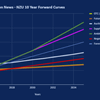
Carbon News updates forward curve
Wed 13 May 2026
Carbon News has updated its ten-year NZU forward curve, following a recent rise in spot market prices, with NZUs rallying from about $34 in January to nearly $54 in early May.

Some inconvenient truths in bringing climate science to the judiciary
Today 11:45am
OPINION: Climate science had been knocking on the courthouse doors for quite some time when the Supreme Court of the United States finally invited it into the realm of legal action in 2007.

Drop in ETS forestry registrations
5 May 2026
By Liz Kivi | ETS forestry registrations have dropped off this year, with the new mandatory emissions return period, new land-use rules, and carbon price volatility all meaning participants aren’t rushing to register forestry in the emissions trading scheme.

GIDI-style help cheaper than LNG: MBIE
Mon 11 May 2026
By Pattrick Smellie | Officials advised ministers last July that the lowest-cost way to free up gas for use during dry winters was to assist industrial gas users to switch to electricity.

Tairāwhiti deserves better than weakened forestry rules
5 May 2026
OPINION: The government's proposed amendments to forestry standards, released yesterday, ignore the hard lessons learned in our region and ignore the voices that have fought hardest to protect it, writes Manu Caddie.
Latest emissions inventory: ‘Something has gone very wrong’
16 Apr 2026
By Liz Kivi | New Zealand’s greenhouse gas emissions in 2024 decreased by just 0.1% compared to 2023, in what an expert says is a “terrible result”, compared to faster progress in previous years.

What Magyar’s defeat of Orbán in Hungary means for climate and energy
21 Apr 2026
Hungary has played a disproportionate role in EU climate and energy policy in recent years, by repeatedly vetoing climate action and by delaying the phaseout of Russian fossil-fuel imports.

Australian operator to run NZ ETS auctions
Mon 11 May 2026
The Government has appointed an Australian company to run its Emissions Trading Scheme auctions, taking over from NZX, which has operated the ETS auctions since they began in 2021.

World Nuclear Association chief to address NZ energy conference
Today 11:45am
The head of the World Nuclear Association will speak at a Hamilton energy conference as debate grows over whether emerging nuclear technologies could play a role in New Zealand’s future energy mix.

Environmental groups call for ETS reform
20 Feb 2026
Several environmental organisations are calling on political parties to make climate and biodiversity central to the 2026 election campaign, with reforming the Emissions Trading Scheme seen as a key priority.
Combined climate extremes may prompt carbon budget rethink
Today 11:45am
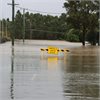
Media release: Springer Nature | Combined extreme climate events are likely to become more common in the future if carbon emissions continue to rise, a paper in Nature suggests.

EDS urges MPs to scrap the Fisheries Amendment Bill
5 May 2026
Media release | The Environmental Defence Society today lodged a substantive submission on the Fisheries Amendment Bill.

Govt presses ahead with forestry rule changes despite opposition
Today 11:45am
By Shannon Morris-Williams | The Government is pushing ahead with changes to commercial forestry rules despite most submitters opposing the proposals, with critics warning the reforms will weaken councils’ ability to manage erosion and forestry slash risks in vulnerable regions such as Tairāwhiti.

Govt moves to block climate change litigation
Tue 12 May 2026
By Liz Kivi | The Government’s move to limit lawsuits holding climate polluters accountable for damage is putting the interests of big emitters ahead of communities, according to Lawyers for Climate Action.
Methanexit: writing on the wall for NZ’s biggest gas user
6 May 2026
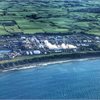
By Liz Kivi | New Zealand’s biggest fossil gas user, Methanex, is expected to stop production by the end of this year, with the company confirming its Motunui methanol operation won’t survive Māui gas field’s closure.

RMA to speed up fossil fuel consents
18 Aug 2025
By Liz Kivi | An energy lobby group has welcomed a last-minute amendment to the RMA that puts fossil fuels on the same footing as renewables, however a sustainable energy expert says the move “beggars belief.”

New funding for low methane farming uptake
29 Apr 2026
By Pattrick Smellie | The government will co-fund projects under an Early Adoption Accelerator scheme announced today to accelerate the uptake of low emissions farming technologies emerging from the AgriZero public-private partnership.

Commission urges Govt action on climate risks
7 May 2026
By Liz Kivi | Climate change currently poses major risks to our water infrastructure with “significant gaps” in readiness to manage risks and increasing hazards, according to the Climate Change Commission.

Fonterra ‘spins’ greenwashing research for favourable press
1 May 2026
By Liz Kivi | Dairy co-operative Fonterra has managed to ‘spin’ international research intended to highlight greenwashing, instead using it to generate unwarranted positive press, according to researchers behind the recent study into ag industry greenwashing.

‘Formidable’ El Niño expected this winter
29 Apr 2026
By Liz Kivi | Meteorologists are anticipating a significant El Niño influence on weather patterns across the country from winter onwards, with predicted lower rainfall for some areas and heavier rain for others likely to impact multiple sectors of the economy as well as the carbon market.

Victorian Hydrogen announces Southland urea fertiliser project using coal
22 Apr 2026
By Liz Kivi | Australian-based Victorian Hydrogen has announced it is developing a new 1.5 million-tonne-a-year urea fertiliser operation in Southland, which it will apply for under fast-track legislation.

Media round-up
24 Apr 2026
In our round-up of climate coverage in local media: What is the real cost of storm-hit infrastructure? Urgency is needed over climate adaptation funding; and a community conservation group has won a legal victory against multinational mining company OceanaGold.

Climate law change spanner in the works for Waitangi Tribunal Inquiry
19 Dec 2025
By Liz Kivi | The Government’s controversial changes to New Zealand’s legal framework for climate policy have thrown a spanner in the works for a long-running Waitangi Tribunal Inquiry into climate change.

How big oil companies can slow the green transition by suing governments that ban fossil fuels
Wed 13 May 2026
Simply put, this rule lets big oil companies sue sovereign states and demand exorbitant amounts of money if they are prohibited from digging up fossil fuels.

Tehran will never cede control of Strait of Hormuz, senior Iranian politician tells BBC
21 Apr 2026
"Never." That's when a senior Iranian lawmaker says they'll be ready to give up their control of the Strait of Hormuz.

Govt missing tricks to save fuel in crisis
30 Apr 2026
By Shannon Morris-Williams | The Government is being urged to shift its response to the fuel crisis away from short-term relief and towards measures that reduce demand, with public health experts warning it is missing an opportunity to boost energy security and lower household costs.

Climate risks could reshape business finances, new guidance warns
15 Apr 2026
By Shannon Morris-Williams | New guidance warns climate change is set to fundamentally reshape financial outcomes for businesses, including difficult-to-model climate “tipping points” – irreversible changes such as ice sheet collapse or ocean circulation shifts – which threaten severe and sudden financial impacts.

‘Triple whammy of climate chaos’: Why Antarctica's sea ice collapse is no longer a mystery
Mon 11 May 2026
Scientists have finally identified the ‘triple whammy’ behind Antarctica’s dramatic collapse, shedding new light on the chain reaction that has pushed its sea ice to record lows.
Coal mine challenge reaches Aus High Court
Wed 13 May 2026
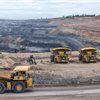
What climate change impacts should a planning authority have to take into account when assessing a mining project?

NZ's latest climate target 'weak' – Climate Action Tracker
24 Jun 2025
By Shannon Morris-Williams | New Zealand's new international climate target to 2035 is weak, and could even allow for higher emissions than the 2030 target, according to a global scientific project that tracks government climate action.

Deep-sea mining risks biodiversity loss lasting decades, scientists warn
Mon 11 May 2026
By Shannon Morris-Williams | The first comprehensive review of deep-sea mining research has found mining could cause ecological damage lasting decades and, in some ecosystems, irreversible biodiversity loss, with New Zealand experts warning the industry poses major risks to fragile ocean environments.

Environmental groups sue Trump administration over approval of new ultra deep-water drilling project
23 Apr 2026
Environmental groups sued the Trump administration on Monday over its approval last month of oil company BP’s ultra deep-water drilling project in the Gulf of Mexico.

Opposition slams environment ministry merger
Wed 13 May 2026
By Shannon Morris-Williams | Opposition MPs accused the Government of downgrading climate and environmental protections as legislation to abolish the Ministry for the Environment and merge it into a new mega-ministry passed its second reading in Parliament.

Kiwis overly optimistic about state of environment
27 Feb 2026
By Shannon Morris-Williams | New research suggests many New Zealanders believe the environment is in better shape than it really is, with public perceptions often out of step with scientific evidence.

ESG funds include petrochemical companies, report finds
5 May 2026
Global banks have invested US$133bn into US petrochemical expansion, even as the industry is linked to climate change.

Thousands protest in Germany urging faster shift to renewable energy, amid Iran war
20 Apr 2026
Thousands of people demonstrated across Germany on April 18, urging a faster shift to renewable energy and accusing conservative Chancellor Friedrich Merz’s coalition of putting the brakes on the transition.

Green Party calls for national electrification plan
20 Apr 2026
By Liz Kivi | The Green Party is calling for a national plan to electrify homes, transport and industry using renewable energy, to reduce fossil fuel dependence in response to the Middle East crisis.

‘Landmark’ conservation reform bill – boost or bust for nature?
Fri 8 May 2026
By Liz Kivi | The Government has announced an overhaul of the country’s conservation system, which environmental organisation Forest & Bird says will undo the work of many generations of Kiwis to protect public conservation land.

Renewable energy hub planned for Scottish coal museum
Today 11:45am
A former 19th Century coal mining 'super-pit' in Midlothian is to be turned into a renewable energy hub providing green electricity for the local community.

Planned coal mine borders internationally significant wetland
30 Apr 2026
By Liz Kivi | Victorian Hydrogen, the company behind plans for a huge coal-to-urea project, has applied for a permit to explore for coal next to an internationally significant wetland in a sensitive catchment in Southland.

Govt launches solar red tape review to speed up installations
Fri 8 May 2026
By Shannon Morris-Williams | The Government has launched a review aimed at making residential and small-scale solar installations faster and easier, in a move Rewiring Aotearoa says could help cut costs and accelerate solar uptake across New Zealand.

Carbon trading schemes cut more emissions than carbon taxes, according to global study
20 Mar 2026
By Shannon Morris-Williams | Carbon trading schemes are more effective than carbon taxes at reducing emissions, cutting fossil fuel use, and accelerating the shift to renewable energy, a global study has found.
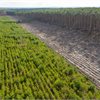
Why both trees and technology are important in the race to mitigate carbon emissions
4 May 2026
Different carbon‑removal approaches solve different problems, and pitting these technologies against each other could slow progress.

Pacific climate response in question as NZ finance remains unclear
19 Dec 2025
By Shannon Morris-Williams | With New Zealand's $1.3 billion international climate finance commitment set to end with no clarity on what follows, the Auditor-General says oversight of that funding remains patchy and long-term outcomes are unclear.

More red lights for cars might mean more green lights for sustainable transport
7 May 2026
Media release: Royal Society Open Science | Reducing the amount of green light time for cars at traffic lights could encourage commuters to switch to more sustainable transport.

UN methane alert system expanded to coal and waste sectors after Indian landfill named among world’s top emitters
6 May 2026
The United Nations is expanding its methane monitoring system to cover coal mines and waste facilities, after satellite analysis identified a landfill in India among the world’s three largest methane-emitting sites.

NZ First moves to revive container return scheme
4 May 2026
By Shannon Morris-Williams | NZ First is aiming to launch a national container return scheme, which could recycle over a billion wasted containers each year, reviving a policy shelved by the previous Labour-led Government in 2023.

Greens condemn planned coal mine next to protected wetland
4 May 2026
By Liz Kivi | The Green Party says a new plan for a coal mine and fertiliser plant next to an internationally significant wetland is “ecological vandalism and climate denial.”

Why is Northern Ireland facing a growing threat from wildfires?
7 May 2026
Figures show that spring drought events are happening more often while there has been a sharp rise in "fire weather" - a mix of warmth, dryness, and wind that allows fires to ignite and spread rapidly. Experts warn this combination, along with climate change, is creating a longer and more volatile wildfire season.

Stripy wind turbines could save some birds
Fri 8 May 2026
Media release: Royal Society Interface | Preventing birds from colliding with wind turbine blades could be as simple as a few paint stripes, according to international researchers, who say this could help protect wildlife as renewable energy expands.
