
A turning point for our ocean: why the High Seas Treaty matters for the Pacific
10 Feb 2026
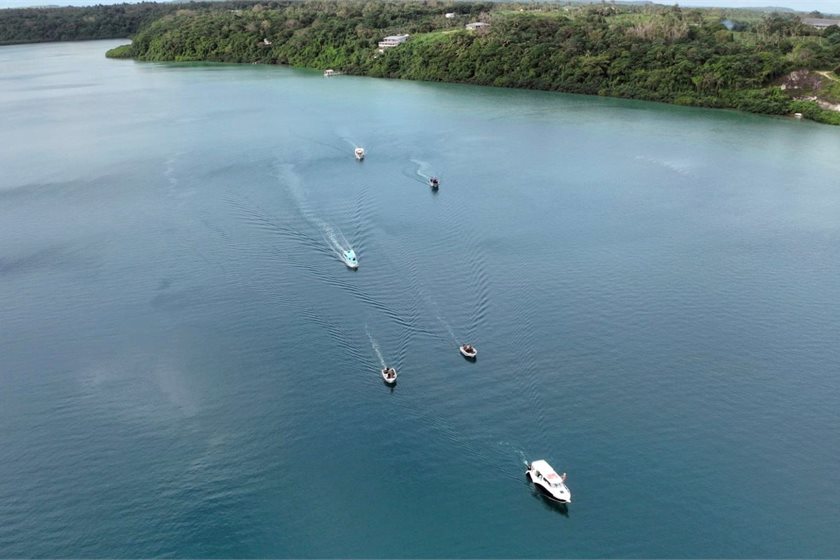
Media release: UNDP | The global ratification of the Biodiversity Beyond National Jurisdiction (BBNJ) Treaty marks a decisive moment in international cooperation and ocean governance. Referred to as the High Seas Treaty, the agreement establishes a legally binding framework to protect marine biodiversity in areas of the ocean that lie beyond national jurisdiction.
Covering nearly two-thirds of our planet’s ocean space, the high seas have long remained vulnerable to fragmented governance, overexploitation, and accelerating climate pressures.
For the Pacific, this treaty is more than a milestone in multilateral diplomacy – it is a profound opportunity. Our region has consistently championed stronger, more equitable rules for the ocean, recognising that the health of the Blue Pacific drives our economies, shapes our identities, and sustains our people.
As the treaty moves from negotiation to implementation, the Pacific stands ready to guide a new era of stewardship rooted in science, solidarity, and the principles of custodianship that Pacific peoples have upheld for generations.
Why it matters for the blue Pacific
Pacific Island Countries are among the most ocean-reliant nations in the world. The BBNJ Treaty aligns closely with the region’s immediate priorities and long-term aspirations.
The treaty fills longstanding gaps in the governance of areas beyond national jurisdiction that are ecologically connected to Pacific exclusive economic zones. By enabling countries to help shape rules for high-seas marine protected areas, environmental impact assessments, and benefit-sharing, the treaty strengthens the Pacific’s voice in decisions that directly affect the health and productivity of its ocean ecosystems.
Pacific fisheries, coral reefs, migratory species, and deep sea ecosystems face increasing threats from climate change, pollution, and unsustainable exploitation. The BBNJ framework offers practical tools to safeguard biodiversity that transcends borders.
For Pacific communities that depend on the ocean for food security, cultural continuity, and economic development, this protection is essential.
Many Pacific Island developing states face limited access to marine technology, deep sea research platforms, genomic analysis expertise, and consistent financing for ocean science. The treaty’s emphasis on capacity building and technology transfer could significantly reduce this inequity. It creates pathways for Pacific scientists, institutions, and youth to engage more fully in global marine research and innovation.
Connecting the BBNJ Treaty with UNDP’s BIOFIN Initiative
UNDP’s Biodiversity Finance Initiative (BIOFIN) is already supporting Pacific countries to close the financing gaps that hinder biodiversity protection. As nations begin implementing BBNJ commitments, such as establishing new conservation areas or conducting high seas environmental assessments, reliable, long-term financing becomes even more critical.
By pairing BIOFIN’s financial strategies with the BBNJ’s governance framework, Pacific countries can unlock innovative investments to safeguard marine biodiversity, ensuring that conservation efforts are not only ambitious, but durable, adequately funded, and nationally owned.
It will strengthen the rationale, urgency, and strategic importance of biodiversity finance planning in the Pacific Island Countries helping protect the ocean that supports the economies, cultures, and climate resilience.
The next decade: A vision for the next 5-10 years
Over the next five to 10 years, the world will witness the true test of the High Seas Treaty. For the Pacific, this period may bring unprecedented opportunities.
Countries will move from legal ratification to practical implementation shaping guidelines for high seas protected areas, harmonising environmental impact assessment processes, and participating in global benefit-sharing arrangements for marine genetic resources. Regional cooperation, a hallmark of Pacific leadership, will be vital in ensuring that the treaty reflects the priorities and values of the Blue Pacific.
The treaty’s implementation could reinforce climate resilience by protecting biodiversity corridors, safeguarding blue carbon ecosystems, and ensuring the sustainability of vital fisheries.
The coming years will determine whether the High Seas Treaty delivers meaningful change. Success will not be defined solely by global milestones, but by how effectively countries translate commitments into action, finance into impact, and governance into protection.
For the Pacific, this is both a test and an opportunity to ensure that implementation reflects the values, priorities, and leadership of the Blue Pacific.
print this story

Fed Farmers back National’s plan to slash solar red tape
Today 12:00pm
Media release | Federated Farmers says the National Party's commitment to make small-scale solar projects a permitted activity is exactly the commonsense farmers need.

What whale poo reveals about survival in warming seas
Today 12:00pm
Media release: University of Auckland | During his morning runs, Rod Keogh had no doubt that the whale poo he saw washed up on the beach had value. Science has finally caught up with him.

The Reality of Everything: A sold-out symposium at VUW
Thu 25 Jun 2026
Media release: Victoria University of Wellington | What do rising grocery bills, soaring insurance premiums, food producers under pressure, and growing international instability have in common? According to organisers of The Reality of Everything Symposium in Wellington, they are all part of a much bigger story – one that New Zealanders urgently want to understand.

New map highlights mining threat associated with controversial conservation reforms: Greenpeace
Wed 24 Jun 2026
Media release | Greenpeace has launched an interactive online map exposing the overlap between known deposits of minerals the Government has deemed "critical" and the public conservation land that would be easier to sell off and exploit under the Government's Conservation Amendment Bill.

Sustainability profession ‘comes of age’ – but pressure remains beneath the surface
Wed 24 Jun 2026
Media release: Sustainable Business Council | New research shows the sustainability profession in Aotearoa New Zealand has firmly established itself at the centre of business strategy – but ongoing pressures around capability, career pathways and pay are threatening to stall its progress.

Calder Stewart to invest $110m for solar across industrial portfolio
23 Jun 2026
Media release | NZ’s largest industrial landowner is preparing one of the country’s most significant industrial rooftop solar rollouts, with Calder Stewart set to invest more than $110 million in solar panels and battery storage across its property portfolio.

High Court hearing highlights the 'shrinking pool' for fisheries research and science
22 Jun 2026
Media release: Environmental Law Initiative | At the close of a four-day High Court hearing challenging the government’s under-levying of the fishing industry, the Environmental Law Initiative (ELI) says more science, research and observer coverage is needed to protect marine wildlife and ecosystems from the impacts of fishing.

Forest owners call for wider FENZ review as funding changes considered
22 Jun 2026
Media release - Forest Owners Association | The Government’s review of how Fire and Emergency New Zealand (FENZ) is funded should be accompanied by a wider examination of whether FENZ is delivering for rural communities, forest owners say.
Public conservation land maps show risk of sale
18 Jun 2026
Media release | Forest & Bird has today released new maps highlighting public conservation land across Aotearoa New Zealand that could be more exposed to development or sale.
Coromandel protections could be stripped away for mining through hidden law change
17 Jun 2026
Media release| Forest & Bird is warning that a hidden provision in the Government’s Conservation Amendment Bill could strip away long-standing protections and open up parts of the Coromandel Peninsula to mining.
