
World fight against invasive species comes to Auckland
10 Feb 2026
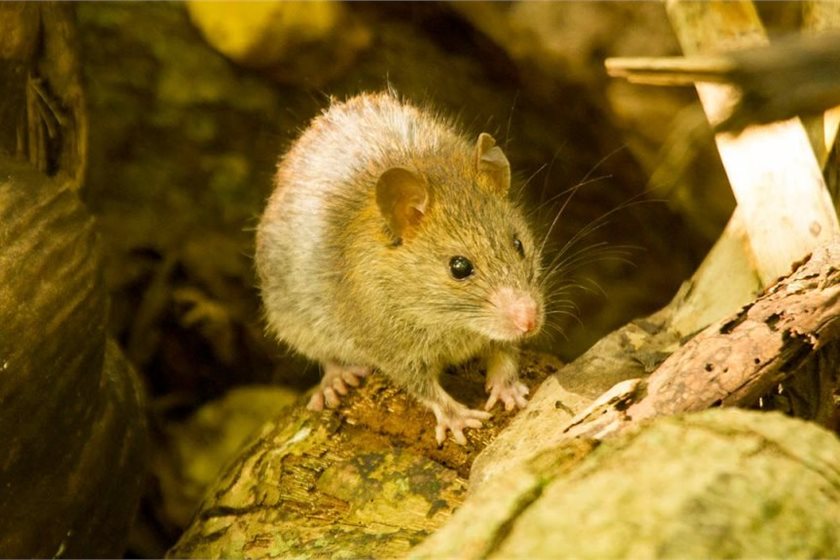
Media release: University of Auckland | From countering invasive pink salmon in Norway to controlling feral cats in the Cayman Islands, knowledge on eradicating invasive species will be shared by international experts in New Zealand.
More than 300 researchers and practitioners are gathering this week for a conference on eliminating invasive species from islands and island-like environments to enhance biodiversity and people’s lives.
The latest Island Invasives at Waipapa Taumata Rau, University of Auckland comes 25 years after the inaugural event, the world’s first conference on invasive species, was hosted by the University in 2001.
Professor James Russell from the School of Biological Sciences attended the first event as a student and is proud to be continuing the tradition. The first conference was set up by now Emeritus Professor Mick Clout and Wildlife Service veteran Dick Veitch.
“New Zealand leads the world in managing invasive species and continues to set its ambitions incredibly high in this area,” says Russell.
The Department of Conservation has eradicated rats and mice from over half the offshore islands they have invaded, while the organisation Zero Invasive Predators has eliminated rats and possums from nearly 100,000 hectares in South Westland.
“Attendees from around the world will be excited to learn about how we have achieved this, while also bringing their own success stories to share,” he says.
Projects span the Galápagos, Hawai’i and Cyprus and separate workshops will cover pig, rat and mouse eradication.
Nicola Rata-MacDonald, the chief executive of the Ngāti Manuhiri Settlement Trust, who’s immersed in Hauraki Gulf conservation, will talk about the fight to eliminate the invasive seaweed caulerpa.
University of Auckland speakers will talk on shrews, ants on Great Mercury Island, and the social science of pest control projects.
The largest numbers of attendees come from New Zealand, the US, Australia and the UK, while others are from the likes of the Seychelles, Caribbean islands, and Pacific islands.
“Every speaker is required to submit a full scientific paper for the conference proceedings,” says Russell. “Attendees are exposed to cutting-edge work not currently published elsewhere and the papers will be published by the International Union for the Conservation of Nature.
The conference is from 9 to 13 February, sponsored by Orillion, The Nature Conservancy, Auckland Council and Critter Solutions, with support from the Department of Conservation, Royal Society of New Zealand, and 100% Pure New Zealand.
print this story

Fed Farmers back National’s plan to slash solar red tape
Today 12:00pm
Media release | Federated Farmers says the National Party's commitment to make small-scale solar projects a permitted activity is exactly the commonsense farmers need.
What whale poo reveals about survival in warming seas
Today 12:00pm
Media release: University of Auckland | During his morning runs, Rod Keogh had no doubt that the whale poo he saw washed up on the beach had value. Science has finally caught up with him.

The Reality of Everything: A sold-out symposium at VUW
Thu 25 Jun 2026
Media release: Victoria University of Wellington | What do rising grocery bills, soaring insurance premiums, food producers under pressure, and growing international instability have in common? According to organisers of The Reality of Everything Symposium in Wellington, they are all part of a much bigger story – one that New Zealanders urgently want to understand.

New map highlights mining threat associated with controversial conservation reforms: Greenpeace
Wed 24 Jun 2026
Media release | Greenpeace has launched an interactive online map exposing the overlap between known deposits of minerals the Government has deemed "critical" and the public conservation land that would be easier to sell off and exploit under the Government's Conservation Amendment Bill.

Sustainability profession ‘comes of age’ – but pressure remains beneath the surface
Wed 24 Jun 2026
Media release: Sustainable Business Council | New research shows the sustainability profession in Aotearoa New Zealand has firmly established itself at the centre of business strategy – but ongoing pressures around capability, career pathways and pay are threatening to stall its progress.

Calder Stewart to invest $110m for solar across industrial portfolio
23 Jun 2026
Media release | NZ’s largest industrial landowner is preparing one of the country’s most significant industrial rooftop solar rollouts, with Calder Stewart set to invest more than $110 million in solar panels and battery storage across its property portfolio.

High Court hearing highlights the 'shrinking pool' for fisheries research and science
22 Jun 2026
Media release: Environmental Law Initiative | At the close of a four-day High Court hearing challenging the government’s under-levying of the fishing industry, the Environmental Law Initiative (ELI) says more science, research and observer coverage is needed to protect marine wildlife and ecosystems from the impacts of fishing.

Forest owners call for wider FENZ review as funding changes considered
22 Jun 2026
Media release - Forest Owners Association | The Government’s review of how Fire and Emergency New Zealand (FENZ) is funded should be accompanied by a wider examination of whether FENZ is delivering for rural communities, forest owners say.
Public conservation land maps show risk of sale
18 Jun 2026
Media release | Forest & Bird has today released new maps highlighting public conservation land across Aotearoa New Zealand that could be more exposed to development or sale.
Coromandel protections could be stripped away for mining through hidden law change
17 Jun 2026
Media release| Forest & Bird is warning that a hidden provision in the Government’s Conservation Amendment Bill could strip away long-standing protections and open up parts of the Coromandel Peninsula to mining.
