
More red lights for cars might mean more green lights for sustainable transport
7 May 2026
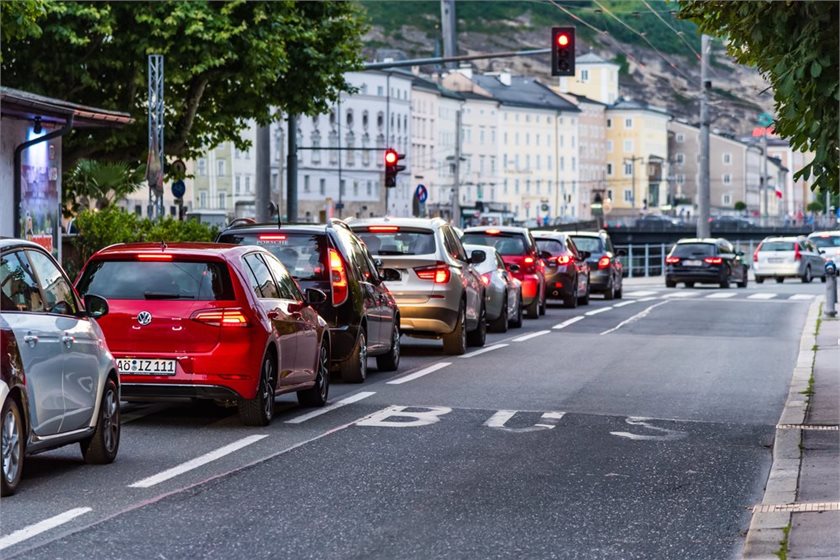
Media release: Royal Society Open Science | Reducing the amount of green light time for cars at traffic lights could encourage commuters to switch to more sustainable transport.
International researchers might be playing devil's advocate here, but they have found that reducing the amount of green-light time people in cars are given could encourage them to switch to more sustainable transport methods.
The researchers used traffic-grid simulations, and worked out that the timing of traffic lights strongly shapes a person's travel time.
They say most commuters adapt to choose the fastest travel option, which, with reduced green light-time for cars and increased green-light time for buses, bicycles and pedestrians, could potentially make people switch over to these more sustainable ways of getting about.
Traffic Light Cycles for a Sustainable City
Cities worldwide struggle with traffic congestion, pollution, and car dependency. Surprisingly, traffic light timing, a factor often overlooked, can strongly influence travel choices.
Using a new traffic model, we explore the traffic light paradox: giving more green time to cars can actually increase driving times, as extra drivers create congestion that outweighs individual savings. Our simulations show that modest reductions in car-prioritised green time shift commuters toward walking, cycling, and public transport without costly infrastructure changes.
These findings reveal that traffic lights are not just flow regulators but powerful tools to promote sustainable urban mobility and healthier, more efficient cities.
Green light go
Reducing the amount of green‑light time for cars at traffic lights could encourage commuters to switch to more sustainable transport.
Using grid‑based simulations, researchers found that traffic‑light timing strongly shapes travel times, and commuters adapt to choose the fastest travel option.
Small reductions in green light time for cars, alongside more time for buses or pedestrians, proved most effective in encouraging commuters to switch to more sustainable modes of transport.
print this story
High Court hearing highlights the 'shrinking pool' for fisheries research and science
Today 11:00am
Media release: Environmental Law Initiative | At the close of a four-day High Court hearing challenging the government’s under-levying of the fishing industry, the Environmental Law Initiative (ELI) says more science, research and observer coverage is needed to protect marine wildlife and ecosystems from the impacts of fishing.
Forest owners call for wider FENZ review as funding changes considered
Today 11:00am
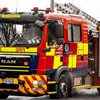
Media release - Forest Owners Association | The Government’s review of how Fire and Emergency New Zealand (FENZ) is funded should be accompanied by a wider examination of whether FENZ is delivering for rural communities, forest owners say.
Public conservation land maps show risk of sale
Thu 18 Jun 2026
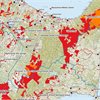
Media release | Forest & Bird has today released new maps highlighting public conservation land across Aotearoa New Zealand that could be more exposed to development or sale.
Coromandel protections could be stripped away for mining through hidden law change
Wed 17 Jun 2026
Media release| Forest & Bird is warning that a hidden provision in the Government’s Conservation Amendment Bill could strip away long-standing protections and open up parts of the Coromandel Peninsula to mining.
ANZ confronted with petition and video screening after report exposes fossil fuel ties
15 Jun 2026
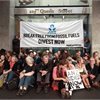
Media release: 350 Aotearoa | A petition signed by over 3000 New Zealanders was handed over to ANZ, calling on the bank to cut banking services to coal expansion companies. The petition comes as the annual ‘Banking on Climate Chaos’ report has confirmed that ANZ continues to back fossil fuel expansion.
Communities need to prepare for increased landslide risk
12 Jun 2026
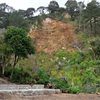
Media release: Te Whare Wānanga o Waitaha University of Canterbury | New UC-led research shows where future Cyclone Gabrielle-like storms could cause more landslides and how communities can reduce the risk.
NZ’s largest rooftop solar switched on at Fisher & Paykel Healthcare
11 Jun 2026
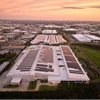
Media release | Sunergise, New Zealand’s leading commercial solar company, has switched on the country’s largest-ever rooftop solar installation at Fisher & Paykel Healthcare’s East Tāmaki campus in Auckland.

Antarctic surface melt set to increase dramatically this century, new study finds
10 Jun 2026
Media release – Victoria University | New research shows surface melting across Antarctica is set to intensify and spread dramatically over the 21st century, with melt increasing by 10 times and the area affected growing by more than 10 percent by 2100 if global temperatures continue to rise.

The environment needs fixes now, says new director
5 Jun 2026
Media release: Auckland University | Innovative solutions to environmental problems are urgently needed, because our wellbeing depends on it, says Professor Dan Tompkins, the new director of the Centre for Climate, Biodiversity and Society, Ngā Ara Whetū, at the University of Auckland.

Entries open for 2026 Sustainable Business Awards
2 Jun 2026
Media release - Sustainable Business Network | Entries are now open for the 2026 Sustainable Business Awards, New Zealand’s pre-eminent sustainability awards. Now in their 24th year, the Awards celebrate outstanding innovation and leadership in sustainability.
