
Health-framed messages are twice as effective at shifting people's attitudes and policy support on climate change
4 May 2026
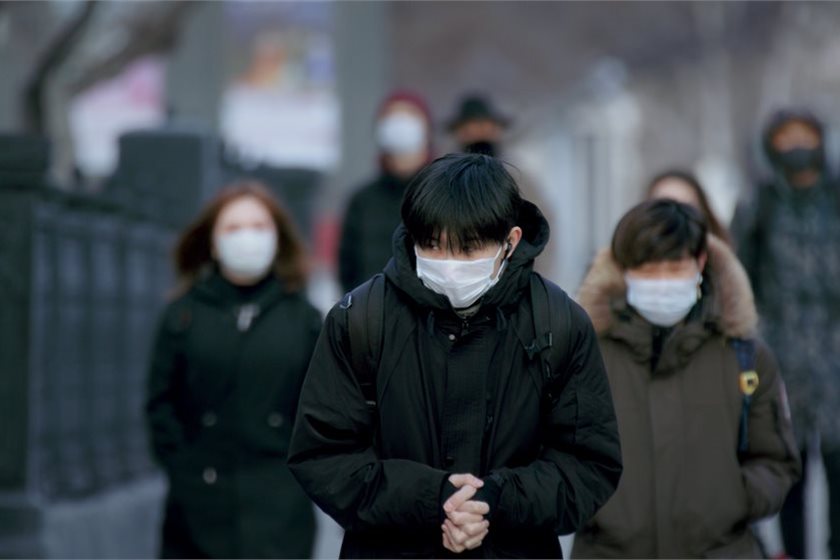
Media release: Global Climate and Health Alliance | Major study in Brazil, India, Japan and South Africa finds that evidence of climate risks to health increases public support for climate action twice as often as other climate-related messages.
Evidence of the increasingly severe health impacts of climate change increases public concern and support for government action across Brazil, India, Japan and South Africa according to a major study conducted for Wellcome by the Climate Opinion Research Exchange (CORE).
Public concern around climate change and support for climate action shifts people’s attitudes twice as often when people are informed about climate change’s impacts on their health, compared to when they receive other information about climate risks.
The influence of climate change on extreme heat, food and water, and children’s health prompt the greatest levels of public concern across the four countries.
The study found differences between countries in how people perceive risks to health from climate change:
- In Brazil, the public are highly concerned about the mental health impacts of climate change, as well as about the impact on food and water insecurity. In all, 79% of the public reported they want the government to take more action on climate change, with 82% wanting urgent action to prevent climate impacts on public health.
- In India, air pollution and access to healthcare as a result of climate impacts drive public concern. 66% of the public want the government to do more on climate change, while 74% want urgent action to safeguard against climate impacts on health.
- In Japan, extreme heat is the most important issue for the public, alongside air pollution, infectious diseases and the risks of climate change to the health of older people. 67% of the public said they want the government to do more on climate change, with 58% believing that urgent action on climate and health should be undertaken.
- In South Africa, climate impacts on children’s health carry the most weight with the public, as well as food and water shortages, and maternal health. An overwhelming 85% of the South African public want the government to take action on climate change, and 82% want specific action to prevent climate impacts on health.
The findings of the research, based on a randomised control trial of over 30,000 respondents across the four countries between September and October 2025, demonstrate widespread concern among the public about the health risks of climate change, and the extent to which these concerns are driving demand for stronger policies.
"The data is clear - when the public finds out how the climate is harming our health, they want the government to do more,” said Dustin Gilbreath, lead researcher of the survey and Senior Analyst at CORE.
“The data shows most of the public are already concerned about climate change and believe the government should take urgent action to prevent climate change from harming public health."
“As the global climate crisis accelerates, its devastating impacts on health are intensifying, making climate change one of the most acute threats to human health,” said Dr Jeni Miller, Executive Director of the Global Climate and Health Alliance.
“As a result of the insufficient action in the face of this challenge, it has become a fully-fledged global health crisis - a reality which resonates strongly with the public. Governments have an obligation to act now to protect the health and wellbeing of their populations by cutting climate warming emissions, and ensuring that people are protected from the worst impacts of climate change.”
“This study gives us a timely opportunity - health-framed messages are not just relevant, they are twice as effective at shifting public attitudes and policy support. That matters because the climate crisis is a health crisis, and people around the world are increasingly concerned by it. We must now ensure support for credible and deliverable solutions based on global evidence so that decision-makers take action to improve health and save lives - now and in the future.” said Neha Dewan, Senior Advisor at the Wellcome Trust.
The severe impacts of climate change, caused mostly by burning fossil fuels, on human health are well documented.The 2025 Lancet Countdown Report on Health and Climate Change highlights the damage caused to the health of people across the world: from extreme heat and extreme weather events to drought and ever more pervasive infectious diseases, the climate crisis is affecting every aspect of people’s lives and overwhelming healthcare systems.
The survey also shows that greater awareness of these health impacts increases public support for specific policies in each country, including investment in renewable energy, promotion of electric vehicles and financial support for more climate-vulnerable countries and emerging economies to transition to clean energy.
The study by CORE comes amid growing international attention to the risks to health from climate change, with the launch of the Belem Health Action Plan and the Climate Health Funders Coalition at last year’s COP30 in Belém, Brazil.
print this story

Calder Stewart to invest $110m for solar across industrial portfolio
Tue 23 Jun 2026
Media release | NZ’s largest industrial landowner is preparing one of the country’s most significant industrial rooftop solar rollouts, with Calder Stewart set to invest more than $110 million in solar panels and battery storage across its property portfolio.
High Court hearing highlights the 'shrinking pool' for fisheries research and science
Mon 22 Jun 2026
Media release: Environmental Law Initiative | At the close of a four-day High Court hearing challenging the government’s under-levying of the fishing industry, the Environmental Law Initiative (ELI) says more science, research and observer coverage is needed to protect marine wildlife and ecosystems from the impacts of fishing.

Forest owners call for wider FENZ review as funding changes considered
Mon 22 Jun 2026
Media release - Forest Owners Association | The Government’s review of how Fire and Emergency New Zealand (FENZ) is funded should be accompanied by a wider examination of whether FENZ is delivering for rural communities, forest owners say.
Public conservation land maps show risk of sale
Thu 18 Jun 2026
Media release | Forest & Bird has today released new maps highlighting public conservation land across Aotearoa New Zealand that could be more exposed to development or sale.

Coromandel protections could be stripped away for mining through hidden law change
17 Jun 2026
Media release| Forest & Bird is warning that a hidden provision in the Government’s Conservation Amendment Bill could strip away long-standing protections and open up parts of the Coromandel Peninsula to mining.

ANZ confronted with petition and video screening after report exposes fossil fuel ties
15 Jun 2026
Media release: 350 Aotearoa | A petition signed by over 3000 New Zealanders was handed over to ANZ, calling on the bank to cut banking services to coal expansion companies. The petition comes as the annual ‘Banking on Climate Chaos’ report has confirmed that ANZ continues to back fossil fuel expansion.

Communities need to prepare for increased landslide risk
12 Jun 2026
Media release: Te Whare Wānanga o Waitaha University of Canterbury | New UC-led research shows where future Cyclone Gabrielle-like storms could cause more landslides and how communities can reduce the risk.

NZ’s largest rooftop solar switched on at Fisher & Paykel Healthcare
11 Jun 2026
Media release | Sunergise, New Zealand’s leading commercial solar company, has switched on the country’s largest-ever rooftop solar installation at Fisher & Paykel Healthcare’s East Tāmaki campus in Auckland.

Antarctic surface melt set to increase dramatically this century, new study finds
10 Jun 2026
Media release – Victoria University | New research shows surface melting across Antarctica is set to intensify and spread dramatically over the 21st century, with melt increasing by 10 times and the area affected growing by more than 10 percent by 2100 if global temperatures continue to rise.

The environment needs fixes now, says new director
5 Jun 2026
Media release: Auckland University | Innovative solutions to environmental problems are urgently needed, because our wellbeing depends on it, says Professor Dan Tompkins, the new director of the Centre for Climate, Biodiversity and Society, Ngā Ara Whetū, at the University of Auckland.
