
Combined climate extremes may prompt carbon budget rethink
14 May 2026

Media release: Springer Nature | Combined extreme climate events are likely to become more common in the future if carbon emissions continue to rise, a paper in Nature suggests.
The study finds that the frequency of compound events – such as concurrent hot–wet and drought–heat extremes – is linked to cumulative carbon dioxide (CO2) emissions. In particular, the frequency of more severe events is predicted to escalate rapidly.
These findings suggest that targets for CO2 emissions to keep warming limited to 1.5 °C and 2 °C may need to be lower to address the wider consequences of climate change.
Climate response to anthropogenic carbon emissions is usually quantified by measuring temperature changes relative to cumulative CO2 emissions, which provides a basis for estimating levels of allowable CO2 emissions consistent with global warming targets.
However, this measure does not capture the full impacts of climate change. Compound events, such as concurrent hot-wet or drought-heat extremes, are of great concern as they can pose high risks to societies and ecosystems, but the response of these compound events to cumulative CO2 emissions is not well understood.
Yao Zhang, Zhaoli Wang and colleagues use climate models and simulations to estimate the future change in monthly hot-and-wet compound event frequency per unit of cumulative CO2 emissions. They find that historically frequent compound events will increase linearly with cumulative CO2 emissions, whereas rarer and more severe events will escalate more sharply.
Their measure of the response of compound events to cumulative CO2 emissions suggests that this effect is 37-75% higher than averages estimated from previous models, thereby indicating that compound extremes will occur more frequently than projected by existing Earth system models.
Accounting for these changes in compound events means that CO2 emissions need to be substantially lower than those proposed to limit warming to 1.5 °C and 2 °C, the authors note. The new metric may support more comprehensive climate policy and negotiations, the authors conclude.
print this story

The Reality of Everything: A sold-out symposium at VUW
Thu 25 Jun 2026
Media release: Victoria University of Wellington | What do rising grocery bills, soaring insurance premiums, food producers under pressure, and growing international instability have in common? According to organisers of The Reality of Everything Symposium in Wellington, they are all part of a much bigger story – one that New Zealanders urgently want to understand.

New map highlights mining threat associated with controversial conservation reforms: Greenpeace
Wed 24 Jun 2026
Media release | Greenpeace has launched an interactive online map exposing the overlap between known deposits of minerals the Government has deemed "critical" and the public conservation land that would be easier to sell off and exploit under the Government's Conservation Amendment Bill.

Sustainability profession ‘comes of age’ – but pressure remains beneath the surface
Wed 24 Jun 2026
Media release: Sustainable Business Council | New research shows the sustainability profession in Aotearoa New Zealand has firmly established itself at the centre of business strategy – but ongoing pressures around capability, career pathways and pay are threatening to stall its progress.

Calder Stewart to invest $110m for solar across industrial portfolio
Tue 23 Jun 2026
Media release | NZ’s largest industrial landowner is preparing one of the country’s most significant industrial rooftop solar rollouts, with Calder Stewart set to invest more than $110 million in solar panels and battery storage across its property portfolio.

High Court hearing highlights the 'shrinking pool' for fisheries research and science
22 Jun 2026
Media release: Environmental Law Initiative | At the close of a four-day High Court hearing challenging the government’s under-levying of the fishing industry, the Environmental Law Initiative (ELI) says more science, research and observer coverage is needed to protect marine wildlife and ecosystems from the impacts of fishing.

Forest owners call for wider FENZ review as funding changes considered
22 Jun 2026
Media release - Forest Owners Association | The Government’s review of how Fire and Emergency New Zealand (FENZ) is funded should be accompanied by a wider examination of whether FENZ is delivering for rural communities, forest owners say.
Public conservation land maps show risk of sale
18 Jun 2026
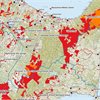
Media release | Forest & Bird has today released new maps highlighting public conservation land across Aotearoa New Zealand that could be more exposed to development or sale.

Coromandel protections could be stripped away for mining through hidden law change
17 Jun 2026
Media release| Forest & Bird is warning that a hidden provision in the Government’s Conservation Amendment Bill could strip away long-standing protections and open up parts of the Coromandel Peninsula to mining.
ANZ confronted with petition and video screening after report exposes fossil fuel ties
15 Jun 2026
Media release: 350 Aotearoa | A petition signed by over 3000 New Zealanders was handed over to ANZ, calling on the bank to cut banking services to coal expansion companies. The petition comes as the annual ‘Banking on Climate Chaos’ report has confirmed that ANZ continues to back fossil fuel expansion.
Communities need to prepare for increased landslide risk
12 Jun 2026
Media release: Te Whare Wānanga o Waitaha University of Canterbury | New UC-led research shows where future Cyclone Gabrielle-like storms could cause more landslides and how communities can reduce the risk.
