
Cost of living dominates Kiwis’ concerns – but sustainability still shapes trust, choices and expectations of business
30 Mar 2026
Media release: Sustainable Business Council | The cost of living continues to emerge as New Zealanders’ top concern - yet sustainability continues to play a decisive role in how people judge businesses, according to new research.
The Better Futures 2026 report, now in its 17th year and produced in partnership between the Sustainable Business Council (SBC) and global insights organisation Kantar, reveals that while climate and environmental issues are competing for attention in an increasingly crowded landscape of crises, expectations of business leadership on sustainability remain high, and unmet.
Nearly nine in ten New Zealanders (87%) say businesses should take responsibility for their environmental and social impacts. However, 69% believe businesses are still not doing enough, and 60% say the way companies talk about sustainability is confusing.
Jason Cate, Kantar’s Sustainable Transformation Practice Lead, says this year’s results reflect a moment of tension, rather than disengagement.
"New Zealanders are continuing to navigate acute pressures, cost of living crises, housing affordability, healthcare access, and social harm - all of which understandably dominate people’s immediate attention," Mr Cate says.
"But that doesn’t mean sustainability has disappeared. As people’s understanding of sustainability matures, what we are seeing is a recalibration, with more scepticism, less patience for vague messaging, and a much stronger focus on whether businesses’ actions genuinely minimise harm and make a difference."
The research shows environmental concerns remain prominent, with pollution of waterways, microplastics and extreme weather events among the top environmental issues. Extreme weather in particular has surged back up the public agenda following several devastating events over summer.
Despite sustainability receiving a smaller ‘share of voice’ in the media, the report finds it continues to influence consumer behaviour, driving both product adoption (74%) and rejection (53%), underlining its ongoing commercial relevance for businesses.
SBC’s Director of Programmes Jay Crangle says the results send a clear signal to business leaders.
"This report cuts through the noise and shows that sustainability still matters to New Zealanders and they’re looking for action."
"People are less interested in what businesses say, and much more interested in what they do. Clear action, visible impact, and honest communication about progress, trade-offs and challenges are now critical for organisations."
Generational differences add complexity
For the first time this year’s report explores generational trends in more depth. While social concerns vary sharply by age, the results reveal remarkable consistency across generations when it comes to environmental issues, including climate change, biodiversity loss and pollution.
However, younger New Zealanders - particularly Gen Z and Millennials - show lower overall commitment to sustainability when feelings and behaviours are combined, despite expressing strong concern. The insights reveal financial pressure, competing priorities and distrust in institutions are key barriers.
"Younger generations care deeply, but they are also stretched and sceptical," says Mr Cate.
"They’re more likely to question whether individual effort is enough, and whether businesses and systems are doing their fair share."
"These insights show that sustainability is becoming a more mature, but also more complex space. Businesses must choose their areas of impact wisely."
The challenge - and opportunity - for business
The Better Futures 2026 report finds that boards and executives globally continue to see sustainability as strategically important, yet New Zealanders still rate many of the country’s largest businesses as average or underperforming on environmental and social action.
Ms Crangle says that gap represents a critical opportunity for business leaders.
"This isn’t about abandoning sustainability because of complex competing priorities," she says.
"It’s about doubling down on credible action that connects to people’s real concerns - affordability, resilience, and fairness - and proving that businesses can be part of the solution."
The Better Futures 2026 report is based on a nationally representative survey of more than 1,000 New Zealanders, alongside international benchmarking and longitudinal analysis.
The 2026 top five concerns for New Zealanders compared with 2025 ranking are as follows:
1. The cost of living (unchanged)
2. Protection of children from mental, physical and sexual abuse (3rd)
3. Not having access to good, affordable healthcare (2nd)
4. Violence in society (5th)
5. Availability of affordable housing (9th)
The top five environmental concerns for New Zealanders compared with 2025 ranking are as follows:
1. Pollution of lakes, rivers, and seas (unchanged)
2. Microplastics in the environment and food sources (3rd)
3. Extreme weather events (flooding, fires, drought) (9th)
4. Loss of biodiversity on land and in marine environments (8th)
5. The impact of climate change (unchanged )
Margin of error ±5% points at the 95% confidence level.
This is the 17th year Kantar has been monitoring the issues New Zealanders care most deeply about.
A full copy of the 2026 Better Futures report can be accessed here.
print this story

The Reality of Everything: A sold-out symposium at VUW
Thu 25 Jun 2026
Media release: Victoria University of Wellington | What do rising grocery bills, soaring insurance premiums, food producers under pressure, and growing international instability have in common? According to organisers of The Reality of Everything Symposium in Wellington, they are all part of a much bigger story – one that New Zealanders urgently want to understand.

New map highlights mining threat associated with controversial conservation reforms: Greenpeace
Wed 24 Jun 2026
Media release | Greenpeace has launched an interactive online map exposing the overlap between known deposits of minerals the Government has deemed "critical" and the public conservation land that would be easier to sell off and exploit under the Government's Conservation Amendment Bill.

Sustainability profession ‘comes of age’ – but pressure remains beneath the surface
Wed 24 Jun 2026
Media release: Sustainable Business Council | New research shows the sustainability profession in Aotearoa New Zealand has firmly established itself at the centre of business strategy – but ongoing pressures around capability, career pathways and pay are threatening to stall its progress.

Calder Stewart to invest $110m for solar across industrial portfolio
Tue 23 Jun 2026
Media release | NZ’s largest industrial landowner is preparing one of the country’s most significant industrial rooftop solar rollouts, with Calder Stewart set to invest more than $110 million in solar panels and battery storage across its property portfolio.

High Court hearing highlights the 'shrinking pool' for fisheries research and science
22 Jun 2026
Media release: Environmental Law Initiative | At the close of a four-day High Court hearing challenging the government’s under-levying of the fishing industry, the Environmental Law Initiative (ELI) says more science, research and observer coverage is needed to protect marine wildlife and ecosystems from the impacts of fishing.

Forest owners call for wider FENZ review as funding changes considered
22 Jun 2026
Media release - Forest Owners Association | The Government’s review of how Fire and Emergency New Zealand (FENZ) is funded should be accompanied by a wider examination of whether FENZ is delivering for rural communities, forest owners say.
Public conservation land maps show risk of sale
18 Jun 2026
Media release | Forest & Bird has today released new maps highlighting public conservation land across Aotearoa New Zealand that could be more exposed to development or sale.
Coromandel protections could be stripped away for mining through hidden law change
17 Jun 2026
Media release| Forest & Bird is warning that a hidden provision in the Government’s Conservation Amendment Bill could strip away long-standing protections and open up parts of the Coromandel Peninsula to mining.
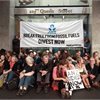
ANZ confronted with petition and video screening after report exposes fossil fuel ties
15 Jun 2026
Media release: 350 Aotearoa | A petition signed by over 3000 New Zealanders was handed over to ANZ, calling on the bank to cut banking services to coal expansion companies. The petition comes as the annual ‘Banking on Climate Chaos’ report has confirmed that ANZ continues to back fossil fuel expansion.
Communities need to prepare for increased landslide risk
12 Jun 2026
Media release: Te Whare Wānanga o Waitaha University of Canterbury | New UC-led research shows where future Cyclone Gabrielle-like storms could cause more landslides and how communities can reduce the risk.
