
World-leading plasma torch takes aim at NZ's most potent greenhouse gases
24 Mar 2026
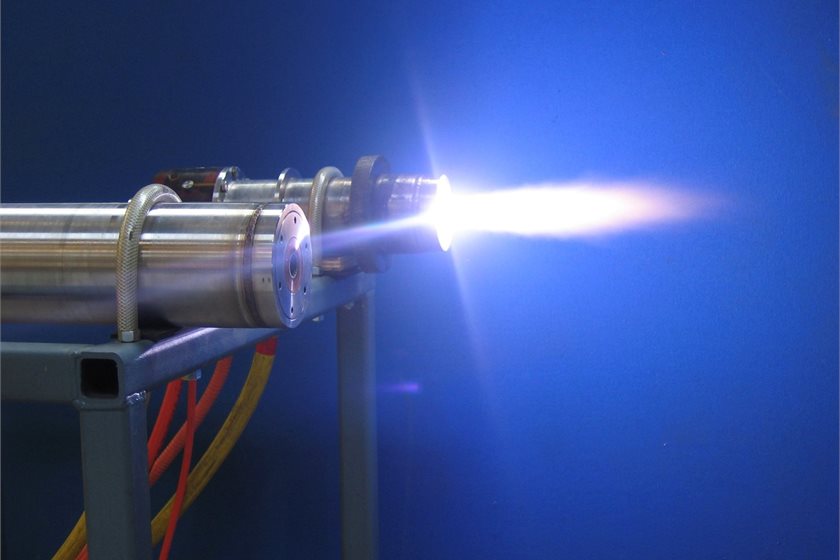
Media release | A high-tech plasma torch was lit up today as Minister of Conservation, Hon Tama Potaka, officially opened the $10 million National Refrigerant Destruction Facility – signalling a new era in addressing the environmental impact of New Zealand’s most potent greenhouse gases.
The new steam plasma arc plant is the first of its type in the Southern Hemisphere, and a key weapon in tackling the threat from synthetic refrigerants – including CFCs, HCFCs, and HFCs – the extremely powerful climate change agents, with global warming factors of up to 15,000 times CO2.
Speaking at the opening in Kawerau, Chair of the Trust for the Destruction of Synthetic Refrigerants, Richard Lauder, says: “This plant represents the beginning of a new chapter in advanced environmental stewardship and action on dealing with end-of-life refrigerants in Aotearoa New Zealand”.
New Zealand has obligations under the Kigali Amendment to the Montreal Protocol, which is a 2016 international treaty designed to phase down the production and consumption of the hydrofluorocarbons (HFCs) which replaced ozone-depleting CFCs and HCFCs.
Mr Lauder says synthetic refrigerants are the ‘invisible backbone’ of modern New Zealand and our export success around the world. They touch every corner of New Zealand, and reliance on them is growing exponentially – from home and commercial air-conditioning, healthcare, supermarkets and foodservice to logistics and cold chains.
He says that while recycling and reclaiming gases has a place, this extends the life of these gases – extending the legacy of older refrigerants.
“Ultimately, to fully address the climate impact, these gases must be safely and permanently destroyed when they reach end-of-life. And now, that solution exists here in New Zealand.”
He says these harmful refrigerants no longer need to be stockpiled, reused indefinitely, or shipped offshore: “They can be permanently destroyed onshore, using world-leading technology, powered by home-grown renewable energy.”
He says this world-class facility is a demonstration of what is possible when industry, government, and community work together with shared purpose.
The new facility funded by the Trust, through Chemical Destruction Services (CDS) uses a Steam Plasma Arc system from Canadian technology leader, PyroGenesis, which destroys synthetic refrigerant gases with a near 100 percent (99.99999%) efficiency – resulting in safe, stable compounds that can be released into the environment.
CDS Managing Director, Clifton Madgwick, says the plant – as a first for New Zealand – is a point of local pride for Kawerau, with the community having a strong industrial heritage and innovative spirit.
Mr Madgwick says the plant has the capacity to sustainably destroy up to 100,000kg of gases per annum, which could have a combined Global Warming Potential (GWP) of about 220 million kilograms (Co2-e).
“That potential harm ends right here! In this National Refrigerant Destruction Facility, where we’re using our plasma torch to do good deeds for planet Earth.”
print this story
Fed Farmers back National’s plan to slash solar red tape
Today 12:00pm
Media release | Federated Farmers says the National Party's commitment to make small-scale solar projects a permitted activity is exactly the commonsense farmers need.

What whale poo reveals about survival in warming seas
Today 12:00pm
Media release: University of Auckland | During his morning runs, Rod Keogh had no doubt that the whale poo he saw washed up on the beach had value. Science has finally caught up with him.

The Reality of Everything: A sold-out symposium at VUW
Thu 25 Jun 2026
Media release: Victoria University of Wellington | What do rising grocery bills, soaring insurance premiums, food producers under pressure, and growing international instability have in common? According to organisers of The Reality of Everything Symposium in Wellington, they are all part of a much bigger story – one that New Zealanders urgently want to understand.

New map highlights mining threat associated with controversial conservation reforms: Greenpeace
Wed 24 Jun 2026
Media release | Greenpeace has launched an interactive online map exposing the overlap between known deposits of minerals the Government has deemed "critical" and the public conservation land that would be easier to sell off and exploit under the Government's Conservation Amendment Bill.

Sustainability profession ‘comes of age’ – but pressure remains beneath the surface
Wed 24 Jun 2026
Media release: Sustainable Business Council | New research shows the sustainability profession in Aotearoa New Zealand has firmly established itself at the centre of business strategy – but ongoing pressures around capability, career pathways and pay are threatening to stall its progress.

Calder Stewart to invest $110m for solar across industrial portfolio
23 Jun 2026
Media release | NZ’s largest industrial landowner is preparing one of the country’s most significant industrial rooftop solar rollouts, with Calder Stewart set to invest more than $110 million in solar panels and battery storage across its property portfolio.

High Court hearing highlights the 'shrinking pool' for fisheries research and science
22 Jun 2026
Media release: Environmental Law Initiative | At the close of a four-day High Court hearing challenging the government’s under-levying of the fishing industry, the Environmental Law Initiative (ELI) says more science, research and observer coverage is needed to protect marine wildlife and ecosystems from the impacts of fishing.

Forest owners call for wider FENZ review as funding changes considered
22 Jun 2026
Media release - Forest Owners Association | The Government’s review of how Fire and Emergency New Zealand (FENZ) is funded should be accompanied by a wider examination of whether FENZ is delivering for rural communities, forest owners say.
Public conservation land maps show risk of sale
18 Jun 2026
Media release | Forest & Bird has today released new maps highlighting public conservation land across Aotearoa New Zealand that could be more exposed to development or sale.
Coromandel protections could be stripped away for mining through hidden law change
17 Jun 2026
Media release| Forest & Bird is warning that a hidden provision in the Government’s Conservation Amendment Bill could strip away long-standing protections and open up parts of the Coromandel Peninsula to mining.
