
Climate change could strain GP access, research warns
10 Oct 2025

Media release - University of Canterbury | New UC research shows the serious effects that climate change could have on New Zealand’s health system, making it even harder for people to see a GP.
While most climate change healthcare planning focuses on heat-related illnesses and mosquito-borne diseases, Te Whare Wānanga o Waitaha | University of Canterbury (UC) PhD candidate Darcy Glenn says primary healthcare access is being overlooked. Her research models how climate-driven pressures, such as sea level rise, population migration and longer appointment times could overwhelm New Zealand’s already stretched General Practitioner (GP) clinics.
“In Christchurch alone, four coastal medical clinics are at risk of being affected by sea level rise by mid-century,” Glenn says. “At the same time, if climate change drives more migration to New Zealand or increases patient demand through longer appointments, many practices will simply not have capacity. That could mean patients being turned away and struggling to find a new doctor.”
New Zealand already faces a GP shortage, with many practices closing their books to new patients. Upcoming retirements are set to worsen the problem, as 34% of older GPs plan to retire within the next five years.
Glenn’s research uses a novel modelling approach that factors in both patient preferences (such as cost, opening hours or distance to their GP practice) and GP capacity to reveal where bottlenecks might appear.
The research is currently focused on Christchurch but will expand nationwide. Glenn hopes the findings will act as a “check engine light” for policymakers, helping health planners identify where more GPs will be needed and enable the prioritisation of those communities in need of additional support.
“There is already work being done to bring more doctors into the system, but climate change means we’ll need to go further,” she says. “If we don’t account for these future pressures now, we risk being unprepared when demand spikes.”
The study will be submitted for publication next year and Glenn says, “it will add to a growing body of research urging governments to treat climate change as a health systems issue, not just a weather or environmental problem.”
print this story

New funding round opens for Auckland zero waste projects – $500k available
Fri 24 Jul 2026
Media release | Auckland Council is inviting applications for the 2026 Waste Minimisation and Innovation Fund (WMIF) with $500,000 available to support projects that reduce waste and increase recycling and reuse to help achieve Auckland’s goal of zero waste by 2040.

Turning waste into climate-resilient soils for communities
Fri 24 Jul 2026
Media release: University of Canterbury | Christchurch’s Red Zone is being used as a test bed to see whether biological wastes (biowastes) can help transform contaminated soil into climate-resilient soil.

Dry-year reliability obligation should fall on generators, not major electricity users – MEUG
Thu 23 Jul 2026
Media release | The Major Electricity Users' Group (MEUG) is urging the Government to redesign its proposed dry-year reliability obligation so responsibility for securing New Zealand's electricity supply rests with generators rather than major electricity users.

Greenpeace launches legal challenge against US$2.5bn expansion by Premier Beehive parent company JBS
Thu 23 Jul 2026
Media release | Greenpeace Netherlands has petitioned a Dutch court seeking to compel the world’s largest meat company JBS, to disclose information, in order to challenge its business policies in court. This includes its planned US$ 6 billion global expansion, of which almost half is earmarked for Nigeria.

Select committee report on resource management guts environmental protections
Wed 22 Jul 2026
Media release | Forest & Bird says the Environment Committee report on the biggest overhaul of resource management law in Aotearoa New Zealand in a generation is bad news for nature.
Open Letter: Exercise restraint on LNG import facility decision ahead of the election
Tue 21 Jul 2026
The Smart Energy Alliance respectfully urges the Government not to enter into a binding commercial agreement for a liquefied natural gas (LNG) import facility in the period immediately preceding the General Election.
Tauranga secures international funding to support rangatahi climate action
16 Jul 2026
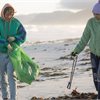
Media release: Tauranga City Council | Tauranga has been selected as one of 300 cities worldwide to receive funding through the Bloomberg Philanthropies Youth Climate Action Fund, creating new opportunities for local rangatahi to turn their climate action ideas into reality.

University launches worldwide search for nature-focused researchers
15 Jul 2026
Media release | As governments and businesses around the world grapple with climate change and biodiversity loss, Waipapa Taumata Rau, University of Auckland is launching an international search for ten PhD researchers to help shape a more nature positive economy.

New entrant seeks to expand exploration portfolio
14 Jul 2026
Media release | Resources Minister Shane Jones has welcomed further investment interest in New Zealand's petroleum sector, with a recent new entrant seeking to expand its exploration interests in the offshore northern Taranaki Basin.

Fifth new petroleum application targets Taranaki
8 Jul 2026
Media release: New Zealand Government | An application targeting frontier deepwater in the Taranaki Basin marks the fifth permit application to prospect or explore for petroleum since the removal of the exploration ban, Resources Minister Shane Jones says.
