
New Plymouth residents say “no to LNG”
Fri 29 May 2026
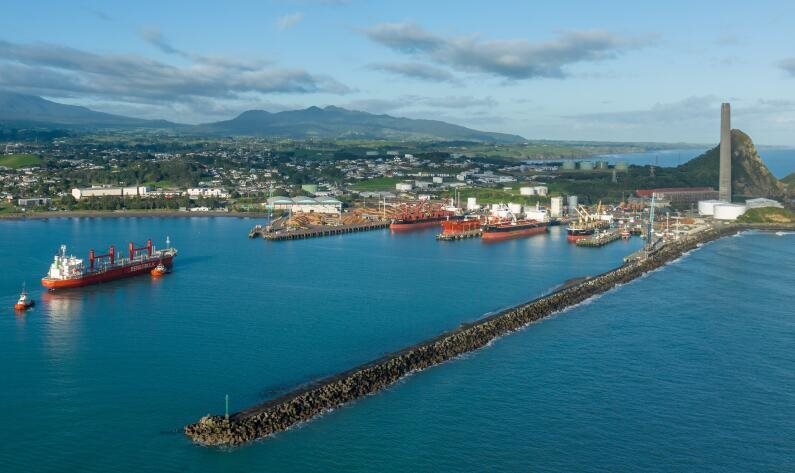
Media release: Climate Justice Taranaki | At a public meeting in New Plymouth this Tuesday attended by about 100 local residents, the vast majority signed an ‘Urgent Plea’ to stop the proposed Liquefied Natural Gas import facility, addressed to Prime Minister Christopher Luxon, Energy Minister Simeon Brown, and Cabinet Ministers.
The plea states that the residents, many living within 2km of Port Taranaki, find that the low probability but high impact risks and consequences of having a LNG import facility at the port, are unacceptable to them.
The residents also object to the government’s intention to enact ‘Enabling legislation’ (without any community consultation) which would allow the LNG facility to be built and operational, and a levy put on all electricity users (not just those using gas) to fund the project, now estimated to cost $2.7 billion or more.
They want the LNG proposal to be withdrawn altogether.
Instead of importing LNG, those who signed the plea want the government to support the many viable alternatives to the ‘dry-year risk’, such as shifting energy demand off peak and accelerating renewable energy generation, efficiency and storage.
The public meeting was jointly organised by Climate Justice Taranaki, Taranaki Energy Watch (TEW), and Community Energy Taranaki (CET), with speakers from the Sustainable Energy Forum, TEW and Rewiring Aotearoa.
“It was about informing the public on the wide range of problematic issues concerning the government’s LNG plan. It is also about stopping the bad so we can get on with the good stuff. The Levy proposed by the government is akin to fossil fuel subsidies. Every dollar spent on prolonging fossil fuel reliance and a dangerous ‘white elephant’ like this is a dollar less for sustainable local energy systems that empower communities and build a resilient economy,” said Catherine Cheung, spokesperson for Climate Justice Taranaki.
Discussion time following the presentations session drew out numerous questions and comments, including from engineers and concerned citizens who fought the first LNG proposal in 2008.
"The company who pushed for the LNG unloading, storage and regasification facility in Port Taranaki back in 2008 hadn’t anticipated that there were a number of engineers, including several LNG experts and other professionals living in New Plymouth, who could show that such a facility would put 31,600 people, 2 hospitals and 20 schools at risk from a 'low probably, high impact' catastrophic LNG accident.
As a result, the idea was quietly 'put on hold'”, said Ted Wells, retired planner and New Plymouth resident.
"Investing in an expensive, stop-gap LNG import terminal makes no economic sense when the global transition to cheap, distributed renewables is moving at an incredible pace. Building this infrastructure risks locking Kiwi consumers into higher power bills and outdated fossil fuels. Instead of importing gas, we should be investing in widespread solar and leveraging our existing hydro infrastructure as a massive, flexible battery to secure our winter energy needs”, commented Michael Lawley of EcoInnovation Ltd.
The idea about turning forestry slash into pellets to cover the dry-year risk was well received, as speaker Steve Goldthorpe's analysis showed “black pellet” generation at Huntly Power Station would be cheaper up-front, cheaper to run, and with significantly lower emissions than fossil fuel alternatives.
Community Energy Taranaki is about saying “yes” to increased electrification, and investing in renewable energy (especially distributed, local options like residential solar & storage), energy efficiency & storage to significantly reduce the hydro “dry year risk”.
The more renewable energy we have, the less we drain our hydro lakes and rely on them in winter. Viable alternative options include promoting solar uptake, wind farms, EVs (and allowing them to be used as batteries on those few evenings every year where supply is low and demand is high), and further supporting energy efficiency (like recently announced $1.2b Gas Transition Loan Scheme & by approving the Ratepayer Assistance Scheme, which is currently with Government for approval). CET works with Taranaki residents to support such initiatives.
Climate Justice Taranaki and the co-organisers will present the Urgent Plea signed by over 70 locals at the NPDC Public Engagement Committee meeting at the council chamber on Wednesday 3rd June at 2pm.
“Local councils need to understand what’s at stake - the danger to local residents, the liability if something happens, the financial costs and the loss of opportunity for a better, more resilient energy future. The Urgent Plea is just the beginning of our collective community opposition. We encourage everyone to write to the Prime Minister, the Energy Minister, local MPs and candidates to express their concerns about the coalition government’s LNG plan. We invite all to come along to the council meeting in support,” concluded Cheung.
print this story

Science losing the long game
Fri 29 May 2026
Media release: New Zealand Association of Scientists | Budget 2026 pushes the science system into a quiet purgatory, with zero announcements from the Minister’s office since 1 April.

Project linking food waste to cutting methane emissions gets underway
Wed 27 May 2026
Media release | Kai Commitment is leading a New Zealand-first project to help understand the connection between food waste and methane emissions and identify effective interventions.

VR tool helps communities plan for a safer, resilient future
Wed 27 May 2026
Media release: University of Canterbury | A newly developed virtual reality (VR) tool could help communities understand flood risks, raise public awareness and give decision-makers clearer information for planning.

Climate action key to affordable housing, but buildings decarbonisation stalls
21 May 2026
Media release: United Nations Environment Programme | Decarbonisation of the buildings and construction sector has slowed, leaving it both a major emissions source and increasingly vulnerable to climate impacts and energy price shocks, according to a new report from the UN Environment Programme and the Global Alliance for Buildings and Construction.

Human health appears unaffected by living near wind turbines
21 May 2026
Media release: PNAS | High-resolution data collected across the United States show negligible evidence of adverse health outcomes tied to wind turbine exposure, a study finds.
NZ energy leaders heading to Hawke’s Bay for business energy summit
20 May 2026
Media release: Hawkes Bay Chamber of Commerce | Some of New Zealand’s most senior energy sector leaders are heading to Hawke’s Bay next month for a business summit focused on the energy transition and what it means for regional industry.

Greenpeace's new fuel crisis scorecard: Coalition flunks, Labour offers few commitments
19 May 2026
Media release | As fuel prices remain high and the Budget looms closer, Greenpeace Aotearoa has released a scorecard ranking political parties on practical solutions to cut dependence on imported fossil fuels and shield households from oil and gas price shocks.

Fourth petroleum permit application enters competitive process
15 May 2026
Media release: New Zealand Government | The fourth petroleum exploration permit application since the removal of the exploration ban late last year has entered the open market competitive process, an encouraging signal of renewed confidence in investing in the country’s sector, Resources Minister Shane Jones says.
Combined climate extremes may prompt carbon budget rethink
14 May 2026
Media release: Springer Nature | Combined extreme climate events are likely to become more common in the future if carbon emissions continue to rise, a paper in Nature suggests.
