
VR tool helps communities plan for a safer, resilient future
27 May 2026
Media release: University of Canterbury | A newly developed virtual reality (VR) tool could help communities understand flood risks, raise public awareness and give decision-makers clearer information for planning.
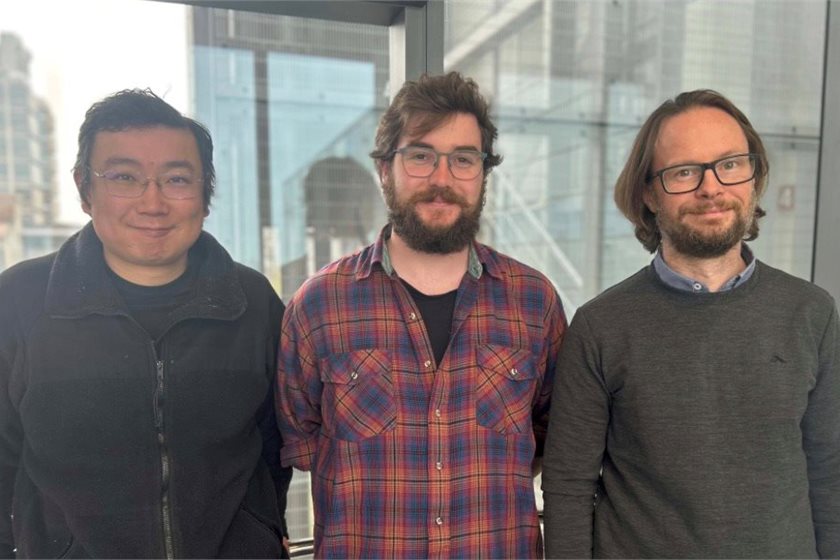
Professor Matthew Wilson, Director of the Geospatial Research Institute at Te Whare Wānanga o Waitaha | University of Canterbury, is leading the research team including Luke Parkinson (UC), Iain Grover (Te Rūnanga o Ngāi Tahu) and Xander Cai (UC), that is developing high resolution, dynamic visualisations of flood impacts under various scenarios.
By transforming complex flood modelling into realistic, interactive visualisations, the tool makes risks easier to grasp and gives communities and decision-makers the insights they need to plan for change.
Professor Wilson says floods are intensified by a combination of heavier rainfall and rising sea levels that increase the impact on low-lying areas, especially when they occur together. The loss of natural vegetation, for example through urbanisation, also aggravates flooding by speeding up how quickly water flows through catchments and magnifying its impact in communities.
“What we are doing is taking scenarios of flooding produced using hydraulic modelling and developing the technology to visualise them within virtual reality,” says Professor Wilson.
“If we represent potential community flooding in a more visually engaging, realistic way, we can help people to understand their flood hazards.”
Professor Wilson says a so-called ‘1-in-100-year flood’ doesn’t mean once in a century – it means there’s roughly a 26% chance of flooding over the 30-year life of a typical home mortgage. Some parts of New Zealand may face increasing challenges in remaining safely inhabited due to rising flood risks, which will require thoughtful, long-term planning and decision-making at both community and national levels.
While the VR tool can visualise flooding events in communities, it can also be used to show how interventions could reduce the severity of the flood.
“We can look at the outcomes of interventions at the catchment level using natural flood solutions such as wetland or native forest restoration.”
He says the tool could be used to compare flood scenarios before and after implementing interventions, showing how those can slow water flow and reduce flood severity.
“By visually comparing these outcomes, communities and decision-makers can better understand the tangible benefits of investing in natural flood solutions.
“My hope is that we will be able to take flood model outputs and automate our visualisation process, for any community in the country.”
This project is supported by the Natural Hazards Commission, with future development funded through MBIE’s Smart Ideas programme. It has been developed in partnership with Te Rūnanga o Ngāi Tahu’s geospatial and transformation teams, and the Ngāi Tahu Research Centre at the University of Canterbury.
print this story

Fifth new petroleum application targets Taranaki
Wed 8 Jul 2026
Media release: New Zealand Government | An application targeting frontier deepwater in the Taranaki Basin marks the fifth permit application to prospect or explore for petroleum since the removal of the exploration ban, Resources Minister Shane Jones says.
Government supporting Wairarapa farmers after heavy rain
6 Jul 2026
Media release | The Government is working closely with farmers and rural communities in the Wairarapa to assess the impacts of recent heavy rain, which has damaged local roads and bridges and caused significant erosion on hillside farms.
Tarakihi on verge of extinction: Stock collapse exposes major fisheries management failings
3 Jul 2026
Media release: Environmental Defence Society | Fisheries NZ is consulting on new sustainability measures for the country’s two tarakihi stocks.
New report sounds alarm on risks of unregulated radioactivity from deep-sea mining
3 Jul 2026
Media release | A groundbreaking scientific report released today by the Deep Sea Mining Campaign exposes a critical, unaddressed threat to global ocean health: the mobilisation of naturally occurring radioactive materials by proposed deep sea mining operations.
Next Govt must restart action on plastic pollution
1 Jul 2026
Media release - Zero Waste Aotearoa | Plastic Free July begins with an urgent call to put plastic pollution back on the political agenda. Plastic Free July is a worldwide campaign to reduce plastic waste and eliminate single use plastics.
Fed Farmers back National’s plan to slash solar red tape
30 Jun 2026
Media release | Federated Farmers says the National Party's commitment to make small-scale solar projects a permitted activity is exactly the commonsense farmers need.

What whale poo reveals about survival in warming seas
30 Jun 2026
Media release: University of Auckland | During his morning runs, Rod Keogh had no doubt that the whale poo he saw washed up on the beach had value. Science has finally caught up with him.

The Reality of Everything: A sold-out symposium at VUW
25 Jun 2026
Media release: Victoria University of Wellington | What do rising grocery bills, soaring insurance premiums, food producers under pressure, and growing international instability have in common? According to organisers of The Reality of Everything Symposium in Wellington, they are all part of a much bigger story – one that New Zealanders urgently want to understand.

New map highlights mining threat associated with controversial conservation reforms: Greenpeace
24 Jun 2026
Media release | Greenpeace has launched an interactive online map exposing the overlap between known deposits of minerals the Government has deemed "critical" and the public conservation land that would be easier to sell off and exploit under the Government's Conservation Amendment Bill.

Sustainability profession ‘comes of age’ – but pressure remains beneath the surface
24 Jun 2026
Media release: Sustainable Business Council | New research shows the sustainability profession in Aotearoa New Zealand has firmly established itself at the centre of business strategy – but ongoing pressures around capability, career pathways and pay are threatening to stall its progress.
