
Australia's big companies face critical net zero investment gap
22 Jul 2025

Media release – Investor Group on Climate Change | New research reveals Australia’s highest emitting companies are failing to back their net zero commitments with adequate investment, highlighting the need for a strong 2035 emissions reduction target and net zero plans to ensure Australia’s transition.
The Investor Group on Climate Change (IGCC) and Pollination have released the first comprehensive analysis of how Australian companies translate climate commitments into capital allocation decisions.
The Financing Australia’s Corporate Climate Transition report finds a significant disconnect between corporate ambition and investment reality.
Despite 66% of ASX200 companies making net zero commitments, few have adequately integrated climate considerations into their capital allocation processes. This investment gap between ambition and action highlights a weakness in Australia's transition to net zero without strong policies that ensure adequate private investment.
Major companies fail to align with commitments
Testing a new evaluation framework against 12 major ASX-listed companies in high emitting sectors highlighted the concerning gap.
Only one company achieved high alignment in more than 50% of criteria, while three companies showed low alignment across half or more criteria. While 75% of companies demonstrated medium or high alignment in transition investment quality, only one company met the high alignment criteria for actual capital quantity.
Policy certainty needed
This investment gap demonstrates why Australia needs a credible 2035 emissions reduction target coupled with comprehensive sectoral pathways that provide clear direction for each part of the economy to reach net zero by 2050.
A strong policy framework will give companies and investors certainty to make substantial capital commitments that align with their decarbonisation goals. The Climate Change Authority has recently released a sector pathways review which provides the foundation, but government action is needed to translate this into clear Sectoral Emissions Reduction Plans.
“This is the first deep dive into whether Australian companies are actually backing their net zero commitments with real investment,” said Richard Proudlove, IGCC Director of Corporate Engagement. “What we’ve found is a significant gap between ambition and action.
"Australia has the opportunity to lead in the transition, but without clear policy signals and adequate capital deployment, we risk being left behind and missing out on huge economic opportunities.”
A framework for better capital alignment
The report introduces a comprehensive framework with seven Guiding Principles across capital sourcing, management, deployment and enabling activities. It includes practical tools for investors and identifies ‘red flags’ indicating inadequate climate ambition.
“Companies are announcing capital expenditure numbers, but our analysis shows these disclosures don’t provide enough detail for investors to assess whether the capital is sufficient or appropriately targeted to achieve their stated decarbonisation goals,” said Zoe Whitton, Managing Director at Pollination Group.
“Without clear policy frameworks like sectoral pathways, companies lack the guidance they need for effective capital allocation, and investors can’t properly evaluate their transition strategies. This framework helps fill that gap.”
The framework was developed through global case studies, stakeholder interviews and evaluation of 12 major Australian companies. It supports the Climate Action 100+ initiative by providing sophisticated tools for investor-company dialogue on decarbonisation progress.
Effective climate transition requires capital allocation across entire sectors. This research provides crucial insights for policymakers designing the sectoral plans needed to accelerate Australia’s transition.
As the government prepares 2035 emissions reductions targets, this analysis reinforces the need for comprehensive sectoral pathways. Without clear policy signals, it will be increasingly difficult to close the investment gap, and Australia could miss out on the economic benefits of a decarbonised economy.
print this story

Fifth new petroleum application targets Taranaki
Wed 8 Jul 2026
Media release: New Zealand Government | An application targeting frontier deepwater in the Taranaki Basin marks the fifth permit application to prospect or explore for petroleum since the removal of the exploration ban, Resources Minister Shane Jones says.
Government supporting Wairarapa farmers after heavy rain
Mon 6 Jul 2026
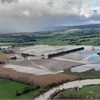
Media release | The Government is working closely with farmers and rural communities in the Wairarapa to assess the impacts of recent heavy rain, which has damaged local roads and bridges and caused significant erosion on hillside farms.
Tarakihi on verge of extinction: Stock collapse exposes major fisheries management failings
3 Jul 2026
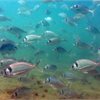
Media release: Environmental Defence Society | Fisheries NZ is consulting on new sustainability measures for the country’s two tarakihi stocks.
New report sounds alarm on risks of unregulated radioactivity from deep-sea mining
3 Jul 2026
Media release | A groundbreaking scientific report released today by the Deep Sea Mining Campaign exposes a critical, unaddressed threat to global ocean health: the mobilisation of naturally occurring radioactive materials by proposed deep sea mining operations.
Next Govt must restart action on plastic pollution
1 Jul 2026
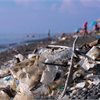
Media release - Zero Waste Aotearoa | Plastic Free July begins with an urgent call to put plastic pollution back on the political agenda. Plastic Free July is a worldwide campaign to reduce plastic waste and eliminate single use plastics.
Fed Farmers back National’s plan to slash solar red tape
30 Jun 2026
Media release | Federated Farmers says the National Party's commitment to make small-scale solar projects a permitted activity is exactly the commonsense farmers need.

What whale poo reveals about survival in warming seas
30 Jun 2026
Media release: University of Auckland | During his morning runs, Rod Keogh had no doubt that the whale poo he saw washed up on the beach had value. Science has finally caught up with him.
The Reality of Everything: A sold-out symposium at VUW
25 Jun 2026
Media release: Victoria University of Wellington | What do rising grocery bills, soaring insurance premiums, food producers under pressure, and growing international instability have in common? According to organisers of The Reality of Everything Symposium in Wellington, they are all part of a much bigger story – one that New Zealanders urgently want to understand.

New map highlights mining threat associated with controversial conservation reforms: Greenpeace
24 Jun 2026
Media release | Greenpeace has launched an interactive online map exposing the overlap between known deposits of minerals the Government has deemed "critical" and the public conservation land that would be easier to sell off and exploit under the Government's Conservation Amendment Bill.

Sustainability profession ‘comes of age’ – but pressure remains beneath the surface
24 Jun 2026
Media release: Sustainable Business Council | New research shows the sustainability profession in Aotearoa New Zealand has firmly established itself at the centre of business strategy – but ongoing pressures around capability, career pathways and pay are threatening to stall its progress.
