
South Island marine reserves get the go ahead
15 Dec 2025
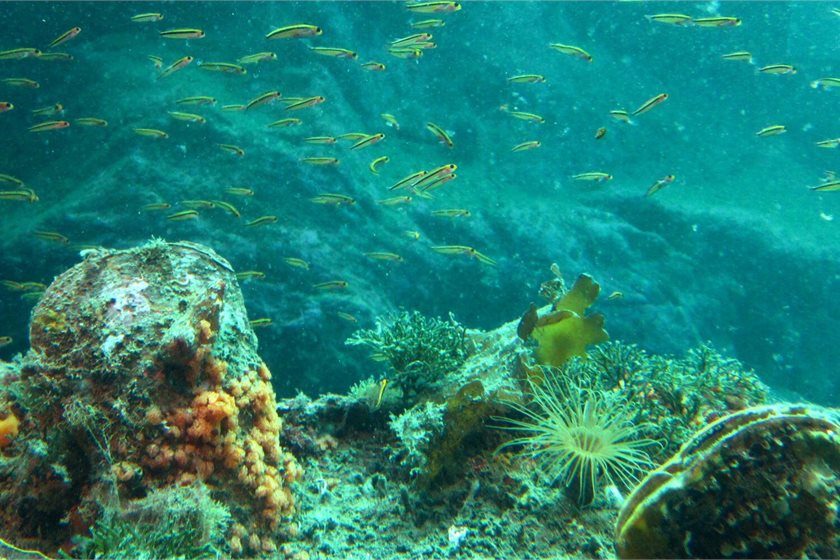
Media release: Environmental Defence Society | A new network of marine reserves off the Otago and south-Canterbury coast is being finalised after years of effort.
The reserves will contribute over 300km2 of new marine protection, safeguarding some of Aotearoa New Zealand’s rarest and most iconic marine ecosystems and species.
The reserves were approved by the previous Minister of Conservation, in October 2023, as the first phase of a wider network of marine protection and kelp restoration areas. But their implementation was delayed after the Otago Rock Lobster Industry Association (ORLIA) judicially reviewed the Minister’s decision.
The High Court has now approved an order resolving ORLIA’s challenge by consent.
“EDS has been actively engaged in settlement negotiations for many months and we are very pleased with the outcome,” says EDS Chief Operating Officer Shay Schlaepfer.
“The boundary of one of the reserves, the Te Umukōau Marine Reserve, will undergo limited reconsideration following targeted consultation. Importantly, the other five marine reserves can now be established without delay.
“EDS recently completed a case study of the Otago Coast (available here) and found that Otago’s extraordinary marine biodiversity is under increasing pressure. Endemic taonga species like hoiho (yellow-eyed penguin), pakake (New Zealand sea lion) and tutumairekurai (Hector’s dolphin,) which are deeply woven into Otago’s identity and integral to a thriving wildlife tourism economy, are dependent on maintaining healthy marine ecosystems.
“The new reserves will protect important habitat for these species, as well as ecologically significant and highly productive estuarine and tidal lagoons, rocky reefs, offshore canyons, giant kelp forests and deepwater lace coral thickets, which are increasingly threatened by a combination of fishing, sedimentation and climate change impacts.
“This latest network of marine reserves comes hot on the heels of new High Protection Areas in the Hauraki Gulf. Marine protection is incredibly hard to achieve, so these substantial gains which have been in the works for over a decade, are fantastic to see.
“The outcome is a positive step, but we must keep up the momentum. We need to do much more to have 30% of our marine environment effectively conserved in ecologically representative protected areas by 2030. EDS urges Ministers to now progress work on implementing the wider network of southern marine type 2 (seafloor protection) and kelp protection areas, as shown in the map below,” concluded Ms Schlaepfer.
EDS gives grateful thanks to Barrister Andrew Beatson for his pro bono legal representation through the negotiation process.
Further information about the new reserves is available here.
print this story
Public conservation land maps show risk of sale
Today 11:30am
Media release | Forest & Bird has today released new maps highlighting public conservation land across Aotearoa New Zealand that could be more exposed to development or sale.
Coromandel protections could be stripped away for mining through hidden law change
Wed 17 Jun 2026
Media release| Forest & Bird is warning that a hidden provision in the Government’s Conservation Amendment Bill could strip away long-standing protections and open up parts of the Coromandel Peninsula to mining.

ANZ confronted with petition and video screening after report exposes fossil fuel ties
Mon 15 Jun 2026
Media release: 350 Aotearoa | A petition signed by over 3000 New Zealanders was handed over to ANZ, calling on the bank to cut banking services to coal expansion companies. The petition comes as the annual ‘Banking on Climate Chaos’ report has confirmed that ANZ continues to back fossil fuel expansion.
Communities need to prepare for increased landslide risk
Fri 12 Jun 2026
Media release: Te Whare Wānanga o Waitaha University of Canterbury | New UC-led research shows where future Cyclone Gabrielle-like storms could cause more landslides and how communities can reduce the risk.

NZ’s largest rooftop solar switched on at Fisher & Paykel Healthcare
11 Jun 2026
Media release | Sunergise, New Zealand’s leading commercial solar company, has switched on the country’s largest-ever rooftop solar installation at Fisher & Paykel Healthcare’s East Tāmaki campus in Auckland.
Antarctic surface melt set to increase dramatically this century, new study finds
10 Jun 2026
Media release – Victoria University | New research shows surface melting across Antarctica is set to intensify and spread dramatically over the 21st century, with melt increasing by 10 times and the area affected growing by more than 10 percent by 2100 if global temperatures continue to rise.

The environment needs fixes now, says new director
5 Jun 2026
Media release: Auckland University | Innovative solutions to environmental problems are urgently needed, because our wellbeing depends on it, says Professor Dan Tompkins, the new director of the Centre for Climate, Biodiversity and Society, Ngā Ara Whetū, at the University of Auckland.

Entries open for 2026 Sustainable Business Awards
2 Jun 2026
Media release - Sustainable Business Network | Entries are now open for the 2026 Sustainable Business Awards, New Zealand’s pre-eminent sustainability awards. Now in their 24th year, the Awards celebrate outstanding innovation and leadership in sustainability.

Science losing the long game
29 May 2026
Media release: New Zealand Association of Scientists | Budget 2026 pushes the science system into a quiet purgatory, with zero announcements from the Minister’s office since 1 April.
New Plymouth residents say “no to LNG”
29 May 2026
Media release: Climate Justice Taranaki | At a public meeting in New Plymouth this Tuesday attended by about 100 local residents, the vast majority signed an ‘Urgent Plea’ to stop the proposed Liquefied Natural Gas import facility, addressed to Prime Minister Christopher Luxon, Energy Minister Simeon Brown, and Cabinet Ministers.
