
Native plant shows promise for tackling `forever chemicals’
11 Mar 2026
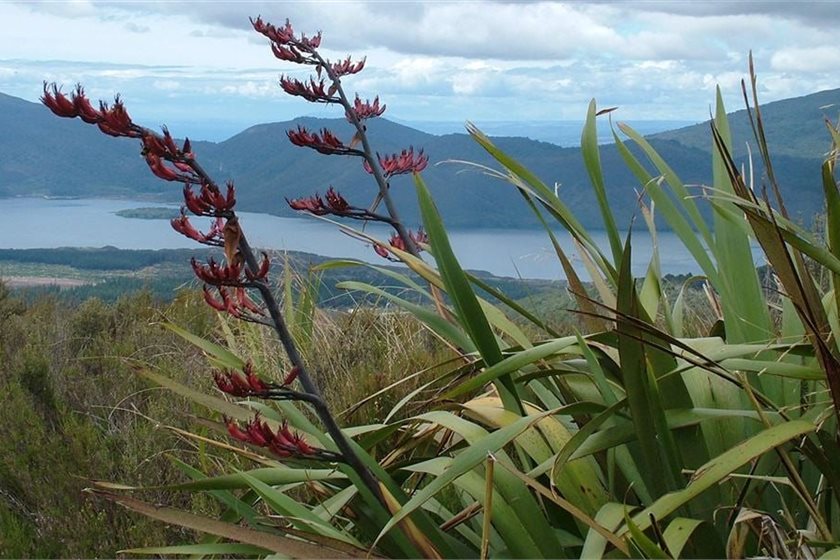
Media release: University of Auckland | One of Aotearoa New Zealand’s taonga plants, harakeke, shows promise as a treatment for removing “forever chemicals” from drinking water.
Known as per- and polyfluoroalkyl substances (PFAS), the chemicals are one of the greatest environmental challenges.
Linked to cancer and reduced fertility, PFAS are in the blood of humans and animals around the world.
In lab experiments at Waipapa Taumata Rau, University of Auckland, chemically treated harakeke outperformed other water treatment methods that were tested.
“Our research findings suggest there is a potential for developing a cost- effective PFAS treatment approach based on this native plant,” says Dr Lokesh Padhye.
He’s an honorary academic in the Faculty of Engineering and Design and the Associate Director of Emerging Contaminants Research at the New York State Center for Clean Water Technology.
“There is more work to be done, but the sustainability and availability of the material make it particularly promising,” says Padhye.
The “forever” name comes from the chemicals’ resistance to breaking down.
“Capturing forever chemicals would only add to the story of harakeke’s remarkable versatility,” says Professor Melanie Kah, of the School of the Environment.
Before colonisation, Māori used harakeke fibres for baskets, ropes, clothes, mats, bird snares and fishing nets, the nectar as a sweetener, dried flower stalks for rafts, the sap as a medicine, and root juice as a disinfectant. (By the way, the plant is a lily, not a flax.)
In the lab, treated harakeke fibre removed five PFAS from water, including three “short chain” PFAS, the most difficult ones to remove, says PhD student Shailja Data.
In the harakeke experiments, small containers held contaminated water and strands of processed harakeke chemically treated to attract the PFAS.
Mechanical shaking of the containers for 24 hours removed between 70 percent and 99 percent of individual short-chain PFAS, outperforming other materials tested in the study, says Data.
“The strength of the plant’s fibres is a big plus – they don’t easily fall apart,” she says.
The project spun off research by Professor David Barker, of the School of Chemical Sciences.
Back in 2019, Māori parents at his kids’ school objected to a harakeke cull, saying the plant cleaned stream water at the school.
Intrigued, Barker researched the plant under the University of Canterbury-led government-funded Science for Technological Innovation project. In tests, treated harakeke fibres removed nitrate from water, although his team moved on to other materials for that task.
The PFAS project is a collaboration between the University’s environmental, engineering, material and chemical scientists, stretching around the world now Padhye is at the New York State Center for Clean Water Technology at Stony Brook University.
Materials scientist Associate Professor Erin Leitao, who is in the School of Chemical Sciences and a co-author of a paper on the experiments, is leading research seeking alternatives to forever chemicals.
“Dealing with forever chemicals is a daunting task, but it must be done,” she says. Data, Barker and Leitao are all part of the MacDiarmid Institute for Advanced Materials and Nanotechnology.
print this story

Culture shapes the meaning of sustainability, NZ study finds
Mon 27 Jul 2026
Media release: Bioeconomy Science Institute | Cultural context changes what sustainability means to people, a new New Zealand study finds.

New funding round opens for Auckland zero waste projects – $500k available
Fri 24 Jul 2026
Media release | Auckland Council is inviting applications for the 2026 Waste Minimisation and Innovation Fund (WMIF) with $500,000 available to support projects that reduce waste and increase recycling and reuse to help achieve Auckland’s goal of zero waste by 2040.

Turning waste into climate-resilient soils for communities
Fri 24 Jul 2026
Media release: University of Canterbury | Christchurch’s Red Zone is being used as a test bed to see whether biological wastes (biowastes) can help transform contaminated soil into climate-resilient soil.

Dry-year reliability obligation should fall on generators, not major electricity users – MEUG
Thu 23 Jul 2026
Media release | The Major Electricity Users' Group (MEUG) is urging the Government to redesign its proposed dry-year reliability obligation so responsibility for securing New Zealand's electricity supply rests with generators rather than major electricity users.

Greenpeace launches legal challenge against US$2.5bn expansion by Premier Beehive parent company JBS
Thu 23 Jul 2026
Media release | Greenpeace Netherlands has petitioned a Dutch court seeking to compel the world’s largest meat company JBS, to disclose information, in order to challenge its business policies in court. This includes its planned US$ 6 billion global expansion, of which almost half is earmarked for Nigeria.
Select committee report on resource management guts environmental protections
22 Jul 2026
Media release | Forest & Bird says the Environment Committee report on the biggest overhaul of resource management law in Aotearoa New Zealand in a generation is bad news for nature.

Open Letter: Exercise restraint on LNG import facility decision ahead of the election
21 Jul 2026
The Smart Energy Alliance respectfully urges the Government not to enter into a binding commercial agreement for a liquefied natural gas (LNG) import facility in the period immediately preceding the General Election.
Tauranga secures international funding to support rangatahi climate action
16 Jul 2026
Media release: Tauranga City Council | Tauranga has been selected as one of 300 cities worldwide to receive funding through the Bloomberg Philanthropies Youth Climate Action Fund, creating new opportunities for local rangatahi to turn their climate action ideas into reality.

University launches worldwide search for nature-focused researchers
15 Jul 2026
Media release | As governments and businesses around the world grapple with climate change and biodiversity loss, Waipapa Taumata Rau, University of Auckland is launching an international search for ten PhD researchers to help shape a more nature positive economy.

New entrant seeks to expand exploration portfolio
14 Jul 2026
Media release | Resources Minister Shane Jones has welcomed further investment interest in New Zealand's petroleum sector, with a recent new entrant seeking to expand its exploration interests in the offshore northern Taranaki Basin.
