
Severe tropical cyclones Maila and Vaianu threaten communities in Solomon Islands, PNG and Fiji
8 Apr 2026
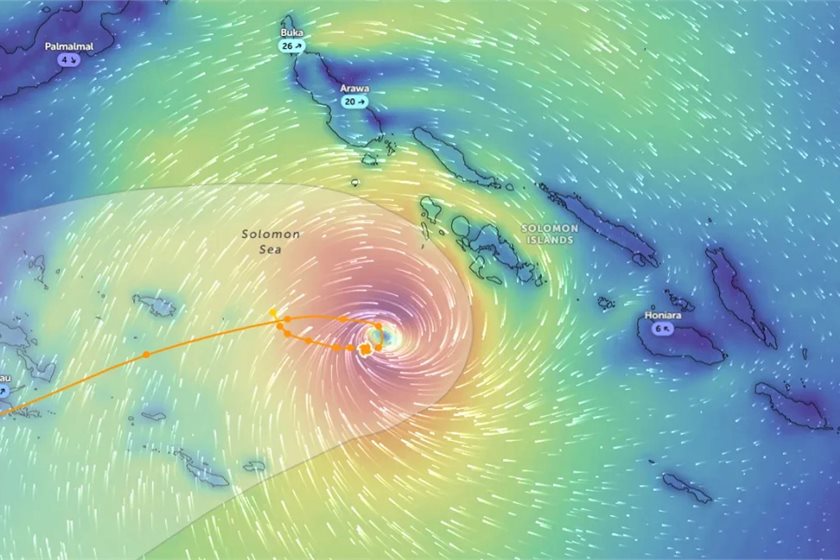
Media release: 350.org | Two Category 3 Tropical Cyclones are currently moving through the Solomon Islands, Papua New Guinea and Fiji, while experts watch a third system potentially developing in the North Pacific.
Warnings are in place for Fiji as Severe Tropical Cyclone Vaianu travels through the island group over the next 24 hours. A separate warning was issued for Solomon Islands and Milne Bay Province in Papua New Guinea, as Severe Tropical Cyclone Maila intensified to a Category 3.
Communities in the Pacific Island nations are already experiencing dangerous flooding, storm surge and loss of electricity and water.
Despite the region’s cyclone season typically running from November to April, experts say that the climate crisis has caused major weather shifts, possibly extending dangerous weather well into the month of May. These severe tropical cyclones typically bring limited energy access, loss of lives, agriculture and infrastructure, all placing an extensive burden on Pacific peoples and governments.
Vinzealhar Nen, 350.org Papua New Guinea Coordinator says, “There are already heavy rains and floods in New Britain areas and expected for coastal communities in Milne Bay. The development of Cyclone Maila has already interrupted power supply in these local communities, due to strong winds and damaged the powerlines.
While the small communities are being asked to move to higher ground, it will be difficult to move at a time like this. With the cyclone, so much is at stake. Homes will be destroyed, lives could be taken, injuries might not be treated due to lack of basic health services nearby and livelihoods will be affected. Many of the people from these communities rely on subsistence farming and fishing to earn their income.
These damages and trying to recover from them will cause many problems for the people from these communities once the cyclone passes through.”
The Pacific region has consistently faced the devastating impacts of intensifying cyclones, higher ocean temperatures and rising sea levels. These impacts have since been combined with the economic burden of rising fuel costs, placing remote islands at a disadvantage in both recovery and resilience.
Fenton Lutunatabua, 350.org Pacific & Caribbean Team Lead says, “We’re currently seeing two severe tropical cyclones impacting the Solomon Islands, Papua New Guinea and Fiji, with our brothers and sisters in the North Pacific also monitoring a weather system that could develop into a third cyclone.
"At some point we need to ask ourselves, who should fit the cost of these climate disasters? The communities that bear the physical and emotional brunt, or the coal, oil and gas CEOs that fuel them?
"Our teachers, farmers, health workers and parents are bracing for a cyclone period that could extend well into May. That’s beyond our typical cyclone season. The climate crisis is shifting the goalposts of what our people have to endure, and those most responsible for this crisis should also be responsible for some form of relief.”
print this story

Fifth new petroleum application targets Taranaki
Wed 8 Jul 2026
Media release: New Zealand Government | An application targeting frontier deepwater in the Taranaki Basin marks the fifth permit application to prospect or explore for petroleum since the removal of the exploration ban, Resources Minister Shane Jones says.
Government supporting Wairarapa farmers after heavy rain
6 Jul 2026
Media release | The Government is working closely with farmers and rural communities in the Wairarapa to assess the impacts of recent heavy rain, which has damaged local roads and bridges and caused significant erosion on hillside farms.
Tarakihi on verge of extinction: Stock collapse exposes major fisheries management failings
3 Jul 2026
Media release: Environmental Defence Society | Fisheries NZ is consulting on new sustainability measures for the country’s two tarakihi stocks.
New report sounds alarm on risks of unregulated radioactivity from deep-sea mining
3 Jul 2026
Media release | A groundbreaking scientific report released today by the Deep Sea Mining Campaign exposes a critical, unaddressed threat to global ocean health: the mobilisation of naturally occurring radioactive materials by proposed deep sea mining operations.
Next Govt must restart action on plastic pollution
1 Jul 2026
Media release - Zero Waste Aotearoa | Plastic Free July begins with an urgent call to put plastic pollution back on the political agenda. Plastic Free July is a worldwide campaign to reduce plastic waste and eliminate single use plastics.
Fed Farmers back National’s plan to slash solar red tape
30 Jun 2026
Media release | Federated Farmers says the National Party's commitment to make small-scale solar projects a permitted activity is exactly the commonsense farmers need.

What whale poo reveals about survival in warming seas
30 Jun 2026
Media release: University of Auckland | During his morning runs, Rod Keogh had no doubt that the whale poo he saw washed up on the beach had value. Science has finally caught up with him.

The Reality of Everything: A sold-out symposium at VUW
25 Jun 2026
Media release: Victoria University of Wellington | What do rising grocery bills, soaring insurance premiums, food producers under pressure, and growing international instability have in common? According to organisers of The Reality of Everything Symposium in Wellington, they are all part of a much bigger story – one that New Zealanders urgently want to understand.

New map highlights mining threat associated with controversial conservation reforms: Greenpeace
24 Jun 2026
Media release | Greenpeace has launched an interactive online map exposing the overlap between known deposits of minerals the Government has deemed "critical" and the public conservation land that would be easier to sell off and exploit under the Government's Conservation Amendment Bill.

Sustainability profession ‘comes of age’ – but pressure remains beneath the surface
24 Jun 2026
Media release: Sustainable Business Council | New research shows the sustainability profession in Aotearoa New Zealand has firmly established itself at the centre of business strategy – but ongoing pressures around capability, career pathways and pay are threatening to stall its progress.
