
Faster consenting, harder trade-offs
Today 12:45pm
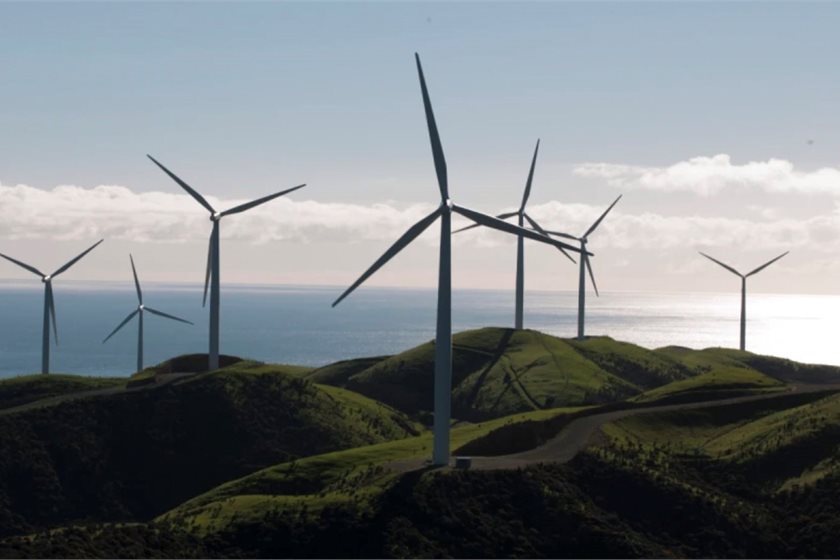
Faster consenting is starting to produce results, but this week's decisions show speed has not removed the harder trade-offs around electricity security, conservation, ecology and climate liability.
The Fast-track Approvals Act supplies the clearest examples. Panels have now approved Mercury's Mahinerangi wind expansion and advanced Lodestone's Haldon solar farm, applying the Act's test of whether adverse effects are out of proportion to a project's regional and national benefits.
That is a more directed question than the one courts used to ask under the old RMA framework. It still involves judgement, but it gives panels a clear instruction to weigh adverse effects against regional and national benefits, with the purpose of the Act given the greatest weight.
Measuring effects
That approach produced approval in both cases, but not because the effects were slight. At Haldon, the Lodestone panel accepted the effects package could not be shown to achieve no net loss for the most sensitive values, including the critically endangered outwash gravel ecosystem.
At Mahinerangi, the panel accepted the project only after late agreement with Ōtākou Rūnaka, changes to conditions and the removal of turbines from the Thomas Block and adjoining QEII covenant area.
The Pūkaki decision was made under the same Act, but pushes the argument further, into territory the fast-track regime did not create but has now been asked to referee. The panel found New Zealand has no purpose-built mechanism for deciding when a strategic hydro reserve should be preserved rather than drawn down, just an "uncoordinated combination" of RMA regional plans and Electricity Act triggers that nobody designed as a system.
Faced with that gap, the panel had to decide for itself how much weight Transpower, Meridian, the Electricity Authority and central government each carried on a question none of them owns outright. It also had to accept serious infrastructure risk around Genesis' Tekapo B power station, including a worst-case estimate it did not treat as determinative, before approving Meridian's temporary access to deeper Pūkaki storage.
Climate law
The Climate Change Response (Tort Liability) Amendment Bill takes the same underlying question and answers it in the opposite direction.
Rather than leaving climate-harm liability to be worked out case by case through the courts, the Government wants it kept inside the statutory climate framework set by Parliament and the executive. Justice Minister Paul Goldsmith calls that a "whole-of-economy" approach, as against what he casts as an ad-hoc judicial one.
The bill's timing, arriving before Smith v Fonterra reaches a substantive hearing, makes the intent explicit: certain kinds of environmental liability should not be decided by judges at all.
The Conservation Amendment Bill complicates any tidy version of this story. There, the Government retreated from expanding its own discretion over conservation land disposal after 75,000 submissions and sustained public pressure. That shows this week's pattern is not simply one of accumulating executive power by default. Public process still matters.
But the unresolved fight has shifted to clause 6, and to whether economic use and development should sit inside the Conservation Act's purpose. That is the same argument again: who decides what trade-offs are acceptable, and how much protection should be locked into law before ministers, panels, companies or courts begin weighing the benefits.
This story is republished from Energy and Environment as part of a copy sharing arrangement.
print this story

Contact: Protected geothermal fields must be opened to meet 2040 goal
Mon 6 Jul 2026
By Oli Lewis | A goal to double geothermal energy generation by 2040 using existing technologies is unachievable unless some protected fields are reclassified for development, Contact Energy says.
Fast-track panel backs proposed Haldon Solar Farm
Mon 6 Jul 2026
By Shannon Morris-Williams | The proposed Haldon Solar Farm in the Mackenzie Basin has moved to the final stages of the Fast-track Approvals Act process after the Fast-track Panel proposed granting approval for the project.
Taranaki offshore wind developer eyes mid-2030s commissioning after law change
Fri 3 Jul 2026
By Oli Lewis | The first offshore wind farm in New Zealand could be commissioned by the mid-2030s, with its developer saying a new permitting framework has bolstered investor confidence.

EECA seeks answers on NZ's future fuel mix
Fri 3 Jul 2026
By Shannon Morris-Williams | The Energy Efficiency and Conservation Authority is looking for specialists to assess the role future low-emissions fuels could play in New Zealand’s energy system.

Australia is at least ten years ahead of us on solar. It’s time we caught up.
Fri 3 Jul 2026
By Ed Harvey | OPINION: Starting this week, millions of households across New South Wales, South Australia and Southeast Queensland will have access to three hours of free electricity every single day.
Offshore renewable energy bill passes, opening path for developers
Thu 2 Jul 2026
By Oli Lewis | Feasibility permits for offshore wind developments could be issued within months after the Government passed a long-awaited law to establish a regulatory regime.

A tale of two electricity systems as NZ and Australia roll out new cost-saving measures
Wed 1 Jul 2026
By Oli Lewis | New rules requiring electricity retailers to offer time-of-use pricing plans, where consumers can access lower-cost electricity at off-peak times, have come into effect.

Savings gap doubles: all-electric households stand to save $3000 a year, report finds
29 Jun 2026
By Oli Lewis | The economic incentive for households to electrify has become more compelling, although overcoming upfront installation costs remains a barrier.

Lake Onslow pumped hydro consortium secures funding for consent push
26 Jun 2026
By Oli Lewis | The consortium behind Lake Onslow pumped hydro has secured funding to finalise its resource consent application, aiming to lodge it under the fast-track process before 2027.
