Carbon News
  • Members
    • Login
      Forgot Password?
    • Not a member? Subscribe
    • Forgot Password
      Back to Login
    • Not a member? Subscribe
  • Home
  • New Zealand
    • Politics
    • Energy
    • Agriculture
    • Carbon emissions
    • Transport
    • Forestry
    • Business
  • Markets
    • Analysis
    • NZ carbon price
  • International
    • Australia
    • United States
    • China
    • Europe
    • United Kingdom
    • Canada
    • Asia
    • Pacific
    • Antarctic/Arctic
    • Africa
    • South America
    • United Nations
  • News Direct
    • Media releases
    • Climate calendar
  • About Carbon News
    • Contact us
    • Advertising
    • Subscribe
    • Service
    • Policies

Contact: Protected geothermal fields must be opened to meet 2040 goal

6 Jul 2026

Depositphotos
Image: Depositphotos

By Oli Lewis

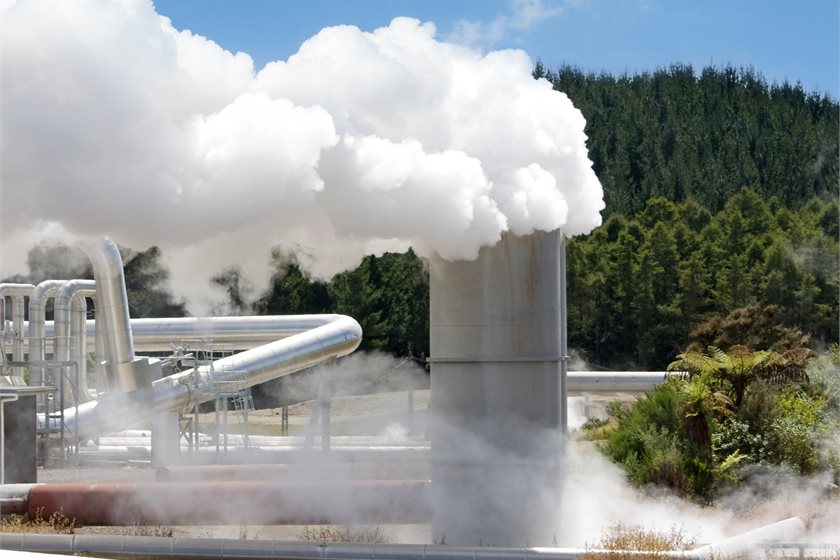
A goal to double geothermal energy generation by 2040 using existing technologies is unachievable unless some protected fields are reclassified for development, Contact Energy says.

Under the Resource Management Act (RMA), regional councils classify how geothermal systems can be used, taking into account various cultural, scientific, and economic development factors.


Because the resource is largely concentrated in the Taupō Volcanic Zone, the Waikato Regional Council is one of the most influential regulators. The Council assigns one of five classifications to geothermal systems: development, limited development, research, protected, or small.


In March, Resources Minister Shane Jones released the From the Ground Up strategy, which is motivated by the goal of doubling geothermal energy use. 


“This strategy provides momentum by clearing barriers, speeding up development, giving investors confidence and giving developers a green light to get on with it,” Jones said at the time.


Around 18% of electricity in New Zealand comes from geothermal, which provides a reliable source of baseload generation. Geothermal energy is also used for direct heating. 


Contact calls for accelerated reclassifications


Last month, the Ministry of Business, Innovation, and Employment (MBIE) released submissions on the draft geothermal strategy.


Contact Energy, the largest geothermal electricity generator in New Zealand, was broadly supportive, but it urged the Government to go further and faster in order to meet the 2040 goal.


"The stated goal of doubling geothermal energy use by 2040 simply cannot be met using current geothermal technology unless some protected fields, under the Resource Management Act (RMA) are reclassified for development,” Contact said in its 2025 submission.


“We recommend that government works with industry to formulate a practical process for reassessing field development risk for current protected or research fields such as Reporoa."


Contact sought Government-led investment for the geoscience surveys needed to investigate systems for commercial viability, as well as greater urgency. 


"This activity is crucial to the central objective of the strategy, it therefore cannot be left to Horizon 3; the work must start immediately,” the company said, referring to the possibility of reclassifying fields.


“While we recognise the practical sense in utilising all available existing data, this should be driven with the purpose of unlocking new fields, rather than an abstract exercise that must be complete before reclassification is even considered.”


Contact recommended that the Government consider the use of National Policy Statements (NPS) to provide regional authorities with guidance on resource classification, allocation and protection.


Several other submitters also called for an NPS, including iwi/Māori. As MBIE identified in its summary of submissions, iwi/Māori organisations commented on the importance of Treaty of Waitangi partnership, Māori rights and interests with regard to geothermal, which is considered a taonga in Te Ao Māori, and the integration of indigenous knowledge.


Energy sovereignty calls for more geothermal 


The final strategy did include actions related to reclassifying geothermal systems.


The Horizon 1 timeframe (2026-2027) included a possible action to explore the role of policy direction for managing geothermal resources, including the role of national direction under the new resource management system.


In Horizon 2 (2028-2029), the strategy called for investigating the appropriateness of system classifications, drawing on data collation undertaken in Horizon 1.


In an interview with Carbon News, Jones said he had spoken with the minister for RMA reform, Chris Bishop, about developing an NPS for geothermal.


Jones said he was confident that work on the policy statement would be a priority under the new system, which the Government is legislating for with the Natural Environment and Planning bills. 


“I mean it is a Godzilla piece of legislation,” Jones said, adding that he and Bishop were aligned on the importance of a geothermal policy statement. 


“He shares my view that energy sovereignty, the simplification and opening up of opportunities for more geothermal, is a matter of national security.”


The strategy identified a need to update outdated regulations for geothermal and make it easier for developers and other parties to access data. Jones said existing data on geothermal was fragmented, and rules could differ between councils.


“That’s why I want to see a centralisation of power and authority through a national policy statement, because the Crown ultimately is responsible for energy security and energy resilience,” he said.


The Government has provided financial backing for geothermal energy, including $60 million from the Regional Infrastructure Fund to support supercritical geothermal research.


Relationships with Māori 


Asked if he was confident about meeting the 2040 goal, Jones said: “I think there’s a reward for being aspirational.”


The strategy had created a platform for stakeholders to aim towards a common target, he said, adding that Contact Energy wouldn’t be the only party that benefited from increased access to geothermal resources.


Jones, who with his New Zealand First hat on is campaigning for the big electricity gentailers to be broken up, was critical of Contact over its relationships with Māori landowners.


“I would expect Contact Energy to vastly improve their working relationship with the local Māori landowners because often access to the geothermal energy is on tāngata whenua land.”


A spokesperson for Contact said the company was a Te Tiriti aware organisation, with a commitment to being the preferred partner of tāngata whenua.


Contact recently held a summit with iwi/Māori partners in Taupō called Hui Taumata.


“We know the wider environment is changing. Laws, policies and decisions about natural resources continue to affect tāngata whenua rights and interests,” the Contact spokesperson said.


“Hui Taumata was a way for Contact to reaffirm that we want to be a better partner, build deeper, more enduring relationships together, grounded in trust, reciprocity and shared commitment to the sustainable management of Aotearoa New Zealand’s natural resources.”


Contact has continued to make major investments in geothermal energy.


In 2024, two new power stations with a combined investment value of $1.2 billion were commissioned in Taupō. In addition, Te Mihi Stage 2, part of the staged replacement of the Wairākei geothermal station, which was built in the 1950s, was expected to be online in the middle of 2027.


“We support the continued growth of geothermal energy use.  We want to ensure this low carbon, renewable energy source is unlocked for the benefit of all, and our economy.”

print this story


Story copyright © Carbon News 2026

Related Topics:   Energy Geothermal Politics Regulation Renewable energy

More >
Energy
More >

Clock ticks on Gas Security Fund as Tariki developer reports ongoing losses

Wed 15 Jul 2026

By Oli Lewis | A Canadian company advancing a major gas storage project in New Zealand continues to report ongoing losses.

$3m Govt boost for Tauranga geothermal energy

Tue 14 Jul 2026

By Liz Kivi | Resources Minister Shane Jones has announced a $3 million grant for the Gas to Geoheat Tauranga Geothermal System Project as part of the Government's plan to double geothermal energy by 2040.

Clutha River downstream from Roxburgh hydro dam

Batteries and full lakes flatten winter power peaks

Tue 14 Jul 2026

Large batteries and more strategic use of hydro generation are starting to flatten winter electricity price peaks, reducing reliance on expensive thermal generation.

The Collie Battery Energy Storage System (BESS) in Western Australia

NZ lagging in energy storage investment – report

Tue 14 Jul 2026

Investment in energy storage is maturing globally, with the need for resilient and flexible power driving demand for storage, but New Zealand has some catching up to do, according to a new report.

Mark Humphreys, chief revenue officer APAC at Gentrack

Shining a light on Trans-Tasman solar reforms

Tue 14 Jul 2026

OPINION: The real test of solar reforms is how fast retailers can turn new rules into working tariffs, writes Mark Humphreys.

'Get on with it': Greens push for pre-election solar law

9 Jul 2026

By Shannon Morris-Williams | The Green Party is calling on Parliament to pass legislation enabling low-cost household solar finance before the election, arguing there is now cross-party support following Labour's SolarSaver announcement and National's earlier Home Energy Fund pledge.

Govt backs hydrogen with national industry summit

9 Jul 2026

By Oli Lewis | The Government is convening a major hydrogen conference to promote awareness and uptake of the alternative fuel.

Pūkaki consent puts dry-year rules in spotlight

8 Jul 2026

Meridian Energy’s approval to draw Lake Pūkaki below its normal operating range has exposed a gap in New Zealand’s electricity security arrangements.

Faster consenting, harder trade-offs

7 Jul 2026

Faster consenting is starting to produce results, but this week's decisions show speed has not removed the harder trade-offs around electricity security, conservation, ecology and climate liability.

Carbon News

Subscriptions, Advertising & General

[email protected]

Editorial

[email protected]

We welcome comments, news tips and suggestions - please also use this address to submit all media releases for News Direct).

Useful Links
Home About Carbon News Contact us Advertising Subscribe Service Policies
New Zealand
Politics Energy Agriculture Carbon emissions Transport Forestry Business
International
Australia United States China Europe United Kingdom Canada Asia Pacific Antarctic/Arctic Africa South America United Nations
Home
Markets
Analysis NZ carbon price
News Direct
Media releases Climate calendar

© 2008-2026 Carbon News. All Rights Reserved. • Your IP Address: 2600:1f28:365:80b0:2c73:81e6:548a:6a6d • User account: Sign In

Please wait...
Audit log: