
Planting mānuka might bring birds, bats and insects back to farms
23 Mar 2026
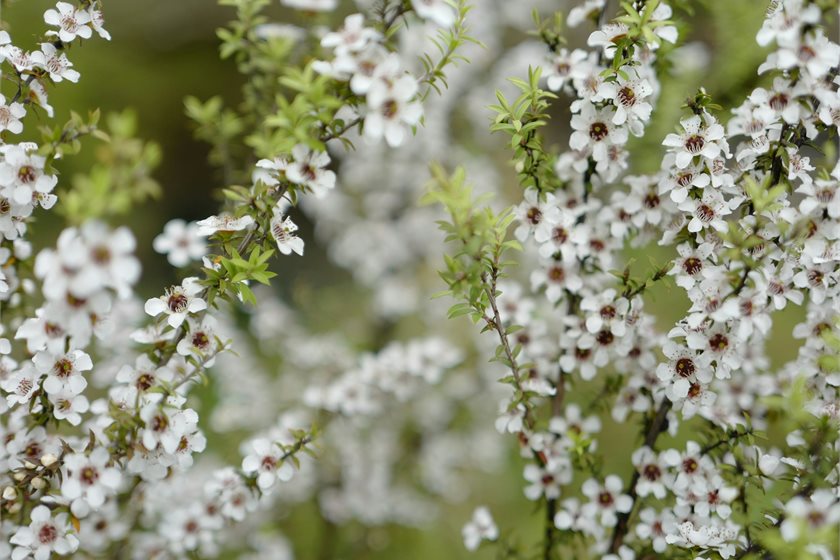
Media release | New research published today in the New Zealand Journal of Ecology shows that Mānuka forests planted to support honey production provide positive nature-related impacts.
Not only does planting Mānuka trees for honey collection deliver health and financial benefits for local communities and the national economy, this research shows that the industry is also good for the environment.
A collaboration between Comvita and scientists from the Bioeconomy Science Institute (formerly Plant & Food Research), the study demonstrates that planting Mānuka forests on former high-country marginal grazing land can significantly restore biodiversity in as little as five years. It also highlights the powerful role reforestation can play in improving ecological health and acting as a long-term carbon sink to help mitigate climate change.
Comvita Chief Science Officer, Dr Jackie Evans, said the findings confirm what the Comvita team has been observing in the field.
"The science now backs what we've been seeing on the ground - Mānuka planting delivers measurable, rapid gains for native ecosystems. That's significant, because it shows protecting nature and productive land use can genuinely go hand-in-hand."
The study found that these young planted Mānuka forests quickly become thriving habitats for native wildlife, supporting birdlife, insects and even endangered long-tailed bats, at levels comparable to old regenerating native Mānuka forests.
Researchers also found freshwater streams bordered by planted Mānuka forests show markedly improved ecological health, with higher macroinvertebrate scores than waterways running through pastoral catchments.
Conducted on a central North Island property, the study compared biodiversity across four stages of land-use transition, from grazed pasture through to planted and naturally regenerating Mānuka forests. The findings identified a critical ecological tipping point between years three and five after planting, when rapid gains in biodiversity emerge.
The results demonstrate that converting marginal grazing land into planted Mānuka forest can deliver positive environmental outcomes while creating new and sustainable land-use opportunities for landowners.
Lead author of the study, Dr David Pattemore, formerly Senior Researcher at the Bioeconomy Science Institute and now Managing Director of Bushcast Limited, says the findings highlight the ecological potential of mass Mānuka reforestation.
“What surprised us most was the speed at which biodiversity returned. By year five, the Mānuka plantings were already supporting diverse and abundant insect and bird communities very similar to those found in a 30-year-old regenerating Mānuka forest.”
Coinciding with the United Nations' International Day of Forests, this research reinforces the growing importance of nature-based solutions that restore ecosystems and biodiversity, while mitigating climate change and supporting resilient rural economies.
Comvita Limited CEO, Karl Gradon, said the research is a reflection of how Comvita has always approached science and sustainability.
"Mānuka regeneration and biodiversity restoration are central to how Comvita operates. Since 2017, we have planted over 6 million Mānuka trees across New Zealand, creating more than 6,300 hectares of new Mānuka forest that is restoring biodiversity, improving water quality and to date has removed over 130,000 tonnes of carbon dioxide equivalent from the atmosphere.
“Research like this gives us confidence those efforts are delivering real environmental impact - and that the model is one others can build on.
“For the consumers who choose us, it also matters - it's independent confirmation that the choices they make have real environmental impact behind them."
The research has been published in the New Zealand Journal of Ecology and can be accessed here.
print this story
High Court hearing highlights the 'shrinking pool' for fisheries research and science
Today 11:00am
Media release: Environmental Law Initiative | At the close of a four-day High Court hearing challenging the government’s under-levying of the fishing industry, the Environmental Law Initiative (ELI) says more science, research and observer coverage is needed to protect marine wildlife and ecosystems from the impacts of fishing.

Forest owners call for wider FENZ review as funding changes considered
Today 11:00am
Media release - Forest Owners Association | The Government’s review of how Fire and Emergency New Zealand (FENZ) is funded should be accompanied by a wider examination of whether FENZ is delivering for rural communities, forest owners say.
Public conservation land maps show risk of sale
Thu 18 Jun 2026
Media release | Forest & Bird has today released new maps highlighting public conservation land across Aotearoa New Zealand that could be more exposed to development or sale.
Coromandel protections could be stripped away for mining through hidden law change
Wed 17 Jun 2026
Media release| Forest & Bird is warning that a hidden provision in the Government’s Conservation Amendment Bill could strip away long-standing protections and open up parts of the Coromandel Peninsula to mining.
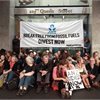
ANZ confronted with petition and video screening after report exposes fossil fuel ties
15 Jun 2026
Media release: 350 Aotearoa | A petition signed by over 3000 New Zealanders was handed over to ANZ, calling on the bank to cut banking services to coal expansion companies. The petition comes as the annual ‘Banking on Climate Chaos’ report has confirmed that ANZ continues to back fossil fuel expansion.
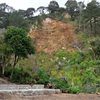
Communities need to prepare for increased landslide risk
12 Jun 2026
Media release: Te Whare Wānanga o Waitaha University of Canterbury | New UC-led research shows where future Cyclone Gabrielle-like storms could cause more landslides and how communities can reduce the risk.
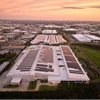
NZ’s largest rooftop solar switched on at Fisher & Paykel Healthcare
11 Jun 2026
Media release | Sunergise, New Zealand’s leading commercial solar company, has switched on the country’s largest-ever rooftop solar installation at Fisher & Paykel Healthcare’s East Tāmaki campus in Auckland.
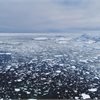
Antarctic surface melt set to increase dramatically this century, new study finds
10 Jun 2026
Media release – Victoria University | New research shows surface melting across Antarctica is set to intensify and spread dramatically over the 21st century, with melt increasing by 10 times and the area affected growing by more than 10 percent by 2100 if global temperatures continue to rise.

The environment needs fixes now, says new director
5 Jun 2026
Media release: Auckland University | Innovative solutions to environmental problems are urgently needed, because our wellbeing depends on it, says Professor Dan Tompkins, the new director of the Centre for Climate, Biodiversity and Society, Ngā Ara Whetū, at the University of Auckland.

Entries open for 2026 Sustainable Business Awards
2 Jun 2026
Media release - Sustainable Business Network | Entries are now open for the 2026 Sustainable Business Awards, New Zealand’s pre-eminent sustainability awards. Now in their 24th year, the Awards celebrate outstanding innovation and leadership in sustainability.
