
New dataset maps NZ’s energy demand to 2050
23 Mar 2026
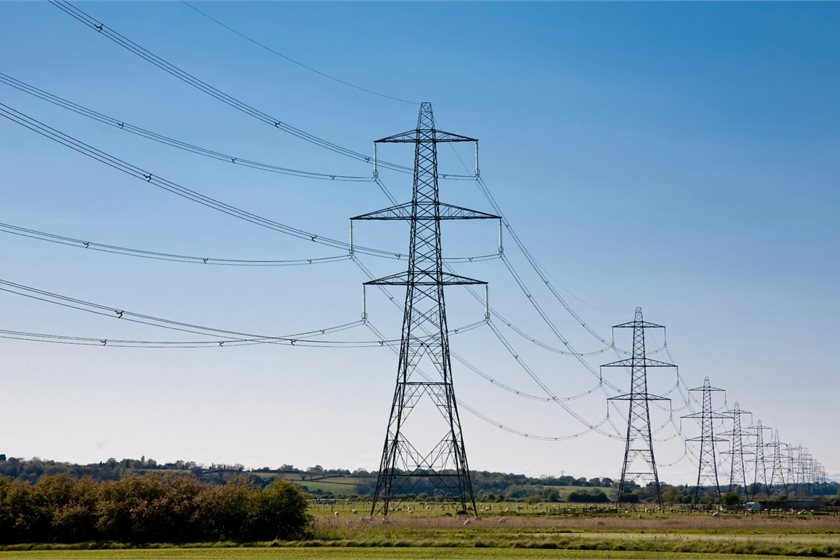
Media release: University of Canterbury | A new UC open dataset reveals how New Zealand’s hourly and regional energy demand could evolve by 2050.
Published in the journal Nature Scientific Data, the dataset provides publicly available projections of energy demand across three major sectors – electricity, heating and transport – under multiple future scenarios.
Lead author Rafaella Canessa, who will soon defend her PhD at Te Whare Wānanga o Waitaha | University of Canterbury (UC) and is now a postdoctoral researcher at ETH Zurich's Research Center for Energy Networks, says the work fills a critical gap in national energy planning.
“Reaching net zero is not only about expanding renewable energy supply, but also about how energy is used across homes, transport and industry,” she says.
“Our research presents a nationwide energy-demand dataset for New Zealand to 2050 across five transition pathways. The dataset provides regional detail for solid, liquid and gaseous fuels, including fossil, bio-based and synthetic carriers, and hourly resolution for electricity demand across sectors.”
The work provides a foundation for modelling New Zealand’s future net-zero energy system, Canessa says. “At UC’s Sustainable Energy Research Group (SERG), we are building on this dataset with deeper demand-side analyses and full energy-system optimisation, including the required electricity generation capacity and synthetic fuel production needed to achieve net zero.”
New Zealand’s shift toward electrification – including electric vehicles, heat pumps and new industrial demand – is expected to reshape the country’s energy system over coming decades.
Until now, there has been limited open data combining hourly demand patterns, regional differences, multiple sectors beyond electricity, and long-term projections to 2050.
The dataset is designed for broad reuse and highlights several important trends: transport and heating transitions are expected to play a major role in shaping future energy use; hour-by-hour modelling shows how future demand peaks could change, with implications for grid resilience and renewable integration; energy demand pathways vary across New Zealand’s regions; and increased electrification in transport and heat may progressively shift demand onto the electricity system.
UC project supervisor and co-lead of SERG, Dr Rebecca Peer, says the research strengthens understanding of future energy needs.
“This work helps contribute to our understanding of what our future energy needs might be. This is important for planning our future energy system and understanding different pathways to meet our net-zero commitments.
The main technical challenge was turning big-picture energy transition plans into detailed data that computer models can use, Dr Peer says. This meant combining national and regional data, modelling how different fuels and technologies might change over time, and making sure every scenario was internally consistent.
The dataset is published as a Data Descriptor article in Scientific Data, part of the Nature Portfolio, and is freely available for reuse.
print this story

High Court hearing highlights the 'shrinking pool' for fisheries research and science
Mon 22 Jun 2026
Media release: Environmental Law Initiative | At the close of a four-day High Court hearing challenging the government’s under-levying of the fishing industry, the Environmental Law Initiative (ELI) says more science, research and observer coverage is needed to protect marine wildlife and ecosystems from the impacts of fishing.

Forest owners call for wider FENZ review as funding changes considered
Mon 22 Jun 2026
Media release - Forest Owners Association | The Government’s review of how Fire and Emergency New Zealand (FENZ) is funded should be accompanied by a wider examination of whether FENZ is delivering for rural communities, forest owners say.
Public conservation land maps show risk of sale
Thu 18 Jun 2026
Media release | Forest & Bird has today released new maps highlighting public conservation land across Aotearoa New Zealand that could be more exposed to development or sale.

Coromandel protections could be stripped away for mining through hidden law change
Wed 17 Jun 2026
Media release| Forest & Bird is warning that a hidden provision in the Government’s Conservation Amendment Bill could strip away long-standing protections and open up parts of the Coromandel Peninsula to mining.

ANZ confronted with petition and video screening after report exposes fossil fuel ties
15 Jun 2026
Media release: 350 Aotearoa | A petition signed by over 3000 New Zealanders was handed over to ANZ, calling on the bank to cut banking services to coal expansion companies. The petition comes as the annual ‘Banking on Climate Chaos’ report has confirmed that ANZ continues to back fossil fuel expansion.
Communities need to prepare for increased landslide risk
12 Jun 2026
Media release: Te Whare Wānanga o Waitaha University of Canterbury | New UC-led research shows where future Cyclone Gabrielle-like storms could cause more landslides and how communities can reduce the risk.

NZ’s largest rooftop solar switched on at Fisher & Paykel Healthcare
11 Jun 2026
Media release | Sunergise, New Zealand’s leading commercial solar company, has switched on the country’s largest-ever rooftop solar installation at Fisher & Paykel Healthcare’s East Tāmaki campus in Auckland.

Antarctic surface melt set to increase dramatically this century, new study finds
10 Jun 2026
Media release – Victoria University | New research shows surface melting across Antarctica is set to intensify and spread dramatically over the 21st century, with melt increasing by 10 times and the area affected growing by more than 10 percent by 2100 if global temperatures continue to rise.

The environment needs fixes now, says new director
5 Jun 2026
Media release: Auckland University | Innovative solutions to environmental problems are urgently needed, because our wellbeing depends on it, says Professor Dan Tompkins, the new director of the Centre for Climate, Biodiversity and Society, Ngā Ara Whetū, at the University of Auckland.

Entries open for 2026 Sustainable Business Awards
2 Jun 2026
Media release - Sustainable Business Network | Entries are now open for the 2026 Sustainable Business Awards, New Zealand’s pre-eminent sustainability awards. Now in their 24th year, the Awards celebrate outstanding innovation and leadership in sustainability.
