
High risk of economic losses from Cook Islands nodule extraction and sales – new study
12 Dec 2025
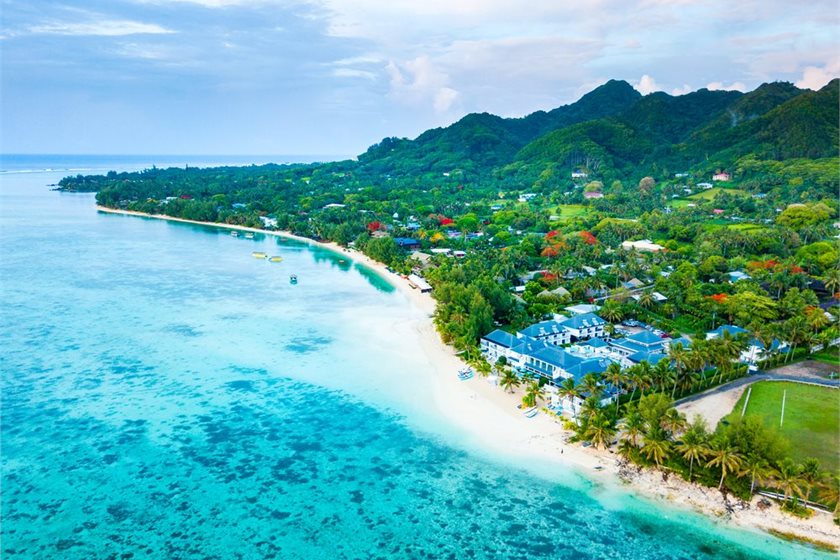
Media release: Greenpeace | The economic potential of seabed polymetallic nodules in the Cook Islands has been overstated, according to a new independent study commissioned by Greenpeace International.
The analysis shows that, once costs, market factors, and technological challenges are accounted for, deep sea mining for Cook Islands nodules is more likely to have a negative economic return.
Juressa Lee, Greenpeace Aotearoa seabed mining campaigner says: "Deep sea mining companies that have made bold claims to try and win social licence in places like the Cook Islands are now being exposed - their sales pitch simply doesn’t add up. Scientific warnings are crystal clear: deep sea mining will damage the oceans and harm biodiversity. Millions of people across the world, including people in the Cook Islands, are concerned about the threats posed by this industry. When you add the major financial risks, it’s hard to understand why anyone is still pushing this industry at all."
Polymetallic nodules are metal-rich rocks that sit on the deep seafloor, increasingly targeted by mining companies despite scientists’ warnings of severe ecological damage.
The new report highlights several reasons why the promise of these "golden apples" - as Cook Islands Prime Minister Mark Brown described the nodules - does not hold up. The author finds that the technologies required to extract the nodules have not been commercially demonstrated, noting that operating "at depths three times greater than the Deepwater Horizon and >15 times deeper than North Sea oil, pose significant challenges to reliable operation".
According to the author, the estimated operating costs at such depths are on a par with, or higher than, their expected market value, making commercial operations unviable.
According to this expert's assessment, there are no single processing facilities worldwide capable of converting raw nodules into saleable metals, and building new plants and supply chains would involve major technical and financial risks. Market outlook is weakest for cobalt and manganese, the primary components of value in Cook Islands nodules. The expert finds Cook Islands nodules' estimated market value is only US$100-140 per dry tonne, far below the level needed to support a profitable industry.
The release of the study comes as the deep sea mining frontrunner, Belgium's Global Sea Mineral Resources (GSR) announces its plan to divest its interests in the Cook Islands and refocus on activities in the Clarion-Clipperton Zone (CCZ). GSR intends to sell its share of the joint venture company Cobalt Seabed Resources (CSR), which was established to pursue mining in the Cook Islands.
Although no buyer has been officially named, local reporting has pointed to speculation about a possible sale to American company Wetstone, a newly formed company with little public track record and who seems close to former International Seabed Authority Secretary General, Michael Lodge.
Lee says: "The future of Pacific Island nations is inextricably linked to healthy oceans - yet this future is now at risk from proposals to open the deep sea to mining, whether within national or international waters. The Pacific Ocean, and the livelihoods it sustains, must be protected.
"Resistance to seabed mining in the Cook Islands and across the Pacific is strong and persistent. Pacific Peoples will not be sidelined by corporations and powerful countries trying to impose this new form of extractive colonialism on the region.
"Alongside our allies, who want to protect the ocean for future generations, we will continue to resist wannabe miners who want to strip the seafloor, causing irreversible harm for profits that are clearly far from guaranteed."
Greenpeace urges coordinated action from Pacific Island governments to safeguard their own waters by putting a ban on deep sea mining, while a global moratorium at the International Seabed Authority is needed to defend the ocean, which is of utmost importance to Pacific People's cultural, economic and environmental wellbeing.
print this story

Southern Ocean might be best place to fertilise for carbon dioxide removal
Today 12:15pm
Media release: Springer Nature | The Southern Ocean and parts of the Pacific near the equator may be the best places to fertilise if we want to remove the most carbon dioxide from the atmosphere while minimising the impact on the environment, according to international research.
Greenpeace calls for citizens assembly to reform electoral finance laws
Thu 30 Jul 2026
Media release | Greenpeace is calling on all political parties to support a citizens assembly to reform electoral finance laws in light of the alarming flood of political donations threatening to drown democracy in New Zealand.
Biochar market predicted to reach US$1.6 billion by 2035
Thu 30 Jul 2026
Media release: Transparency Market Research | Strong growth in the global biochar market will be driven by sustainable agriculture and carbon sequestration initiatives.
Culture shapes the meaning of sustainability, NZ study finds
Mon 27 Jul 2026
Media release: Bioeconomy Science Institute | Cultural context changes what sustainability means to people, a new New Zealand study finds.

New funding round opens for Auckland zero waste projects – $500k available
24 Jul 2026
Media release | Auckland Council is inviting applications for the 2026 Waste Minimisation and Innovation Fund (WMIF) with $500,000 available to support projects that reduce waste and increase recycling and reuse to help achieve Auckland’s goal of zero waste by 2040.

Turning waste into climate-resilient soils for communities
24 Jul 2026
Media release: University of Canterbury | Christchurch’s Red Zone is being used as a test bed to see whether biological wastes (biowastes) can help transform contaminated soil into climate-resilient soil.

Dry-year reliability obligation should fall on generators, not major electricity users – MEUG
23 Jul 2026
Media release | The Major Electricity Users' Group (MEUG) is urging the Government to redesign its proposed dry-year reliability obligation so responsibility for securing New Zealand's electricity supply rests with generators rather than major electricity users.

Greenpeace launches legal challenge against US$2.5bn expansion by Premier Beehive parent company JBS
23 Jul 2026
Media release | Greenpeace Netherlands has petitioned a Dutch court seeking to compel the world’s largest meat company JBS, to disclose information, in order to challenge its business policies in court. This includes its planned US$ 6 billion global expansion, of which almost half is earmarked for Nigeria.
Select committee report on resource management guts environmental protections
22 Jul 2026
Media release | Forest & Bird says the Environment Committee report on the biggest overhaul of resource management law in Aotearoa New Zealand in a generation is bad news for nature.
Open Letter: Exercise restraint on LNG import facility decision ahead of the election
21 Jul 2026
The Smart Energy Alliance respectfully urges the Government not to enter into a binding commercial agreement for a liquefied natural gas (LNG) import facility in the period immediately preceding the General Election.
