
UN Body agrees first methodology under Paris Agreement carbon market
5 Nov 2025
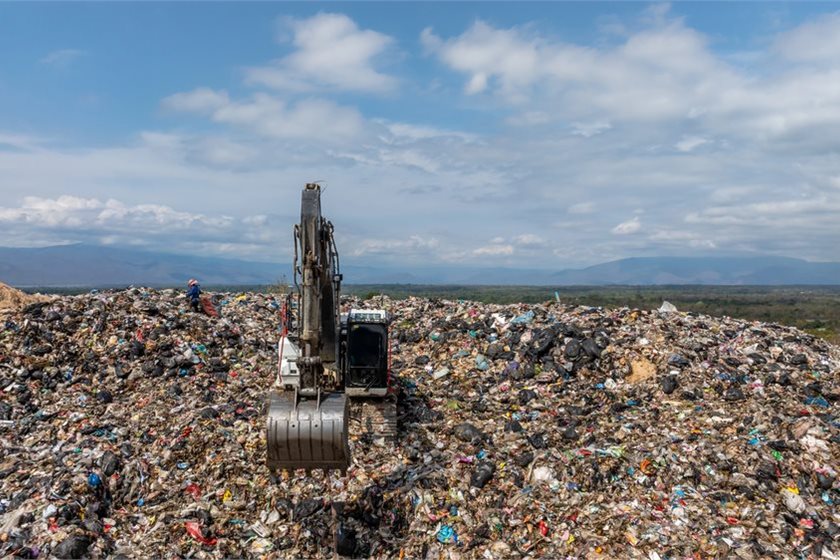
Media release | The UN body responsible for setting up an international carbon market under the Paris Agreement has agreed its first new methodology, which sets out how emissions reductions from a specific project type can be calculated.
This first Paris Agreement Crediting Mechanism methodology defines how methane emissions from landfill sites can be managed and qualify for UN-backed carbon credits, helping to address one of the most potent greenhouse gases and cutting climate-warming emissions.
It is the first project type to have a Paris-aligned methodology approved under the mechanism, and the first in the world to detail how alignment of the baseline with the Paris Agreement can work in practice.
It applies the concept of a downward adjustment to gradually reduce crediting levels over time, applying different rates to different solutions. Projects that simply burn off methane (flaring) see their crediting level fall more quickly, while projects that use methane to produce energy keep higher crediting levels for longer. This approach rewards better solutions, encourages innovation and avoids locking in less sustainable practices.
This marks a turning point, making the UN carbon market fully operational, as activities can now be submitted for registration using this first Paris-aligned methodology. Further methodologies for other project types, such as renewable energy, are expected to follow.
"This is a breakthrough for the Paris Agreement Crediting Mechanism – the first practical application of Paris-aligned crediting as expressed in our methodological standard adopted last year. As the world looks for credible ways to cut emissions and deliver on climate promises I hope this is only the first of many innovative methodologies." said Martin Hession, Chair of the Article 6.4 Supervisory Body.
"Starting with landfill methane, we’re showing how carbon markets aligned to the Paris Agreement can deliver real-world solutions - and there’s plenty more to come."
Alongside the landfill methane methodology, the Supervisory Body also adopted an investment analysis tool. The tool requires project developers to demonstrate additionality by showing that their activities would not be viable without revenue from carbon credits. This ensures that credits are only issued for actions that go beyond business as usual and genuinely contribute to climate goals.
Major outcomes in 2025
Since the agreement on carbon markets at COP29, the Supervisory Body has laid the groundwork for the Paris Agreement Crediting Mechanism to operate with integrity and transparency. This includes new standards for how projects measure their impact, covering how to estimate what emissions would have happened without the project (the ‘baseline’) and how to account for any unintended increases in emissions elsewhere (known as ‘leakage’).
The Body also adopted a reversal standard, aimed at ensuring climate gains from projects relying on the storage of emissions are not lost over time, and a standard to support projects in communities lacking basic needs.
Next steps at COP30
At COP30, the Body will present its annual report to Parties to the Paris Agreement, who may clarify or expand its mandate and guide future work on new methodologies and market rules.
Notes to editors:
-
The Paris Agreement Crediting Mechanism (also known as Article 6.4) is a carbon crediting mechanism established under the Paris Agreement. It allows countries to raise climate ambition and implement national action plans more affordably. It identifies and encourages opportunities for verifiable emission reductions, attracts funding to implement them, and allows cooperation among countries and other groups to conduct and benefit from these activities.
-
The Paris Agreement Crediting Mechanism has a Supervisory Body tasked with developing and supervising the requirements and processes needed to operationalize it. This includes developing and/or approving methodologies, registering activities, accrediting third-party verification bodies, and managing the Article 6.4 Registry.
-
For media enquiries, please contact press@unfccc.int.
print this story

Climate action key to affordable housing, but buildings decarbonisation stalls
Thu 21 May 2026
Media release: United Nations Environment Programme | Decarbonisation of the buildings and construction sector has slowed, leaving it both a major emissions source and increasingly vulnerable to climate impacts and energy price shocks, according to a new report from the UN Environment Programme and the Global Alliance for Buildings and Construction.

Human health appears unaffected by living near wind turbines
Thu 21 May 2026
Media release: PNAS | High-resolution data collected across the United States show negligible evidence of adverse health outcomes tied to wind turbine exposure, a study finds.

NZ energy leaders heading to Hawke’s Bay for business energy summit
Wed 20 May 2026
Media release: Hawkes Bay Chamber of Commerce | Some of New Zealand’s most senior energy sector leaders are heading to Hawke’s Bay next month for a business summit focused on the energy transition and what it means for regional industry.

Greenpeace's new fuel crisis scorecard: Coalition flunks, Labour offers few commitments
Tue 19 May 2026
Media release | As fuel prices remain high and the Budget looms closer, Greenpeace Aotearoa has released a scorecard ranking political parties on practical solutions to cut dependence on imported fossil fuels and shield households from oil and gas price shocks.

Fourth petroleum permit application enters competitive process
15 May 2026
Media release: New Zealand Government | The fourth petroleum exploration permit application since the removal of the exploration ban late last year has entered the open market competitive process, an encouraging signal of renewed confidence in investing in the country’s sector, Resources Minister Shane Jones says.
Combined climate extremes may prompt carbon budget rethink
14 May 2026
Media release: Springer Nature | Combined extreme climate events are likely to become more common in the future if carbon emissions continue to rise, a paper in Nature suggests.

Government biodiversity credit scheme welcomed as opportunity for restoration
12 May 2026
Media release | Forest & Bird says today’s Government announcement supporting the development of voluntary biodiversity credit schemes has potential to bring about much needed investment into nature restoration.
Stripy wind turbines could save some birds
8 May 2026
Media release: Royal Society Interface | Preventing birds from colliding with wind turbine blades could be as simple as a few paint stripes, according to international researchers, who say this could help protect wildlife as renewable energy expands.

More red lights for cars might mean more green lights for sustainable transport
7 May 2026
Media release: Royal Society Open Science | Reducing the amount of green light time for cars at traffic lights could encourage commuters to switch to more sustainable transport.

Stormwater conference to tackle growing flood risks and climate challenges
6 May 2026
Media release: Water New Zealand | More than 600 stormwater professionals will gather at the Water New Zealand Stormwater Conference and Expo to address one of our most pressing infrastructure challenges – how to manage stormwater in an era of more frequent and intense rainfall.
