
UC launches interactive tool for low-carbon urban planning
28 Oct 2025
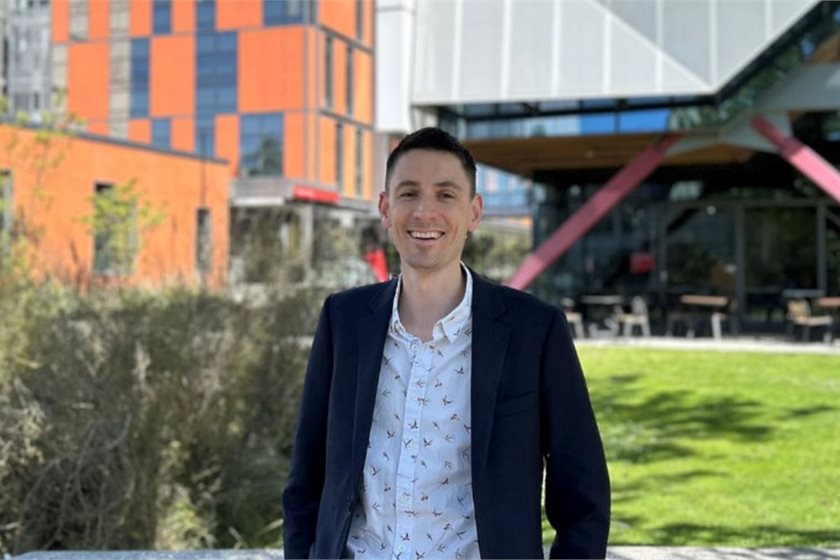
Media release | University of Canterbury researchers launch an interactive mapping tool to help urban planners and local councils design lower-carbon neighbourhoods.
The Carbon Neutral Neighbourhoods project transforms complex transport and emissions data into easy-to-understand visualisations across six towns and cities: Auckland, Hamilton, Wellington, Christchurch, Oamaru and Queenstown.
The multidisciplinary team, led by Professor Malcolm Campbell from Te Whare Wānanga o Waitaha | University of Canterbury’s (UC) School of Earth and Environment, includes UC Professor Simon Kingham, Dr Lindsey Conrow and Dr Tom Logan, with funding from the Building Research Association New Zealand.
Professor Campbell says the project’s focus is on developing a practical tool to make complex datasets accessible.
“There is a lot of data available on transport and emissions, but it can be difficult to engage with it in spreadsheets, so we created an app that presents the data in a user-friendly way, with a focus on community impact.”
The platform includes two main features: an emissions scenario controller that shows how changes in vehicle types affect carbon footprints, and a mode share visualiser that tracks transport patterns from recent census data. Users can adjust variables like the proportion of electric vehicles in an area and immediately see emissions impacts. For example, in some areas, increasing hybrid vehicles to 75% of an area’s transport fleet could reduce carbon emissions by nearly 45%.
“Transport is the second most important contributor to our emissions in New Zealand, meaning that changes in how we get around can have positive impacts for our environment,” Professor Campbell says.
The project also addresses the ongoing debate about whether urban development strategies should expand upwards or outwards to accommodate growth. “The research supports densification over urban sprawl, with modelling showing that low-density housing produces nearly four times the greenhouse gas emissions of high-density alternatives, mainly due to car dependence,” Professor Campbell says.
According to the research, Ōtautahi Christchurch vehicles account for between 40-90% of commuting trips, while active transport like walking and cycling are closer to 10%.
“It’s not just about where people live, but how their location affects their daily travel patterns and associated emissions,” Professor Campbell says. “In Christchurch, for example, a commuter from the outer suburb of Halswell travelling to the CBD is likely to generate nearly six times the CO₂ emissions of someone living in the inner suburb of Sydenham. This is crucial information when it comes to planning lower-carbon communities.”
The research also identifies several successful strategies used successfully in international cities that could work in similar contexts in New Zealand, including mixed-use development, improved public transport, and infrastructure that encourages walking and cycling.
The project has attracted interest from local and regional councils and urban planning consultancies, with requests for customised versions for their specific areas. It also aligns with government policies promoting urban density, such as the National Policy Statement on Urban Development.
The Carbon Neutral Neighbourhoods dashboard is available online here.
print this story
NZ energy leaders heading to Hawke’s Bay for business energy summit
Today 10:45am
Media release: Hawkes Bay Chamber of Commerce | Some of New Zealand’s most senior energy sector leaders are heading to Hawke’s Bay next month for a business summit focused on the energy transition and what it means for regional industry.
Greenpeace's new fuel crisis scorecard: Coalition flunks, Labour offers few commitments
Tue 19 May 2026
Media release | As fuel prices remain high and the Budget looms closer, Greenpeace Aotearoa has released a scorecard ranking political parties on practical solutions to cut dependence on imported fossil fuels and shield households from oil and gas price shocks.

Fourth petroleum permit application enters competitive process
Fri 15 May 2026
Media release: New Zealand Government | The fourth petroleum exploration permit application since the removal of the exploration ban late last year has entered the open market competitive process, an encouraging signal of renewed confidence in investing in the country’s sector, Resources Minister Shane Jones says.
Combined climate extremes may prompt carbon budget rethink
Thu 14 May 2026
Media release: Springer Nature | Combined extreme climate events are likely to become more common in the future if carbon emissions continue to rise, a paper in Nature suggests.

Government biodiversity credit scheme welcomed as opportunity for restoration
12 May 2026
Media release | Forest & Bird says today’s Government announcement supporting the development of voluntary biodiversity credit schemes has potential to bring about much needed investment into nature restoration.
Stripy wind turbines could save some birds
8 May 2026
Media release: Royal Society Interface | Preventing birds from colliding with wind turbine blades could be as simple as a few paint stripes, according to international researchers, who say this could help protect wildlife as renewable energy expands.

More red lights for cars might mean more green lights for sustainable transport
7 May 2026
Media release: Royal Society Open Science | Reducing the amount of green light time for cars at traffic lights could encourage commuters to switch to more sustainable transport.

Stormwater conference to tackle growing flood risks and climate challenges
6 May 2026
Media release: Water New Zealand | More than 600 stormwater professionals will gather at the Water New Zealand Stormwater Conference and Expo to address one of our most pressing infrastructure challenges – how to manage stormwater in an era of more frequent and intense rainfall.
EDS urges MPs to scrap the Fisheries Amendment Bill
5 May 2026
Media release | The Environmental Defence Society today lodged a substantive submission on the Fisheries Amendment Bill.

Christchurch youth to lead local climate action through global fund
5 May 2026
Media release: Christchurch City Council | Christchurch has been announced as one of 300 cities selected to take part in the Bloomberg Philanthropies Youth Climate Action Fund, a global initiative empowering young people to design and deliver practical climate solutions in their own communities.
