
Global survey finds 8 out of 10 people support taxing oil and gas corporations to pay for climate damages
23 Jun 2025
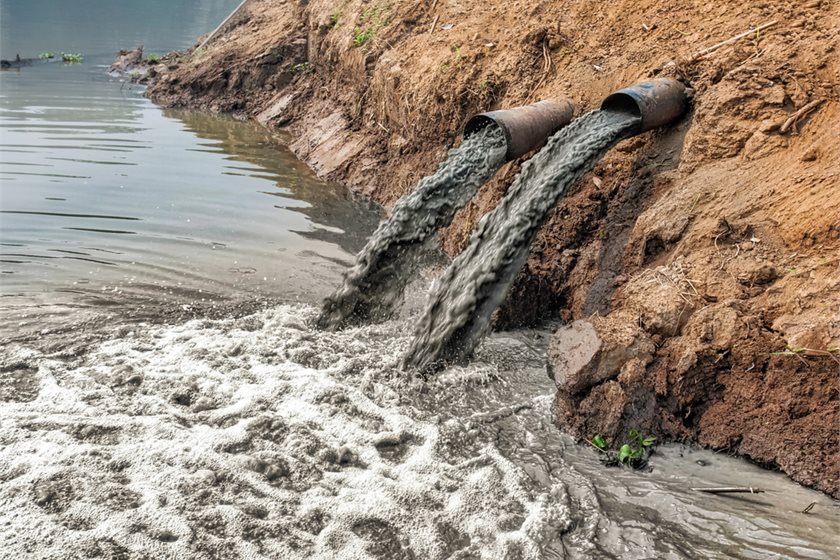
Media Release – Oxfam Aotearoa | Oxfam's research finds that 585 of the world's largest and most polluting fossil fuel companies made $583 billion in profits in 2024, a 68% increase since 2019.
A majority of people believe governments must tax oil, gas and coal corporations for climate-related loss and damage, and that their government is not doing enough to counter the influence on politics of the super-rich and polluting industries. These are the key findings of a global survey, which reflects broad consensus across political affiliations, income levels and age groups.
Today’s study, which was jointly commissioned by Greenpeace International and Oxfam International, was launched at the Bonn UN climate meetings (SB62 16-26 June), where governments are discussing key climate policy priorities, including ways to mobilise at least US $1.3 trillion annually in climate finance for Global South countries by 2035.
The poll was conducted across 13 countries, including most G7 countries. The study, run by Dynata, comes with additional research by Oxfam showing that a polluter profits tax on 590 oil, gas and coal companies could raise up to US $400 billion in its first year. This is equivalent to the estimated annual costs of climate damage in the Global South. Loss and damage costs from climate change to the Global South are estimated to reach between $290bn to $580bn annually by 2030.
Key findings of the survey include:
- 81% of people surveyed support new taxes on the oil, coal and gas industry to pay for damages caused by fossil-fuel driven climate disasters like storms, floods, droughts and wildfires.
- 86% of people in surveyed countries support channelling revenues from higher taxes on oil and gas corporations towards communities who are most impacted by the climate crisis. Climate change is disproportionately hitting people in Global South countries, who are historically least responsible for greenhouse gas emissions.
- When asked who should be taxed to pay for helping survivors of fossil-fuel driven climate disasters, 66% of people across countries surveyed think it should be oil and gas companies compared to than 5% who support taxes on working people, 9% on goods people buy, and 20% in favour of business taxes.
- 68% felt that the fossil fuel industry and the super-rich had a negative influence on politics in their country. 77% say they would be more willing to support a political candidate who prioritises taxing the super-rich and the fossil fuel industry.
Oxfam’s research finds that 585 of the world’s largest and most polluting fossil fuel companies made $583 billion in profits in 2024, a 68% increase since 2019. The annual emissions of 340 of these corporations (for whom data was available) accounted for over half of global greenhouse gas emissions caused by humans. Their emissions in just one year are enough to cause 2.7 million heat-related deaths over the next century.
A polluter profits tax on these companies would ensure that renewable energy is more profitable than fossil fuels, encouraging companies to invest in renewables, as well as avoid more deaths driven by fossil fuelled climate change. This new tax must be accompanied by higher taxes on the super-rich and other polluting companies. Governments should impose such taxes nationally and engage positively at the UN to ensure a fair global tax agreement.
Nick Henry, Climate Justice Lead for Oxfam Aotearoa, said: “This new poll shows that people support Oxfam’s call for our leaders to make polluting corporations pay for the damage they cause to our climate.”
“People understand that storms, floods, drought, wildfires, and other extreme weather events are being fuelled by oil and gas corporations. Instead of leaving communities exposed to deal with these devastating costs alone, governments can unlock huge sums of money to invest in climate solutions through making dirty energy companies pay,” said Rebecca Newsom, Global Political Lead for Greenpeace’s Stop Drilling, Start Paying campaign. “
The Polluters Pay Pact unites communities on the frontlines of climate disasters, concerned citizens, first responders like firefighters and humanitarian groups around the world to call on politicians to act now through making polluters, not people, pay for climate damages.”
Amitabh Behar, Executive Director of Oxfam International, said: “Mega-rich coal, oil and gas companies have known for decades about the damage their polluting products wreak on humanity. Corporations continue to cash in on climate devastation, and their profiteering destroys the lives and livelihoods of millions of women, men and children, predominantly those in the Global South who have done the least to cause the climate crisis. Governments must listen to their people and hold rich polluters responsible for their damages. A new tax on polluting industries could provide immediate and significant support to climate-vulnerable countries and finally incentivise investment in renewables and a just transition.”
Nick Henry continued: “Rather than subsidising new oil and gas drilling, and fast-tracking coal mines, our Government should be holding fossil fuel companies responsible for the costs facing our communities to adapt to climate change.”
print this story

Fifth new petroleum application targets Taranaki
Wed 8 Jul 2026
Media release: New Zealand Government | An application targeting frontier deepwater in the Taranaki Basin marks the fifth permit application to prospect or explore for petroleum since the removal of the exploration ban, Resources Minister Shane Jones says.
Government supporting Wairarapa farmers after heavy rain
6 Jul 2026
Media release | The Government is working closely with farmers and rural communities in the Wairarapa to assess the impacts of recent heavy rain, which has damaged local roads and bridges and caused significant erosion on hillside farms.

Tarakihi on verge of extinction: Stock collapse exposes major fisheries management failings
3 Jul 2026
Media release: Environmental Defence Society | Fisheries NZ is consulting on new sustainability measures for the country’s two tarakihi stocks.

New report sounds alarm on risks of unregulated radioactivity from deep-sea mining
3 Jul 2026
Media release | A groundbreaking scientific report released today by the Deep Sea Mining Campaign exposes a critical, unaddressed threat to global ocean health: the mobilisation of naturally occurring radioactive materials by proposed deep sea mining operations.
Next Govt must restart action on plastic pollution
1 Jul 2026
Media release - Zero Waste Aotearoa | Plastic Free July begins with an urgent call to put plastic pollution back on the political agenda. Plastic Free July is a worldwide campaign to reduce plastic waste and eliminate single use plastics.

Fed Farmers back National’s plan to slash solar red tape
30 Jun 2026
Media release | Federated Farmers says the National Party's commitment to make small-scale solar projects a permitted activity is exactly the commonsense farmers need.

What whale poo reveals about survival in warming seas
30 Jun 2026
Media release: University of Auckland | During his morning runs, Rod Keogh had no doubt that the whale poo he saw washed up on the beach had value. Science has finally caught up with him.

The Reality of Everything: A sold-out symposium at VUW
25 Jun 2026
Media release: Victoria University of Wellington | What do rising grocery bills, soaring insurance premiums, food producers under pressure, and growing international instability have in common? According to organisers of The Reality of Everything Symposium in Wellington, they are all part of a much bigger story – one that New Zealanders urgently want to understand.

New map highlights mining threat associated with controversial conservation reforms: Greenpeace
24 Jun 2026
Media release | Greenpeace has launched an interactive online map exposing the overlap between known deposits of minerals the Government has deemed "critical" and the public conservation land that would be easier to sell off and exploit under the Government's Conservation Amendment Bill.

Sustainability profession ‘comes of age’ – but pressure remains beneath the surface
24 Jun 2026
Media release: Sustainable Business Council | New research shows the sustainability profession in Aotearoa New Zealand has firmly established itself at the centre of business strategy – but ongoing pressures around capability, career pathways and pay are threatening to stall its progress.
