
New Kiwi methane venture gets $13.5M boost
25 Sep 2024
 |
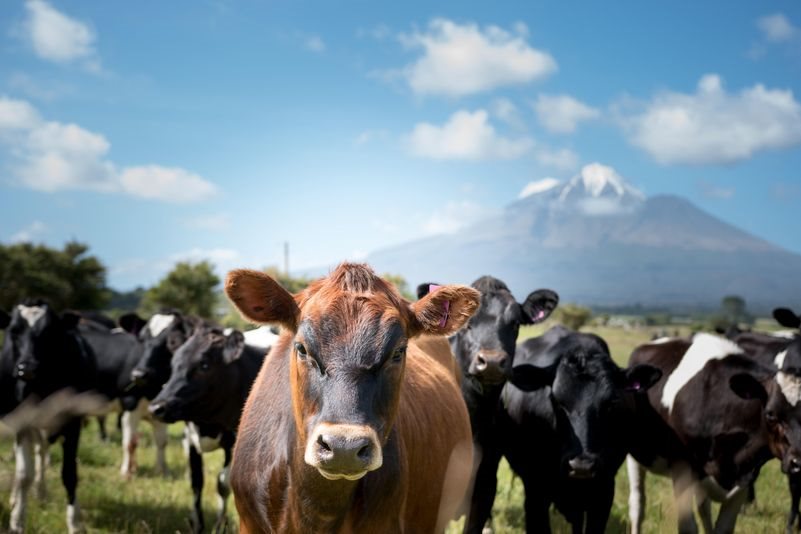
| PHOTO: AgriZeroNZ |
Media release | The two key players working to provide Kiwi farmers with tools to reduce emissions are stepping up their support of a methane vaccine with multimillion-dollar funding for new company, Lucidome Bio.
AgriZeroNZ and the New Zealand Agricultural Greenhouse Gas Research Centre (NZAGRC) are providing $13.5 million ($8.5M and $5M respectively) to Lucidome Bio, which is spearheading the next phase in the country’s pioneering methane vaccine research.
AgriZeroNZ chief executive Wayne McNee says it is pleased to boost its support for the research, following prior funding to set up the entity to attract international investors and accelerate development.
"A vaccine that reduces methane from ruminant animals would be a transformational tool for New Zealand’s agricultural sector and for farmers worldwide.
“It’s widely recognised as the holy grail to reduce emissions, as it’s a low cost, high-impact solution which has the potential to be adopted into all farming systems.
“We’re really pleased to be backing Lucidome Bio, alongside the NZAGRC, in a shared effort to get a vaccine to farmers sooner,” says McNee.
A successful vaccine would trigger an animal's immune system to generate antibodies in saliva that suppress the growth and function of methane-producing microbes (methanogens) in the rumen, significantly reducing the quantity of the potent greenhouse gas it burps out.
NZAGRC executive director Naomi Parker says the reliance on antibody production in saliva and the complex nature of the rumen makes this work incredibly challenging, however the progress to date gives confidence it can achieve success.
“We’re proud to be long-standing supporters of this work and help Lucidome Bio achieve a world-first by turning the vaccine’s research legacy into a safe and effective tool for farmers.
“This is no easy task, but the research team has made significant progress over the years and achieved many groundbreaking advancements which provide critical foundations to support future success.”
Lucidome Bio interim chief executive David Aitken welcomed the funding and emphasised the new venture’s commitment to technological innovation in tackling this global opportunity.
“We know farmers are looking for effective and affordable ways to reduce methane. Our vision is to help farmers feed the world while protecting our planet. We’re focused on making the technology breakthroughs needed to commercialise a safe, effective vaccine that reduces methane emissions at scale and addresses one of the world’s biggest climate change challenges.
“This funding will allow us to build the team, carry out field trials in animals and progress development of the vaccine for farmers,” says Aitken.
Lucidome Bio - which refers to its work to shine a light on innovations for the ruminant microbiome - builds on pioneering research led by AgResearch’s team of globally renowned immunologists and microbiologists.
It was established by AgriZeroNZ to bring together New Zealand’s vaccine technology, intellectual property, team and funding into a compelling investible entity and help deliver a world-first solution to market.
Prior to this, the research had received support and funding from multiple organisations including the Pastoral Greenhouse Gas Research Consortium and the New Zealand government (Ministry of Business Innovation and Employment; Ministry for Primary Industries) through the NZAGRC.
AgResearch will continue to be a critical partner, providing expertise with scientists being seconded to Lucidome Bio as well as access to research facilities. The Pastoral Greenhouse Gas Research Consortium also remains a shareholder alongside AgriZeroNZ.
The funding follows the announcement in August from the Bezos Earth Fund to provide USD $9.4million for an international consortium to build scientific evidence for a methane vaccine. Led by researchers at the Pirbright Institute and the Royal Veterinary College, the AgResearch scientists (now seconded to Lucidome Bio) will provide expertise in rumen microbiology and immunology.
print this story

Fourth petroleum permit application enters competitive process
Fri 15 May 2026
Media release: New Zealand Government | The fourth petroleum exploration permit application since the removal of the exploration ban late last year has entered the open market competitive process, an encouraging signal of renewed confidence in investing in the country’s sector, Resources Minister Shane Jones says.
Combined climate extremes may prompt carbon budget rethink
Thu 14 May 2026
Media release: Springer Nature | Combined extreme climate events are likely to become more common in the future if carbon emissions continue to rise, a paper in Nature suggests.
Government biodiversity credit scheme welcomed as opportunity for restoration
Tue 12 May 2026
Media release | Forest & Bird says today’s Government announcement supporting the development of voluntary biodiversity credit schemes has potential to bring about much needed investment into nature restoration.

Stripy wind turbines could save some birds
8 May 2026
Media release: Royal Society Interface | Preventing birds from colliding with wind turbine blades could be as simple as a few paint stripes, according to international researchers, who say this could help protect wildlife as renewable energy expands.

More red lights for cars might mean more green lights for sustainable transport
7 May 2026
Media release: Royal Society Open Science | Reducing the amount of green light time for cars at traffic lights could encourage commuters to switch to more sustainable transport.

Stormwater conference to tackle growing flood risks and climate challenges
6 May 2026
Media release: Water New Zealand | More than 600 stormwater professionals will gather at the Water New Zealand Stormwater Conference and Expo to address one of our most pressing infrastructure challenges – how to manage stormwater in an era of more frequent and intense rainfall.
EDS urges MPs to scrap the Fisheries Amendment Bill
5 May 2026
Media release | The Environmental Defence Society today lodged a substantive submission on the Fisheries Amendment Bill.

Christchurch youth to lead local climate action through global fund
5 May 2026
Media release: Christchurch City Council | Christchurch has been announced as one of 300 cities selected to take part in the Bloomberg Philanthropies Youth Climate Action Fund, a global initiative empowering young people to design and deliver practical climate solutions in their own communities.

Community feedback sought on plan to reduce emissions in the Kāpiti Coast
4 May 2026
Media release | Kāpiti Coast District Council is seeking feedback on its draft Emissions Reduction Plan that aims to cut the district’s greenhouse gas emissions as part of Council’s goal of a ‘net zero’ emissions by 2040.

Health-framed messages are twice as effective at shifting people's attitudes and policy support on climate change
4 May 2026
Media release: Global Climate and Health Alliance | Major study in Brazil, India, Japan and South Africa finds that evidence of climate risks to health increases public support for climate action twice as often as other climate-related messages.
