
Climate change is here and we’re all paying for it
Wed 15 Jul 2026
By Raewyn Peart
COMMENT: Another week, another storm. Just days ago, Kaikōura saw two months of rain fall within 48 hours, the most recent in a long line of adverse weather events.
The Wild Weather Tracker has documented 46 storms over 12 months, or almost one a week. The areas affected span the Far North to Southland. Few parts of the country are off limits.
Three in five New Zealanders report being impacted by natural hazards over the past year. Some have tragically lost their lives, others have lost their homes, and yet others have been cut off from services for weeks or months.
Our climate is warming fast, which means future storms will pack more punch, more wind, more rain, more storm surge and larger waves. Conversely, with the strongest El Niño on record currently developing, we are also facing prolonged drought. The question is – are we prepared? And who will ultimately pay the cost when we are not?
The Environmental Defence Society has been travelling the country interviewing people who have been impacted by weather events. We have also been talking to those looking to get ahead of the game by planning for, and implementing, timely adaptation.
It’s been an instructive exercise. Adverse weather events are traumatising for those involved. Forced to clamber out of rapidly flooding homes, or escape devastating slips, people can suffer severe anxiety whenever there is heavy rain. Then there’s the aftermath, the silted up homes, trashed belongings, and a realisation they will never again be able to live in the place they love.
Most people we interviewed bought their house when there was no indication of a natural hazard risk on council records. They relied on the fact that council had consented the house and saw this as a form of assurance that the house was well-founded and safe. Others took comfort in stopbanks that had been built to protect communities from flooding. No one was thinking of flood return periods, residual risk or climate change.
A key question is what can we learn from these events and how can we minimise damage in the future?
We have seen wild swings in government policy which can only be unhelpful. Under Labour, we saw a generous buy out scheme for those impacted by the 2023 Auckland Anniversary floods and ex-Cyclone Gabrielle. Homeowners received 95% of pre-event market value, which just happened to coincide with a near peak in the Auckland property market.
The current government has indicated property owners should not expect such generosity in the future, although it is not clear what support, if any, they can rely on. There is a policy vacuum. Faced with losing their home, their life savings and potentially saddled with a mortgage while trying to cover rent, there could be a grim future for those affected.
There has been some excellent adaptation planning, often council or iwi-led, which looks to provide safe new locations for affected communities. We have the Westport Masterplan, the South Dunedin Futures project, the Amberley Beach Coastal Adaptation Plan, the Maketu Climate Change Strategy and many more. But funding support has been lacking for their implementation.
Central government has been keen to fund stopbanks, investing nearly $200 million. This is a doubling down on engineering solutions. But as we saw in Hawke’s Bay, there can be catastrophic consequences when they are overwhelmed. The higher the stopbanks, the greater the damage when they are breached.
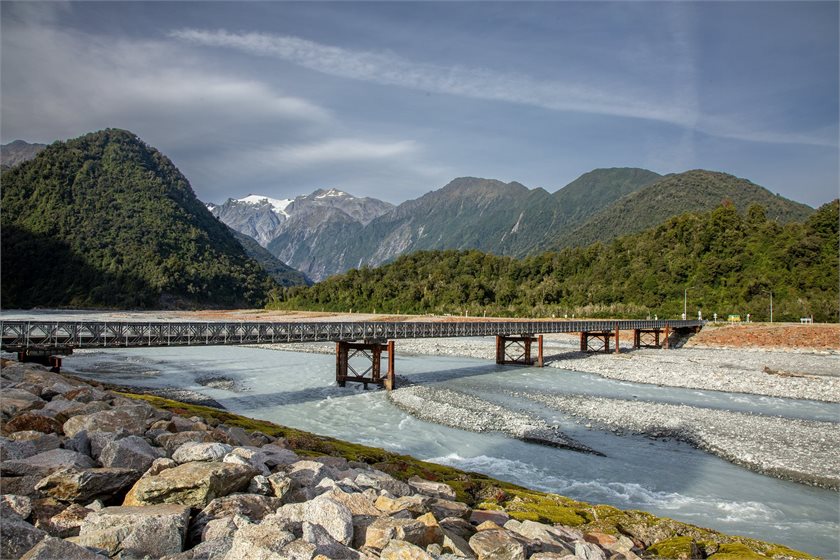
Franz Josef is a vivid example of this, where the riverbed is now up to 5 metres higher than the township. Government has recently contributed to building the stopbanks even higher but has not come to the party when it comes to letting the river go to the south, seen as the only lasting solution by river engineers and councils in the area.
There are also stark inconsistencies in the funding provided. Westport, a town of 4,600 which has repeatedly flooded, asked government for $45.5 million to build a circular floodwall and upgrade the stormwater system. It received just $22.9 million, and there is an estimated $10 to $15 million shortfall to complete the project. Wairoa, which has a similar-sized population, received three times that amount, $70 million, for a flood spillway.
In the end we all pay for the costs of natural hazards, in our taxes, our rates and personally if we are directly affected. What we need is robust and fair policy that ensures we are making the best decisions to minimise the costs for us all.
Raewyn Peart, EDS’s Policy Director, will discuss adaptation challenges with Marc Daalder from Newsroom at the Climate Change and Business Conference, Auckland, 7-8 September 2026.
print this story
Story copyright © Carbon News 2026

Government running out of time to lock in LNG import terminal deal before election
Today 11:45am
By Oli Lewis | Procurement for a floating LNG import terminal in Taranaki is well advanced, the Government says, but the clock is ticking to sign contracts before the election.

Pacific coral reefs face mounting climate threat – experts
Today 11:45am
By Shannon Morris-Williams | Coral reef scientists are warning that climate change is accelerating the decline of reef ecosystems across the Pacific, with rising ocean temperatures, marine heatwaves and sea-level rise threatening both biodiversity and the communities that depend on them.

Rich nations inflate climate finance as NZ urged to act
Today 11:45am
By Shannon Morris-Williams | Rich countries have overstated the value of climate finance delivered to developing nations by around US$100 billion in 2024, Oxfam says. The non-profit is urging New Zealand to increase its climate finance while applauding the country's strategy of allocating finance as grants rather than loans.
Climate law introduced requiring adaptation plans and reducing Commission's role
Wed 15 Jul 2026
By Oli Lewis | The Government has introduced legislation to amend the Climate Change Response Act (CCRA), which includes stripping the Climate Change Commission of one of its core roles, adds a new requirement for councils to produce adaptation plans for higher-risk areas, and updates ETS settings.

Clock ticks on Gas Security Fund as Tariki developer reports ongoing losses
Wed 15 Jul 2026
By Oli Lewis | A Canadian company advancing a major gas storage project in New Zealand continues to report ongoing losses.

Planetary Facts dashboard aims to make environmental costs visible
Wed 15 Jul 2026
By Shannon Morris-Williams | Consumers can now compare the environmental impacts of everyday products with a new online dashboard designed to do for sustainability what nutrition labels have long done for food.

Quarry land swap gains habitats, loses area for rare native trees
Wed 15 Jul 2026
By Justin Wong, Local Democracy Reporter | A proposed land swap could add better-quality natural habitats to the public conservation estate but at the expense of handing over parts of Belmont Regional Park that features rare native trees to expand Lower Hutt’s Belmont Quarry, according to a Department of Conservation (DOC) report.

What’s next for Sams Creek after failed mining bid?
Wed 15 Jul 2026
Max Frethey, Local Democracy Reporter | A controversial gold mining application at Sams Creek has been declined, leaving question marks hanging over the future of the land.

Climate remains top priority for Pacific leaders
Tue 14 Jul 2026
By Shannon Morris-Williams | Major regional events in Vanuatu and Fiji this month have underscored the Pacific's continued focus on climate action, with locally led innovation and sustainable farming highlighted as critical tools for tackling the region's environmental challenges.
