
Quarry land swap gains habitats, loses area for rare native trees
Today 12:30pm
By Justin Wong, Local Democracy Reporter
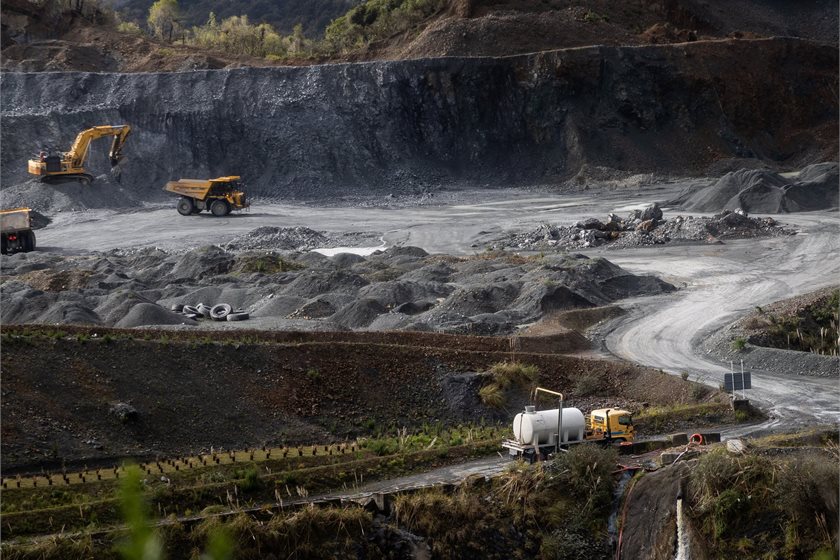
A proposed land swap could add better-quality natural habitats to the public conservation estate but at the expense of handing over parts of Belmont Regional Park that features rare native trees to expand Lower Hutt’s Belmont Quarry, according to a Department of Conservation (DOC) report.
A local conservation group argued a QEII covenant already protects most of those forests and they should be excluded from any calculations on the exchange’s ecological net gain. The quarry’s owners disagreed with some of DOC’s assessments.
Winstone Aggregates wanted to build a new site for its Belmont Quarry to dispose byproducts of rock extraction like clay and topsoil and extend the quarry’s lifespan by four decades.
The company suggested exchanging 34 hectares over four parcels of its land – known as Northern Gully, Southern Gully, Firth Block and the now-closed Dry Creek quarry – for about 24ha of the neighbouring Belmont Regional Park. The Government already approved the project for a panel to consider for a sped-up consent.
A QEII covenant, which protects private natural character land from being developed in perpetuity, covers the northwestern corner of Northern Gully and the entire Firth Block.
In DOC’s report on the exchange released earlier this month, the department’s experts analysed the conservation values of all land blocks, concluding the public would have a net gain on animal life and natural character from the swap but lose out on flora and recreation. There were no change on heritage and freshwater ecology.
The regional park land where the quarry wants to expand contained native trees and vegetation like mānuka/kanuka, tawa, kahikatea, ramarama, and within the area there were nine swamp maire, a nationally vulnerable native evergreen tree, according to advice from DOC botanist Matt Ward.
It also contains a 400m 4WD track that forms part of the Buchanan Road Tramping Track.
Ward ranked the indigenous flora value of the regional park land to be “moderate-high” but the land it was exchanging for was a combined “low-moderate”.
Even with Winstone’s offered improvements – including five years’ weeding, propagating 200 swamp maire at Southern Gully and 7000 indigenous plants at Dry Creek – they would lift their combined rating to “moderate” only.
In terms of animal habitat, DOC senior technical adviser Dr Rhys Burns’ report considered the forests at Northern Gully and Firth Block should offer “better quality” habitats than the regional park land, but Dry Creek and Southern Gully had “lower values across all criteria”.
He said Winstone’s five-year pest control pledge should slightly improve Southern Gully, as lower possum numbers should mean more food for birds.
Winstone planned to apply for the substantive sped-up consents by the end of month. The company’s own ecological assessments differed from DOC’s, saying the regional park land was predominately old pine and gorse.
“It is difficult to reconcile how it could overall be considered to have high value, particularly when compared to the regenerated native bush we are offering in return,” said its general manager Amanda Croft.
Although she conceded the lost recreational access could not be replicated like-for-like, the company wanted to build walking tracks “where it makes sense to”, including in Southern Gully.
Jonathan Ravens, a member of the Friends of Belmont Regional Park, said the exchange’s net ecological values would be negative if the calculations took the QEII-protected land out of consideration. That was the “morally and legally right thing to do”, he said.
“A lot of the land that isn't QEII protected is either already buried and overburdened,” he said. “There's not a lot of worth there. There's not a lot of value in what's left outside of the QEII blocks.”
Ravens and DOC’s report also doubted Winstone’s plans to plant swamp maire at Southern Gully would be successful because that was not a suitable location.
The company previously said under normal circumstances, a new disposal area at the quarry would need to run through three separate processes involving five different legislations, costing millions of dollars without guaranteed success
.
“If the Belmont expansion somehow doesn't proceed, the cost to build homes, schools, hospitals and roads here would increase substantially if aggregate has to be supplied from quarries outside the region,” Croft said.
LDR is local body journalism co-funded by RNZ and NZ On Air.

print this story
Climate law introduced requiring adaptation plans and reducing Commission's role
Today 12:30pm
By Oli Lewis | The Government has introduced legislation to amend the Climate Change Response Act (CCRA), which includes stripping the Climate Change Commission of one of its core roles, adds a new requirement for councils to produce adaptation plans for higher-risk areas, and updates ETS settings.

Clock ticks on Gas Security Fund as Tariki developer reports ongoing losses
Today 12:30pm
By Oli Lewis | A Canadian company advancing a major gas storage project in New Zealand continues to report ongoing losses.

Planetary Facts dashboard aims to make environmental costs visible
Today 12:30pm
By Shannon Morris-Williams | Consumers can now compare the environmental impacts of everyday products with a new online dashboard designed to do for sustainability what nutrition labels have long done for food.
Climate change is here and we’re all paying for it
Today 12:30pm
By Raewyn Peart | COMMENT: Another week, another storm. Just days ago, Kaikōura saw two months of rain fall within 48 hours, the most recent in a long line of adverse weather events.
What’s next for Sams Creek after failed mining bid?
Today 12:30pm
Max Frethey, Local Democracy Reporter | A controversial gold mining application at Sams Creek has been declined, leaving question marks hanging over the future of the land.

Climate remains top priority for Pacific leaders
Tue 14 Jul 2026
By Shannon Morris-Williams | Major regional events in Vanuatu and Fiji this month have underscored the Pacific's continued focus on climate action, with locally led innovation and sustainable farming highlighted as critical tools for tackling the region's environmental challenges.
$3m Govt boost for Tauranga geothermal energy
Tue 14 Jul 2026
By Liz Kivi | Resources Minister Shane Jones has announced a $3 million grant for the Gas to Geoheat Tauranga Geothermal System Project as part of the Government's plan to double geothermal energy by 2040.
Batteries and full lakes flatten winter power peaks
Tue 14 Jul 2026
Large batteries and more strategic use of hydro generation are starting to flatten winter electricity price peaks, reducing reliance on expensive thermal generation.

NZ lagging in energy storage investment – report
Tue 14 Jul 2026
Investment in energy storage is maturing globally, with the need for resilient and flexible power driving demand for storage, but New Zealand has some catching up to do, according to a new report.
