
Call for cross-party agreement on climate risks as NZ stuck in costly disaster cycle
8 May 2026
By Shannon Morris-Williams
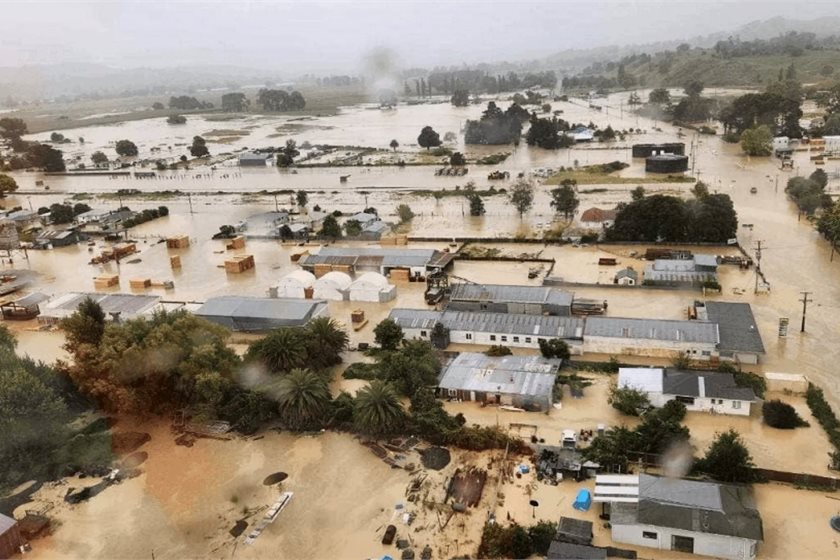
An expert is calling for cross-party ministerial appointments and lasting bipartisan agreement about how to act on significant climate risks the country is facing, in response to the Climate Change Commission’s latest report.
The commission yesterday released its latest National Climate Change Risk Assessment, issuing stark warnings and calling for urgent action to avoid the multi-billion-dollar costs of delaying climate resilience measures.
Professor of Political Science Bronwyn Hayward, University of Canterbury, said the report highlighted a serious disconnect between the threats New Zealanders are already experiencing and the highly partisan responses from political leaders.
"I not a fan of ‘climate emergencies’ (democratic processes matter too much) but today I am calling for cross-party NZ ministerial appointments to get lasting agreement about how to act on the serious climate risks we now face - like we did in World War Two," she wrote on Linkedin.
“[It’s] the kind of cross party cooperation that we saw to get the RMA over the line in the first place in 1987 when both Sir Geoffrey Palmer and Simon Upton worked across party lines.
"We [can’t] keep using the partisan adversarial thinking that has helped get us into this mess.
"We need renewed cooperation not coercion of local government or polarisation across parties to make lasting investments to protect [our] population, environment [and] economy.
She said the report highlights the far-reaching complex risks now faced by whole communities, business sectors, Iwi, cities and our natural environment. "Yet to date our political responses to these risks are inadequate, focused on individual responsibility, and politically partisan restructuring of ministries and local and regional government.”
Hayward said the consequences of climate inaction were already being felt by communities across the country, while political divisions were undermining efforts to respond effectively.
"At the very moment when we need cross party consensus to effectively plan, fund and deliver the protection that highly vulnerable New Zealanders, businesses and environments so badly need, we find our political leadership is divided both within the Coalition government and across party lines.
"In 2022 the IPCC Adaptation report highlighted how New Zealand as a country is at significant risk of governance failure. Like this risk report, they noted our local and central government agencies will struggle to coordinate action and find the funding needed to address the serious risks we now face as a nation.”
Hayward said the report should serve as a wake-up call that New Zealand was still responding to climate disasters as isolated events, rather than taking a coordinated long-term approach backed by cross-party political consensus.
"In many ways, unfortunately this risk report could not come at a worse time, as New Zealand heads into an election we need consensus not point scoring.
“The hazards highlighted in the report, like flooding, storms, droughts and illnesses that accompany our rapidly changing climate exacerbate other risks like the cost of living or secure food, energy and water supply. These hazards do not recognise a difference between voters – they will impact whole communities and businesses. We need cross party consensus to make effective long term change.”
'Pressure cooker'
Forest & Bird said the report showed New Zealand needed to work with nature to respond to climate change, warning decades of environmental degradation had compounded climate risks.
Climate spokesperson Scott Burnett said the risk assessment shows climate change is hitting Aotearoa “harder, faster, and in more places at once”.
“If we want to protect our native species and unique natural spaces, politicians must take urgent, bold, and achievable action on climate-changing emissions.
“Climate change from burning fossil fuels and methane from livestock are adding to frequent and severe floods, storms, and droughts. These risks are compounding because decades of poor land use, wetland destruction, and weak environmental protections have stripped away the natural defences that would have softened the blow.”
Burnett said a warming world is like a pressure cooker on New Zealand’s native species, worsening freshwater quality, eroding dunes, and putting forests at risk.
“Politicians at all levels of government can take action, now, to reduce the pressure and protect habitats,” he said.
“Continued use of fossil fuels is directly at odds with thriving wildlife and safe communities. We can choose a different path.”
Burnett said nature-based solutions and renewable energy projects were already showing how communities could improve resilience while protecting biodiversity and reducing emissions.
“We want politicians and leaders to move away from fossil fuels and invest in nature to protect the species, people, and places we treasure.
“Already, communities, iwi, and councils are showing what works: nature-based solutions and distributed renewable energy. Wetlands provide safe habitat for species while local residents are protected downstream. Rooftop solar with batteries prevents climate-changing pollution while keeping the lights on in a power outage.
“Working with nature rather than against nature is a path forward that can achieve wins for biodiversity, resilience, and affordability.”
Luxon missing in action – Greens
The Green Party said the report showed the Government was failing to invest in climate resilience, leaving communities to face growing costs from increasingly severe weather events.
“Luxon likes to talk about preparing New Zealand for a rainy day. The Commission is clear that he is refusing to invest in an umbrella,” said co-leader Chlöe Swarbrick.
“This independent, expert assessment shows that Luxon's climate adaptation 'plans' are mere window dressing.”
Swarbrick said the numbers are sobering, with 97 per cent of government spending on natural hazards going on responding to disasters, and only 3 per cent on building resilience.
“Luxon’s Government has actively chosen to stay in react-and-recover mode, deciding at Cabinet in October last year to delay any meaningful investment in resilience, planning or cost-sharing until after the election.”
She said the report made it clear New Zealand faced a choice between continuing to pay for repeated disaster recovery or investing now in long-term climate resilience.
“Luxon's Government has chosen the first option. They have cut flood protection spending almost in half while climate disasters become more frequent and severe.”
She said urgent decisions were needed on how climate adaptation would be funded, warning delays would leave communities facing rising costs and increasing disruption from storms, flooding, droughts and sea-level rise.
“The Commission says the need for guidance on how communities will pay for climate adaptation is 'urgent'. Yet, Climate Change Minister Simon Watts has confirmed cost-sharing decisions will not be made until the next term of Government.
“New Zealanders are already facing more disruption from storms, rain, landslides, drought and sea-level rise. Every dollar we fail to invest in resilience now is a dollar communities pay back many times over when the next event hits.”
‘Sobering picture’
James Renwick, Professor of Climate Science, Victoria University of Wellington – Te Herenga Waka, said the report painted a ‘sobering picture’ of New Zealand’s growing climate risks, warning the country was still spending far more on disaster recovery than on building long-term resilience.
"Damages and costs from extreme events are piling up, and so far there is little sign of a coordinated national response.
“It is telling that since 2010, of government expenditure on natural hazards, 97% has gone into responding to and recovering from disasters, while only 3% has been directed to risk reduction and resilience.
“We have a fleet of ambulances lined up at the bottom of the cliff, while at the top there is no fence, maybe just a flimsy string.”
Renwick warned New Zealand’s ability to respond would eventually be overwhelmed without proper planning and investment, saying the report showed critical infrastructure, housing, land use and emergency services were all increasingly exposed to climate risks.
"Such a situation cannot go on. The [risk assessment] lays out where the greatest risks are and where we as a country would get best “bang for our buck” investing for better preparedness. Our transport system is exposed, our homes and dwellings are exposed, our land uses are exposed, and our mental health is suffering. Emergency services are already stretched.
“As the report describes, many of the impacts of extremes associated with climate change take years to adjust to and get over, even if the events themselves play out in a few days.”
He said there was a clear need for a national climate adaptation plan, and while some steps had been taken, far more action was needed.
“Funding is a key issue and there have been discussions for many years over who should pay: central government, local government, householders? It is time for decisions to be made and for serious resources to be put into the sector.
“As something of an aside, the NCCRA mentions the need also to invest in mitigation, the reduction of emissions of greenhouse gases that are causing the problem. Absolutely, we need a focus there as well, if we are to manage our way into the future."
Risks 'no longer linear'
Nick Cradock-Henry, principal scientist at Earth Sciences New Zealand, said the National report had arrived at a critical moment, warning there was a growing gap between the country’s climate risks and its resilience.
"Since the first NCCRA in 2020, we have seen devastating storms, increased flooding, severe drought, and more extreme weather, with material effects across the motu.
“The evidence could not be clearer: climate change is here, now. The consequences of higher mean temperatures, more severe storms, and changing rainfall patterns represent a material risk across diverse communities and activities.”
He said the risks were no longer linear, but increasingly interconnected, with impacts compounding across communities, regions and sectors.
“Drought, which now has a more significant economic cost for the national economy than flooding, is a function of a complex interplay between existing land uses and changing rainfall patterns. Its effects range from mental, emotional, and material anxiety for primary producers to higher input costs, consequences for animal welfare and condition, and decreased productivity.
"These impacts don’t end when the rain returns. They leave behind a long tail of consequences that continue to damage our economy and our communities for years.”
Cradock-Henry said the assessment showed climate adaptation could no longer be treated as optional, warning New Zealand needed a coordinated, system-wide approach to build resilience and address growing risks.
"By identifying a comprehensive suite of risks, the assessment proves that we can no longer treat climate adaptation as optional; it is fundamental.
“What is required now is a linked-up, systems approach that understands and recognises that today’s risk is tomorrow’s liability.
“We must unlock the inertia delaying adaptation, and endeavour to build climate-resilience, protecting the links between infrastructure, economy, community and cultural wellbeing, and the environment."
Major knowledge gaps
Professor Tim Naish, chair of the World Climate Research Programme and Professor of Antarctic Science at Victoria University of Wellington, said the report highlights an urgent need for stronger leadership and long-term decision-making to shift New Zealand away from a cycle of disaster response and recovery toward proactive climate adaptation.
"Given the dramatic increase in climate-related states of emergency across New Zealand this century, and especially since 2020, the timing and importance of the 2nd National Climate Change Risk Assessment cannot be overstated.
“By identifying 10 key risks across four risk areas – infrastructure, communities, nature and bioeconomy, decisions and funding – the assessment highlights the need for strong leadership, long-term thinking and system-scale approaches to governance and decision making (from local to national) to deliver proactive adaptation.
“Importantly, it identifies the need to get out of the disaster response and recovery cycle by moving the focus to long term risk reduction through effective adaptation decision making.”
He said the assessment emphasises dual roles of delivering mitigation obligations to reduce future impacts and provide more effective adaptation, especially to impacts that are increasingly unavoidable.
"Underpinning any adaptation plan is knowledge of the risk and what we will need to adapt to. This requires decision-ready, robust scientific information on nature of the hazard, its impacts and consequences that is bespoke to the New Zealand context.”
Naish said the assessment also highlighted major gaps in climate risk knowledge, warning New Zealand needed greater investment in research and decision-making tools to better prepare for both extreme events and long-term climate impacts.
“These include improved prediction and attribution of extreme events (acute risks; e.g. drought, flood, wildfire, landslide), risks related to longer term and progressive changes (chronic risks e.g. sea-level rise, heat stress) and risks associated with changing variability of our climate (e.g. increased rainfall and temperature intensity).
“Aotearoa needs investment into transdisciplinary approaches that enable the physical risk information to be used more effectively and integrated into decision making and advice processes, through engagement with our communities, practitioners, and all stakeholders at risk.”
Agriculture and emissions
The assessment also highlighted growing risks for New Zealand’s agriculture sector, prompting calls for both greater investment in climate resilience and stronger action on farm emissions.
Robyn Dynes, principal scientist and farmer engagement specialist, Bioeconomy Science Institute, said the report highlighted the need for long-term investment in science, technology and infrastructure to help farmers and the wider primary sector adapt to climate risks.
“The report reinforces the importance of taking a long-term, system-wide view, recognising that resilience depends not just on what happens on-farm, but also on factors like transport and infrastructure that connect production through to markets.
“From our perspective, it highlights the need for sustained investment in science and technology to support farmers over time. Encouragingly, it also shows we still have a runway to develop the tools, generate the insights, and provide the advice needed to respond effectively to these challenges.”
Dynes said a long-term view is critical.
“At the Bioeconomy Science Institute, we identified nearly two decades ago that methane would become a significant issue for New Zealand farmers. Since then, we’ve been applying genetics and breeding approaches to help mitigate emissions.
“But this kind of work takes 10 to 15 years to deliver real-world impact. It underlines why consistent investment is essential if we are to keep building resilience into our farming systems.”
She said a warming climate would intensify existing farming challenges, but science and genetics could help farmers adapt while maintaining productivity and sustainability.
“Together, these efforts show how science can help farmers adapt to a more complex and changing environment, while maintaining productivity and sustainability over the long term.”
Greenpeace Aotearoa said the assessment showed climate change impacts were worsening and called on the Government to take stronger action on agricultural emissions.
"The intensive dairy industry – led by Fonterra – is New Zealand’s worst climate polluter. Fonterra’s oversized dairy herd is cooking the climate, putting us all at risk so that the industry can send milk powder overseas for KitKats and Mars Bars, while our communities are suffering and Luxon’s Government cuts funding for responding to climate emergencies,” said Greenpeace agriculture spokesperson Will Appelbe.
"The agriculture sector is the only industry in New Zealand that doesn’t have to pay for the pollution it’s causing. Successive governments have refused to take action to stop intensive livestock’s climate pollution, enabling their climate destruction.
“The agriculture industry is New Zealand's biggest source of greenhouse gas emissions, making up more than half of the country's total emissions. Pollution from the intensive dairy industry alone accounts for 26% of New Zealand’s emissions, more than any other industry.
"A handful of milk powder millionaires are profiting from pollution, but the rest of us pay the price as climate disasters hit us where it hurts," says Appelbe.
"We urgently need a transition to regenerative, ecological farming, that’s better for people and the planet. Not only would this be more climate-friendly, but it would also be more resilient to the ongoing threat we face from extreme weather events."
print this story
Story copyright © Carbon News 2026
Lake Onslow pumped hydro consortium secures funding for consent push
Fri 26 Jun 2026
By Oli Lewis | The consortium behind Lake Onslow pumped hydro has secured funding to finalise its resource consent application, aiming to lodge it under the fast-track process before 2027.

Labour won't scrap RMA replacement laws: Hipkins
Fri 26 Jun 2026
By Shannon Morris-Williams | Labour Party leader Chris Hipkins says New Zealand needs to move beyond the "repeal and replace" approach to resource management, confirming the party would amend rather than scrap the Government's RMA reforms, if elected.

Commissioner ‘unconvinced’ LNG is the best dry-year solution
Fri 26 Jun 2026
By Liz Kivi | The Parliamentary Commissioner for the Environment has told the Energy Minister he is “unconvinced” the government’s proposed LNG import terminal is the best ‘dry year’ solution for the country, and criticised the Government’s “extremely limited” options analysis.

'Not enough': Pressure mounts to scrap conservation bill despite Potaka retreat
Fri 26 Jun 2026
By Shannon Morris-Williams | Conservation Minister Tama Potaka's walkback of a proposal to allow the sale of public conservation land has failed to quell opposition, with environmental groups and the Green Party saying the Conservation Amendment Bill should be scrapped entirely.

Media round-up
Fri 26 Jun 2026
In our round-up of climate coverage in local media: the UK Government is questioning whether New Zealand's oil and gas investment breaches its free trade deal; the Infrastructure Commission warns the government to slow down its LNG plans; and Shane Jones has a grim visitor outside the Environmental Defence Society's conference.

National promises low-cost solar loans for households
Thu 25 Jun 2026
By Oli Lewis | The National Party is promising a Home Energy Fund to accelerate the roll-out of household solar, batteries, insulation and other energy resilience measures if it is re-elected this year.

Energy resilience conference axed due to Ara Ake closure
Thu 25 Jun 2026
By Shannon Morris-Williams | A national conference focused on energy affordability, resilience and hardship has been cancelled because of the Government's decision to end Crown funding for energy innovation centre Ara Ake.
Government needs to 'sort out' flood damage exclusion from natural hazard insurance
Thu 25 Jun 2026
By Oli Lewis | Natural hazard insurance should be extended to cover household damage caused by flooding, a geotechnical and natural hazard specialist says.

Green Party pledges to protect public conservation land
Thu 25 Jun 2026
The Green Party is promising to scrap the Government's current conservation reforms and start again with a process focused on protecting conservation land and wildlife for future generations, if elected.

$75k up for grabs for climate resilience and inclusion projects
Thu 25 Jun 2026
Community organisations and charities working to strengthen climate resilience and social inclusion can apply for a share of $75,000 through the QBE Foundation's 2026 Local Grants.
