
Labour mulls GIDI 2.0 as factory closures mount
1 Apr 2026
By Pattrick Smellie
Factory closures across the country could have been prevented if the last Labour-led government’s GIDI fund to assist companies with the cost of electrification hadn't been scrapped, Labour energy spokesperson, Megan Woods, says.
Speaking to Downstream26, an annual energy sector fixture, Woods stopped short of announcing that Labour would reintroduce a Government Investment in Decarbonising Industry (GIDI) fund if elected to govern in November.
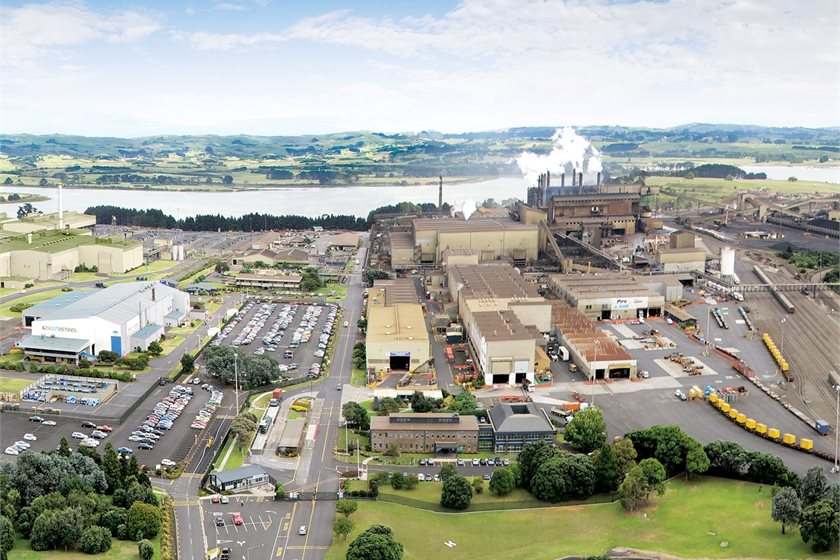
However, she gave a full-throated defence of the initiative, suggesting that NZ Steel’s Glenbrook steel mill was saved by the Crown’s co-investment in an electric arc furnace to replace part of the mill’s production capacity.
The arc furnace removes the use of coking coal from the steelmaking process, yielding large-scale carbon emissions reduction.
The GIDI fund promised up to $140m for the $300m project.
“What we achieved with GIDI is the fact that we have a steelmaker in New Zealand while we have seen a whole lot of factories close down,” she said. The gain was not just in highly-paid, skilled jobs and economic activity, but also an important “economic security win” for NZ.
“Any idea that this was a corporate subsidy misses the point,” Woods said, because NZ had emissions obligations that had to be met either in NZ or bought from the international carbon markets.
If the choice was paying $19 per tonne of carbon to abate NZ Steel emissions versus paying $150 a tonne for carbon from global markets, “I will pick $19 a tonne and backing New Zealand companies and jobs”.
Japanese global wood processor Juken Nissho is the latest energy-intensive business to announce possible closure of its two plants in Kaitaia, putting up to 250 jobs at risk.
Food processors Heinz-Wattie and McCain’s, both major gas users, have announced drastic downsizing and closures in recent weeks, citing various factors, including soaring NZ domestic gas prices.
Informal soundings at the Downstream conference suggest there would be significant support for GIDI 2.0 from energy industry executives who normally preach the virtues of market-led solutions.
“I hate to say it, but GIDI worked,” said one deeply connected industry participant.
In a panel session with her Green Party counterpart, Scott Willis, Woods made clear that Labour sees a key role for the coal and gas-fired Huntly power station, which increasingly runs on coal and is the main backstop for security of electricity supply.
She would not be drawn on whether that meant Labour preferred to burn coal at Huntly than to import LNG, but said yesterday that the government’s procurement process should be “paused”.
The government has said previously it would seek to write contracts by mid-year for a removable LNG import terminal facility to stave off extreme spikes in electricity prices during dry winters.
Prime Minister Christopher Luxon raised the first doubts about the government’s commitment to the politically unpopular plan to charge electricity users a levy to fund the plant this week, saying if the business case didn’t stack up, “we won’t do it”.
Media commentary has focused on the impact of the Iran war to suggest LNG has become uneconomic. However, the consensus among Downstream participants spoken to by Carbon News is consistently that the dry winter problem still exists if LNG is cancelled and that current prices are irrelevant to the 2028 arrival date for LNG.
Woods also demonstrated only weak enthusiasm for the policy espoused by both NZ First and the Green party to break up the ‘big four’ electricity generator-retailers but wanted market regulation “designed for the 21st century” to encourage electrification and decarbonisation.
“That means far more independent generation to supplement what we have, where New Zealand is an attractive place to invest”.
It also meant far more demand-side response.
She cited the Sustainable Business Council report published yesterday and showing potential for major economic gains from electrification of the NZ economy as proof that this was not only possible, but an opportunity for the country.
Her Green Party counterpart, Scott Willis, said NZ needed to adopt a “moonshot” mentality to electrification.
Both Willis and Woods made clear their parties would maintain the fast-track consenting process where it could hasten decarbonisation.
Woods took credit for the fact that there had been an “explosion” in renewable electricity generation projects in the past two years, arguing that the momentum began before the current government was elected and was down to Labour’s embrace of fast-track processes.
print this story
Story copyright © Carbon News 2026

Savings gap doubles: all-electric households stand to save $3000 a year, report finds
Mon 29 Jun 2026
By Oli Lewis | The economic incentive for households to electrify has become more compelling, although overcoming upfront installation costs remains a barrier.

Lake Onslow pumped hydro consortium secures funding for consent push
Fri 26 Jun 2026
By Oli Lewis | The consortium behind Lake Onslow pumped hydro has secured funding to finalise its resource consent application, aiming to lodge it under the fast-track process before 2027.

National promises low-cost solar loans for households
Thu 25 Jun 2026
By Oli Lewis | The National Party is promising a Home Energy Fund to accelerate the roll-out of household solar, batteries, insulation and other energy resilience measures if it is re-elected this year.

Energy resilience conference axed due to Ara Ake closure
Thu 25 Jun 2026
By Shannon Morris-Williams | A national conference focused on energy affordability, resilience and hardship has been cancelled because of the Government's decision to end Crown funding for energy innovation centre Ara Ake.

'Stored solar': Bioenergy Association touts cost benefits of biomass boilers over gas
24 Jun 2026
By Oli Lewis | Businesses across New Zealand are warming to bioenergy, but advocates believe woody biomass could play a far greater role as a replacement for more expensive natural gas and electric heat options.

Gas transition loan scheme nears launch as savings modelled
23 Jun 2026
By Oli Lewis | Commercial gas users could potentially save thousands of dollars a year by using Crown-backed loans to fund fuel-switching and energy efficiency projects, new modelling indicates.

EECA head steps down
22 Jun 2026
By Shannon Morris-Williams | Chief executive Marcos Pelenur will step down after three years at the Energy Efficiency and Conservation Authority, leaving the organisation looking for a new CEO as it becomes the sole remaining government agency offering support for businesses looking to transition away from fossil fuels.

Canadian firm seeks Crown co-investment for Genesis-supported gas storage project
19 Jun 2026
By Oli Lewis | A proposed gas storage project supported by Genesis Energy has sought Crown co-investment through the $200 million Gas Security Fund.

Lessons from Australia: Climate Change Authority chair cites rapid roll-out of household solar, batteries
19 Jun 2026
By Oli Lewis | Australia is rapidly outpacing New Zealand when it comes to new household solar and battery systems, lowering electricity costs and driving down the carbon intensity of installed generation.

Decision on controversial Waipara solar farm delayed
18 Jun 2026
By David Hill, Local Democracy Reporter | The fire risk assessment for a proposed 181 hectare solar farm in North Canterbury will need to be redone over conflict of interest concerns.
