
Unusual scarcity drives early 2026 NZU rally
5 Mar 2026

By Pattrick Smellie
The New Zealand carbon price has recovered since its late 2025 collapse, although the rally is driven by scarcity rather than confidence in market settings.
At the same time, market participants are using new products to smooth the impact of volatility in NZ Unit (NZU) prices.
In its latest carbon market report, Jarden reported increasing use of “simple average index pricing structures” by participants who were “captured” by the emissions trading scheme (ETS), “in response to ongoing NZU price volatility”.
The NZU price collapsed from early November – hitting a three-year low in mid-January – after the government announced that it was decoupling the ETS from NZ’s Paris Accord commitments.
The move was defended as a technical adjustment but its coincidence with a swathe of other policy decisions weakening NZ’s climate change commitments made it the second time in three years that a NZ government has fundamentally undermined confidence in the ETS.
The Labour-led government caused a similar price collapse in 2023 after it announced in late 2022 that it would reject Climate Change Commission (CCC) advice to tighten the ETS.
Carbon prices plunged on Nov 5, trading as low as $33 by January 15, before a late February high point at close to $48. The NZU price has softened since, settling at $43.67 yesterday in the Carbon News index, which averages three available benchmark prices in a market that is both lightly regulated and has yet to establish an industry standard benchmark.
In a market update, issued this week, carbon trader Marex said that a combination of low NZU prices and improved farm balance sheets appeared to be constraining supply at a time when many forest owners tend to monetise their NZU claims.
January to April traditionally traded “flat to softer” because it has “historically been the time forestry supply is most evident”, with the carbon NZ carbon price averaging a 6% fall annually over that period since 2010.
“Supply has been materially lower than seasonal norms, tightening visible liquidity”.
Marex, whose NZ managing director is Carbon News shareholder Nigel Brunel, anticipated “near-term headwinds” caused by “auction dynamics and psychological resistance near $50”.
NZUs last traded above $50 on November 4 last year, having pushed close to $60 in the second half of last year before the policy announcements on Nov 5 started NZUs plunging to trade as low as $33 by January 15.
The underlying shift in forestry credits coming to market reflected “improved rural economics and a meaningful change in underlying balance sheet conditions” while sellers withdrew from the market when prices plumbed the low $30 range, Marex said.
“The [recent] rally has been driven more by the absence of supply than by aggressive new demand.”
On emerging trends in carbon traders’ behaviour, Jarden said that “ETS-captured entities are increasingly aligning their procurement strategies with the Commtrade platform benchmark”.
“This approach enables compliance entities to pass through NZU costs in line with prevailing market levels, ensuring pricing consistency with peers across both retail and wholesale channels while mitigating exposure to short-term price fluctuations.”
Jarden reported “active trading on increased liquidity and large voice-brokered traded volumes”, with the firm facilitating trade in 1,095,000 spot NZUs last week and 5,475,220 spot NZUs for the month of February.
The carbon price remains well below the $71 floor imposed in this year’s government carbon auctions, the most recent of which again failed to clear this week, with an expectation that new supply via auctions is unlikely this year.
Last month, the Government published a request by Energy and Climate Change Minister Simon Watts that the Climate Change Commission consider policy options for underpinning the carbon price.
print this story
Story copyright © Carbon News 2026
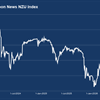
CARBON PRICE
Wed 22 Jul 2026
Exclusively for subscribers, the Carbon News NZU Index tracks daily movements in the compliance carbon market across multiple trading platforms.

Emissions Trading Scheme ‘stockpile’ shrinking
9 Jul 2026
By Liz Kivi | The “stockpile” of NZUs in private accounts continues to shrink, with the latest Environmental Protection Authority figures showing the number has dropped by 9.5 million since this time last year.

Biodiversity credit markets need stronger safeguards – report
8 Jul 2026
By Shannon Morris-Williams | Emerging biodiversity credit markets need stronger government safeguards and public investment if they are to deliver lasting conservation benefits, according to a new report.

Carbon markets and biochar: a golden opportunity for NZ?
1 Jul 2026
By John O’Brien | COMMENT: New Zealand’s abundant and increasing forestry waste could become a multi-billion dollar opportunity for biochar carbon sequestration – as long as the right policies, programmes, and incentives are in place.

BNZ and Pāmu team up on ‘carbon insetting’ with existing native forests
30 Jun 2026
By Liz Kivi | BNZ and state-owned enterprise Pāmu (Landcorp) have teamed up on what they say could be a model for landowners to earn revenue from existing native forests, while businesses pay for carbon removals. The organisations involved say this is “not offsetting,” with less stringent rules needed than for carbon credits.

ETS settings: Minister favours biennial cycle, officials prefer annual updates
18 Jun 2026
By Oli Lewis | The Ministry for the Environment and the Climate Change Minister, Simon Watts, hold differing views on how often emissions trading scheme (ETS) settings should be updated.

NZ biodiversity credits top global rankings
16 Jun 2026
By Shannon Morris-Williams | A New Zealand biodiversity credit project has topped global sales rankings, with Sanctuary Mountain Maungatautari accounting for 43% of worldwide biodiversity credit transactions in May and adding momentum to the country's emerging voluntary nature market.

Govt looks to tighten ETS auction supply
12 Jun 2026
By Liz Kivi | The Government is consulting on auctioning fewer ‘pollution permits’ for 2027-2031, a move it says would help meet the country’s domestic emissions targets while also maintaining short-term confidence in the ETS.

‘A shame’: experts on decision to send Govt carbon auctions offshore
10 Jun 2026
By Liz Kivi | Carbon market experts are questioning whether the Government has made the right decision in sending its auctions of carbon 'pollution permits' worth billions of dollars offshore.

No bidders again: NZ carbon auction extends losing streak
9 Jun 2026
By Shannon Morris-Williams |New Zealand's carbon auction has failed for the sixth consecutive time, with no bidders emerging for the 2.6 million NZUs on offer as secondary market prices remain well below the Government's $71 auction floor price.
