
Hawke’s Bay weather response: What councils changed after Cyclone Gabrielle
26 Jan 2026
By Linda Hall, Local Democracy Reporter
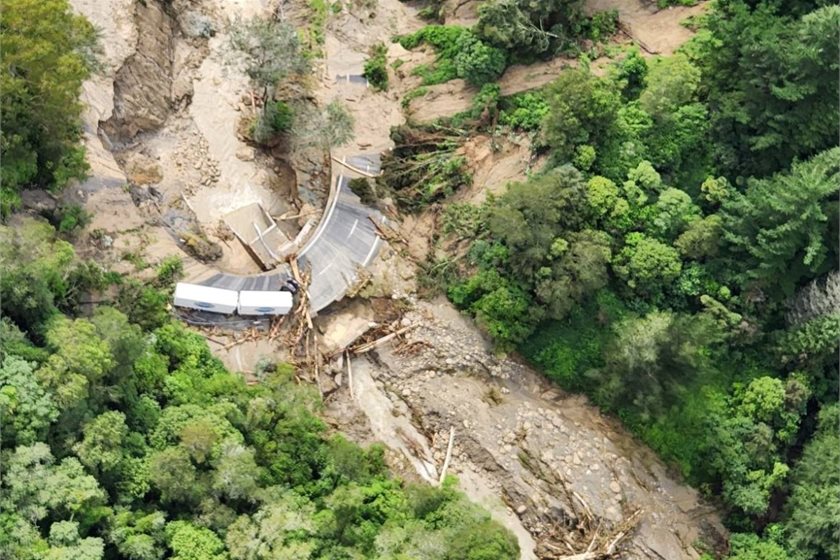
Hawke’s Bay councils say preparation played a key role in responding to the latest devastating weather to strike the country.
The region was under an orange rain warning for about 24 hours from January 21.
While the impacts were light locally, other areas bore the brunt of the deadly tropical storm, with states of emergency declared in Northland, Coromandel, Tairāwhiti, Bay of Plenty and Hauraki.
It was a different story on February 14, 2023, when Cyclone Gabrielle devastated Hawke’s Bay, and subsequent inquiries found major failures by councils and civil defence. Eight people died.
We asked the council what they did differently this time.
Wairoa District Council
Civil Defence controller Juanita Savage said early messages from MetService and their flood forecaster allowed Wairoa to begin preparing before the orange warning.
“We were able to start preparations with messaging, monitoring, checking drains, etc, so when we got the warning, our approach was underway.”
Wairoa connected with inter-agency partners - particularly Fire and Emergency New Zealand - and stood up a Civil Defence Incident Management Team early and gathered information to ensure emergency responses were in place if needed.
“We know our district is vulnerable to isolation and collaborating early ensured we were prepared.”
Savage said information from the community helped enable quick and effective responses.
Central Hawke’s Bay District Council
Acting chief executive Dylan Muggeridge said the council started monitoring the weather system early, then worked with its community partners and emergency services.
“As the forecast became clearer and more definitive, we kicked into gear and implemented the processes we always follow.”
Muggeridge said the council evaluated the risk as well as checked on vulnerable communities and known stormwater flooding hotspots, and ensured coastal communities and campers were aware of the risks.
Council teams cleared drains and prepared for potential impacts.
“On Thursday morning, teams were in the community and on the road assessing any damage.”
Only minor surface flooding and debris on roads were reported.
Napier City Council
Mayor Richard McGrath said the council was in a good position when the event began in terms of preparedness.
“We had roading and water crews out overnight and they continued to monitor the city’s infrastructure.”
More staff had been trained in CDEM roles, and the council has more generators, many being portable.
“We have community hubs around Napier and in the wider region and we spoke with those connectors so they were ready to help.”
McGrath said the stormwater and wastewater infrastructure was one of the biggest improvements, including new detention ponds at the wastewater treatment plant.
“This was the first time we activated them and they worked very well.”
Hastings District Council
Over the past three years, the council has made several changes in the community and internally, a council spokesperson said.
Two significant changes involved the development of 30 Community Emergency Hubs and a fit-for-purpose incident management response system.
The system digitally connects the emergency coordination team during an event, regardless of their ability to physically access a site, and centralises emergency-related templates and contact information in one platform.
In the build-up to a recent wildfire risk and this week’s rain warning the council communicated directly to the community hub leads, who shared the information.
Residents were informed broadly via social media. The main messaging had been focused on roading and weather updates.
The spokesperson said emergency services and relevant agencies were co-ordinated in planning and council had staff, including an on-duty local controller, monitoring the situation overnight.
“Our three waters and roading contractors were monitoring road conditions, drains and pumps, and preliminary inquiries were made regarding potential evacuation sites in case they were needed.”
Hawke’s Bay Regional Council
Chair Sophie Siers said they understood people needed timely and clear communication and reassurance.
“That’s why we now have the Extreme Weather Hub on our website, which gives people access to information and tools to help them understand and assess their own risk.”
Siers said a huge amount of work had gone into implementing the post-Cyclone Gabrielle flood review.
“For example, we have invested in enhanced flood forecasting and telemetry to monitor rainfall and river levels.”
She said that helps council’s flood modellers and provides data for the Extreme Weather Hub.
“We have stronger modelling tools, while also acknowledging that weather is unpredictable and encouraging the community to monitor conditions and take care.”
She said council had developed its work with MetService as a crucial link in the flood forecasting chain.
“Specifically in Wairoa, we have a new Wairoa Bar Management Plan, developed in partnership with the Wairoa District Council and Tātau Tātau o Te Wairoa and informed by local expertise as well as our own staff.
“We have close working relationships with councils and HB Civil Defence and Emergency Management.”
LDR is local body journalism co-funded by RNZ and NZ On Air.

print this story

Climate advocates take complaint to UN over Govt’s plan to block climate lawsuits
Thu 18 Jun 2026
By Liz Kivi | Climate activist and iwi leader Mike Smith has joined forces with other advocates in a complaint to the United Nations over the Government’s proposed legislation change to block climate lawsuits.

New refrigerant scheme targets potent greenhouse gases
Thu 18 Jun 2026
By Shannon Morris-Williams | New Zealand is set to introduce its second regulated product stewardship scheme under the Waste Minimisation Act, targeting synthetic refrigerants that account for around 2% of the country's greenhouse gas emissions.

Looking behind the headline costs of offshore mitigation
Thu 18 Jun 2026
COMMENT: A closer look at Treasury’s analysis reveals assumptions that undervalue the case for using offshore mitigation as part of Aotearoa New Zealand’s global climate contribution, writes Catherine Leining.
Decision on controversial Waipara solar farm delayed
Thu 18 Jun 2026
By David Hill, Local Democracy Reporter | The fire risk assessment for a proposed 181 hectare solar farm in North Canterbury will need to be redone over conflict of interest concerns.

Fonterra backs Canterbury solar in long-term power deals
Wed 17 Jun 2026
By Shannon Morris-Williams | Fonterra has signed two long-term power purchase agreements with solar developers in as many days, backing more than 170MW of new renewable generation in Canterbury.

Govt climate claims don't match reality, lawyers say
Wed 17 Jun 2026
By Shannon Morris-Williams | Lawyers for Climate Action has accused the Government of presenting an overly positive picture of New Zealand's climate progress at the United Nations climate summit in Bonn, arguing key claims on emissions reductions and support for the Paris Agreement's 1.5°C goal are not reflected in domestic policy.

Clean air goal will take decades
Wed 17 Jun 2026
By Emily Ireland, Local Democracy Reporter | It could take 20 years for Masterton to meet international air quality guidelines, exposing vulnerable people to “unacceptably high levels of air pollution” for much of winter, a new report says.

LNG import terminal could cost NZ economy $6.2 billion: Concept Consulting
Wed 17 Jun 2026
By Oli Lewis | The benefits of a liquefied natural gas (LNG) import terminal to provide insurance against dry year energy prices would be outweighed by the wider costs to the New Zealand economy, a new report says.

Carbon capture and the need for ‘net zero oil’
Tue 16 Jun 2026
By Pattrick Smellie | The answer to making carbon capture and storage work is to make fossil fuel producers responsible for making it happen rather than consumers, says Oxford University climate change policy expert, Professor Myles Allen.

Climate change minister tight-lipped on ACT climate policy
Tue 16 Jun 2026
By Liz Kivi | Climate Change Minister Simon Watts is keeping his cards close to his chest about the ACT Party’s election campaign pledge last week that it would resubmit New Zealand’s Paris Agreement target.
