
Right approach required for river work expectations
5 Dec 2025
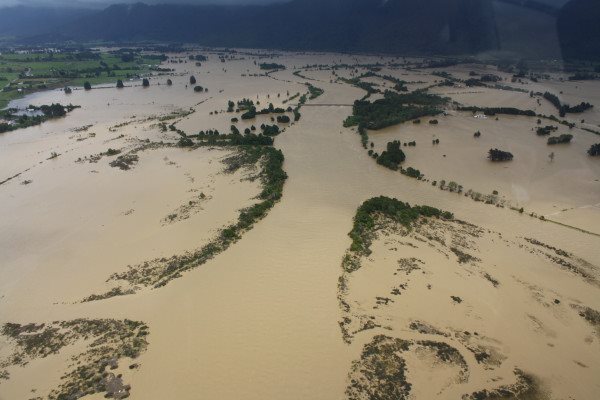
Media release | Tasman District Council is focused on ensuring long-term resilience and protection for our river and floodplains.
While rivers are dynamic, constantly changing systems, the June-July 2025 floods have pushed a number of Tasman's rivers into a new state and a new balance that will continue to adjust and settle for some time.
The long-term recovery work on our rivers will have this new dynamic state front of mind, and we will be looking to river management practices, old and new, including willow planting and gravel extraction, to prepare us for the next major flood as best as possible.
Recent interactions with the public through our district-wide Rivercare meetings have helped us take stock and gain valuable insights on what is important to residents who live near or rely on our rivers and how to approach our ongoing works programme.
We share the urgency of addressing the issues facing us, but at the same time emphasise that the nature of meeting, maintaining and adapting to the ever-changing nature of rivers and the associated infrastructure will require a long term commitment.
Collaboration with landowners remains an important aspect in establishing the needs and priorities of our ongoing work. We have also contracted previous Catchment Board staff and experts from outside the District to contribute to this exercise and keep the momentum going.
The initial period of response during and after the floods meant immediate action was required by landowners to repair damage and minimise the impacts that had occurred in anticipation of another flood, as long as that work did not adversely impact your neighbours or the river's ability to accommodate a major flood.
Many works completed by landowners in the post-flood period, such as clearing drains, pulling debris from rivers, and managing scour damage, would have had a very low risk of impacting adjacent properties.
It is essential that all works completed in our rivers take account of the river in its entirety, and we are not just shifting harm from one landowner to another.
To that end, Council will be looking to verify that permanent works completed during and after the floods, such as raising existing stopbanks or building new stopbanks, are constructed to required standards and regulations.
Stopbanks, which divert or deflect flood water, have a high risk of making flooding worse on neighbouring properties, and need to be designed as a linked network to provide consistent and fair protection to everyone living and working along the river in flood prone areas.
Where legal requirements for permanent works that have the potential to impact adjacent landowners are not met, the Council will consider if compliance measures are necessary to remedy the situation.
At the core of this is the long-term goal of managing flood risk sustainably and building a safe and resilient river network.
print this story

Southern Ocean might be best place to fertilise for carbon dioxide removal
Today 12:15pm
Media release: Springer Nature | The Southern Ocean and parts of the Pacific near the equator may be the best places to fertilise if we want to remove the most carbon dioxide from the atmosphere while minimising the impact on the environment, according to international research.

Greenpeace calls for citizens assembly to reform electoral finance laws
Thu 30 Jul 2026
Media release | Greenpeace is calling on all political parties to support a citizens assembly to reform electoral finance laws in light of the alarming flood of political donations threatening to drown democracy in New Zealand.
Biochar market predicted to reach US$1.6 billion by 2035
Thu 30 Jul 2026
Media release: Transparency Market Research | Strong growth in the global biochar market will be driven by sustainable agriculture and carbon sequestration initiatives.

Culture shapes the meaning of sustainability, NZ study finds
Mon 27 Jul 2026
Media release: Bioeconomy Science Institute | Cultural context changes what sustainability means to people, a new New Zealand study finds.

New funding round opens for Auckland zero waste projects – $500k available
24 Jul 2026
Media release | Auckland Council is inviting applications for the 2026 Waste Minimisation and Innovation Fund (WMIF) with $500,000 available to support projects that reduce waste and increase recycling and reuse to help achieve Auckland’s goal of zero waste by 2040.

Turning waste into climate-resilient soils for communities
24 Jul 2026
Media release: University of Canterbury | Christchurch’s Red Zone is being used as a test bed to see whether biological wastes (biowastes) can help transform contaminated soil into climate-resilient soil.

Dry-year reliability obligation should fall on generators, not major electricity users – MEUG
23 Jul 2026
Media release | The Major Electricity Users' Group (MEUG) is urging the Government to redesign its proposed dry-year reliability obligation so responsibility for securing New Zealand's electricity supply rests with generators rather than major electricity users.

Greenpeace launches legal challenge against US$2.5bn expansion by Premier Beehive parent company JBS
23 Jul 2026
Media release | Greenpeace Netherlands has petitioned a Dutch court seeking to compel the world’s largest meat company JBS, to disclose information, in order to challenge its business policies in court. This includes its planned US$ 6 billion global expansion, of which almost half is earmarked for Nigeria.
Select committee report on resource management guts environmental protections
22 Jul 2026
Media release | Forest & Bird says the Environment Committee report on the biggest overhaul of resource management law in Aotearoa New Zealand in a generation is bad news for nature.

Open Letter: Exercise restraint on LNG import facility decision ahead of the election
21 Jul 2026
The Smart Energy Alliance respectfully urges the Government not to enter into a binding commercial agreement for a liquefied natural gas (LNG) import facility in the period immediately preceding the General Election.
