
Govt climate policy set by vested interests to delay emissions cuts - Carr
6 Nov 2025
By Liz Kivi
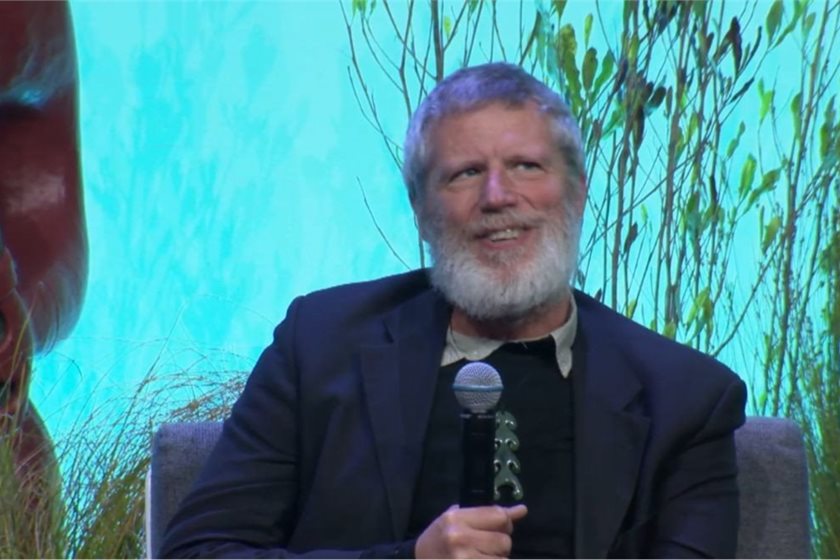
Rod Carr, former Climate Change Commission chair, says the Government’s move to unlink the Emissions Trading Scheme from our international climate target to 2030 undermines the credibility of emissions pricing as a tool for climate action – and is yet another Coalition Government policy designed to benefit vested interests rather than ordinary New Zealanders.
As part of a slew of climate policy changes released on Tuesday evening, the Government announced it was amending the Climate Change Response Act to remove the requirement that Emissions Trading Scheme settings and volumes align with international climate targets, and that it would strip the independent Climate Change Commission of one of its core roles.
The market immediately tanked off the back of the news, with the secondary market dropping $10 to trade as low as $41.50 – a 20% drop overnight, and more than 50% down on the market’s all-time high of $88.50 in November 2022.
The Coalition Government has repeatedly promised a “strong and stable” Emissions Trading Scheme would be its key tool to decarbonise the economy but, unfortunately for the carbon market, its policy doesn’t seem to be walking the talk.
Not requiring ETS settings to align with our international climate target or nationally determined contribution (NDC) only matters if the NDC requires sooner and larger emissions reductions than our targets and plans for domestic emissions reductions require, Carr explains. “The 2035 domestic target and NDC are aligned so the problem is the 2030 NDC, which requires fewer units to be auctioned and a higher price if ETS settings align with the 2030 NDC.”
The change will mean more units at a lower price are available this decade, he says.
“Adding more sources of units without reducing free allocations or extending coverage to include agriculture, long haul aviation or shipping will add further units, have a lower unit price and further reduce the ability of the ETS to reward emissions reductions in line with targets and plans.
“This undermines the credibility of the Government’s reliance on emissions pricing to achieve targets and plans.”
Coupled with weaker regulation of emissions – for example for tail pipe emissions – and less ambition for the Government to reduce emissions from its own activities, the policy is clearly targeted to appease vested interests, Carr says.
“It is clear climate policy in the Coalition Government is set by stakeholders with vested interests in delaying emissions reductions by as much as possible, for as long as possible, whatever the impact on the health of New Zealanders, whatever the impact on access to foreign markets, whatever the impact on energy security, whatever the impact on future generations.
“If the Coalition is judged by its actions not by its words, the agenda for climate response is not in the hands of the Prime Minister, the Minister of Climate Change or the National caucus.”
However, Carr says that it matters to some extent what the details are. “We won’t know that until the first reading next year.”
Carr agrees that it was a duplication to have both the Commission consult publicly on its ERP draft advice and for the Ministry to consult publicly on the Government’s draft ERP. “So long as the Commission provides its advice, which is made public, before the Government consults publicly on its draft ERP, I understand the reasoning.”
However, moving ETS settings reviews to bi annual won’t avoid the fundamental flaws in the ETS, Carr says.
Carr was the inaugural chair of the Climate Change Commission, and was the independent organisation’s public face from 2019 until his term ended in late 2024.
Under Carr’s leadership, the Commission repeatedly called for a review of the Emissions Trading Scheme, saying the current design was incentivising afforestation rather than decarbonisation.
print this story
Story copyright © Carbon News 2025

Labour promises to repeal bill to block climate lawsuits
Fri 3 Jul 2026
By Liz Kivi | The Government bill aiming to block climate lawsuits passed its first reading under urgency after a heated debate in Parliament last night, with the Labour Party promising it will repeal the bill if elected in November.

Taranaki offshore wind developer eyes mid-2030s commissioning after law change
Fri 3 Jul 2026
By Oli Lewis | The first offshore wind farm in New Zealand could be commissioned by the mid-2030s, with its developer saying a new permitting framework has bolstered investor confidence.

Confidence in tackling climate risks remains low
Fri 3 Jul 2026
By Shannon Morris-Williams |New Zealanders have little faith in the country's ability to tackle climate risks, with a new poll finding fewer than one in three are confident the country can reduce the impacts of climate change, while many are calling for stronger Government leadership on climate hazards.

EECA seeks answers on NZ's future fuel mix
Fri 3 Jul 2026
By Shannon Morris-Williams | The Energy Efficiency and Conservation Authority is looking for specialists to assess the role future low-emissions fuels could play in New Zealand’s energy system.

Australia is at least ten years ahead of us on solar. It’s time we caught up.
Fri 3 Jul 2026
By Ed Harvey | OPINION: Starting this week, millions of households across New South Wales, South Australia and Southeast Queensland will have access to three hours of free electricity every single day.

West Coast Conservation Board chair concerned over loosening commercial concessions
Fri 3 Jul 2026
By Vihan Dalal, Local Democracy Reporter | The West Coast Conservation Board chairman Mike Legge has raised concerns with a move by the Government to amend the Conservation Act to loosen how commercial concessions are granted on conservation land.

Media round-up
Fri 3 Jul 2026
In our round-up of climate coverage in local media: Getting the most impact from the Government's investment in school solar; NZ needs an objective assessment of LNG imports and renewable storage options; and while greener suburbs are healthier on all kinds of metrics, achieving them isn’t straightforward.

Offshore renewable energy bill passes, opening path for developers
Thu 2 Jul 2026
By Oli Lewis | Feasibility permits for offshore wind developments could be issued within months after the Government passed a long-awaited law to establish a regulatory regime.

Ombudsman upholds complaint PM’s office ‘unreasonably withheld’ climate law briefing
Thu 2 Jul 2026
By Liz Kivi | The Ombudsman has upheld a complaint that the Prime Minister’s office unreasonably held information, as Parliament is set to read – under urgency – the climate bill at the centre of the scandal.

High Court upholds forestry directors' environmental liability
Thu 2 Jul 2026
By Shannon Morris-Williams | The High Court has dismissed appeals by a forestry company, its directors, and a landowner, against enforcement orders over environmental damage in a Gisborne forest, reinforcing that company directors can be personally liable for environmental breaches.
