
New Zealand left behind as Australia invests a further $A500 million in energy efficiency
11 Dec 2024

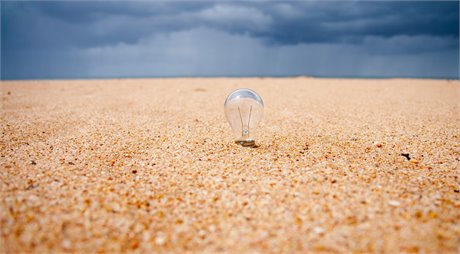 |
| Photo by Glen Carrie on Unsplash |
Media release | New Zealand investment in energy efficiency has fallen further behind Australia after the Albanese government doubled funding for energy efficiency retrofits of social housing.
The Federal government allotted an additional $A500 million ($NZ551 million) to expand its Social Housing Performance Initiative (SHEPI), adding funding for a further 50,000 homes.
“The Australia government is making a real difference for social housing tenants who are the least able to afford energy efficiency upgrades, and most likely to face higher power bills.” said Dr Chris Mardon, Managing Director of Ecobulb, a New Zealand energy efficiency company.
“The best way to lower power bills is to not use electricity in the first place – Australia is setting the ANZAC standard in how tens of thousands of households can have cooler homes in summer and warmer homes in winter and save on energy bills.
“By comparison, New Zealand has dramatically cut or curtailed public investment in energy efficiency and carbon abatement schemes."
“The Gidi Fund is gone. Money for commercial lighting upgrades is gone. The only programme remaining is Warmer Kiwi Homes, which has been downsized.”
“The second emissions reduction plan released this week talks about ‘enabling energy efficiency’ through development of better building and product regulations. This could take years to provide benefits and doesn’t help low-income people wanting to lower their power bill right now.
By comparison, Australia’s SHEPI funds energy efficient upgrades which include installing hot water heat pumps and LED lighting.
Dr Mardon said that many New Zealand homes were still using old lighting technology rather than modern LEDs, and hot water heat pumps were extremely rare. Both these technologies are much more efficient and result in lower energy bills and less need for fossil fuel generation in mid-winter. Energy efficiency also reduces peak loads on electricity networks, which means lower lines charges.
“Energy efficiency is a no-brainer as it is far cheaper option than building new generation, upgrading transmission and distribution lines. Let’s hope that the New Zealand government takes notice of the excellent incentives being offered by our nearest neighbour.”
print this story

Culture shapes the meaning of sustainability, NZ study finds
Mon 27 Jul 2026
Media release: Bioeconomy Science Institute | Cultural context changes what sustainability means to people, a new New Zealand study finds.

New funding round opens for Auckland zero waste projects – $500k available
Fri 24 Jul 2026
Media release | Auckland Council is inviting applications for the 2026 Waste Minimisation and Innovation Fund (WMIF) with $500,000 available to support projects that reduce waste and increase recycling and reuse to help achieve Auckland’s goal of zero waste by 2040.

Turning waste into climate-resilient soils for communities
Fri 24 Jul 2026
Media release: University of Canterbury | Christchurch’s Red Zone is being used as a test bed to see whether biological wastes (biowastes) can help transform contaminated soil into climate-resilient soil.
Dry-year reliability obligation should fall on generators, not major electricity users – MEUG
Thu 23 Jul 2026
Media release | The Major Electricity Users' Group (MEUG) is urging the Government to redesign its proposed dry-year reliability obligation so responsibility for securing New Zealand's electricity supply rests with generators rather than major electricity users.

Greenpeace launches legal challenge against US$2.5bn expansion by Premier Beehive parent company JBS
Thu 23 Jul 2026
Media release | Greenpeace Netherlands has petitioned a Dutch court seeking to compel the world’s largest meat company JBS, to disclose information, in order to challenge its business policies in court. This includes its planned US$ 6 billion global expansion, of which almost half is earmarked for Nigeria.
Select committee report on resource management guts environmental protections
Wed 22 Jul 2026
Media release | Forest & Bird says the Environment Committee report on the biggest overhaul of resource management law in Aotearoa New Zealand in a generation is bad news for nature.
Open Letter: Exercise restraint on LNG import facility decision ahead of the election
21 Jul 2026
The Smart Energy Alliance respectfully urges the Government not to enter into a binding commercial agreement for a liquefied natural gas (LNG) import facility in the period immediately preceding the General Election.
Tauranga secures international funding to support rangatahi climate action
16 Jul 2026
Media release: Tauranga City Council | Tauranga has been selected as one of 300 cities worldwide to receive funding through the Bloomberg Philanthropies Youth Climate Action Fund, creating new opportunities for local rangatahi to turn their climate action ideas into reality.

University launches worldwide search for nature-focused researchers
15 Jul 2026
Media release | As governments and businesses around the world grapple with climate change and biodiversity loss, Waipapa Taumata Rau, University of Auckland is launching an international search for ten PhD researchers to help shape a more nature positive economy.

New entrant seeks to expand exploration portfolio
14 Jul 2026
Media release | Resources Minister Shane Jones has welcomed further investment interest in New Zealand's petroleum sector, with a recent new entrant seeking to expand its exploration interests in the offshore northern Taranaki Basin.
