
Water is ‘canary in the coalmine’ of climate change: WMO
9 Oct 2024
 |
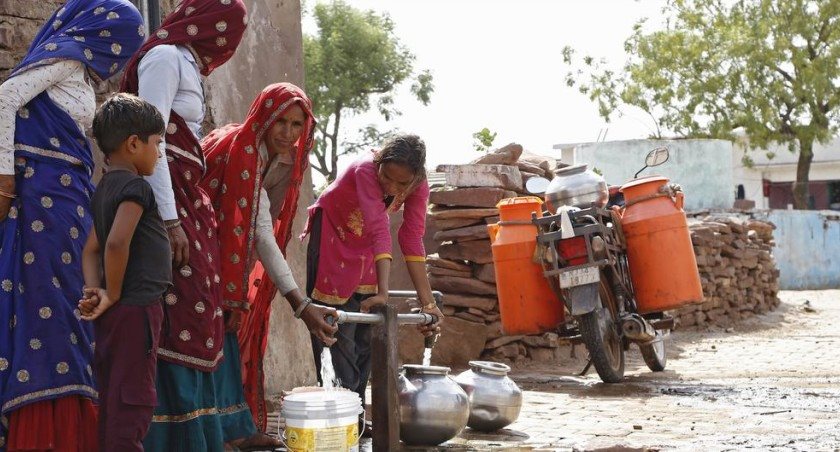
| Image: UNICEF/Faisal Magray |
Media release | The year 2023 marked the driest year in over three decades for rivers around the world, according to a new report coordinated by the UN’s World Meteorological Organization.
The State of Global Water Resources report released on Monday also highlights that over the last five years below-normal conditions for river flows have been recorded with less water reaching reservoirs.The reduction in supplies has reduced the amount of water available for communities, agriculture and ecosystems.
Currently, 3.6 billion people worldwide face inadequate access to water at least a month per year and this is expected to increase to more than five billion by 2050, according to UN Water.
The report also reveals that glaciers suffered the largest loss of mass ever registered in the last five decades. Every region in the world where glaciers are present reported ice loss.
The ice loss has produced more than 600 gigatonnes of water, much of which has ended up in the ocean as well as some riverways.
Meanwhile, 2023 was recorded as the hottest year on record, leading to elevated temperatures and widespread dry conditions, which contributed to prolonged droughts.
Unprecedented stress
“Water is the canary in the coalmine of climate change. We receive distress signals in the form of increasingly extreme rainfall, floods and droughts which wreak heavy toll on lives, ecosystems and economies said WMO Secretary-General Celeste Saulo.
The report also paints a stark picture of the world’s freshwater resources, highlighting unprecedented stress, exacerbated by climate change and increasing demand.
Climate change intensifies
A significant number of floods across the world are highlighted in the report.
The surge in extreme hydrological events has been influenced by naturally occurring climate conditions including the transition from La Niña to El Niño weather patterns in mid-2023 as well as human induced climate change.
“As a result of rising temperatures, the hydrological cycle has accelerated. It has also become more erratic and unpredictable, and we are facing growing problems of either too much or too little water,” Ms. Saulo explained.
Africa battered
Africa was the most impacted in terms of human casualties. In Libya, two dams collapsed due to the major flood in September 2023, claiming more than 11,000 lives and affecting 22 per cent of the population.
Floods also affected the Greater Horn of Africa, the Democratic Republic of the Congo as well as Rwanda, Mozambique and Malawi.
Meanwhile, the southern United States, Central America, Argentina, Uruguay, Peru and Brazil were affected by widespread drought conditions, which led to the lowest water levels ever observed in the Amazon and in Lake Titicaca on the border of Bolivia and Peru.
Monitoring and data sharing
“Far too little is known about the true state of the world’s freshwater resources. We cannot manage what we do not measure,” Ms. Saulo stated.
“This report seeks to contribute to improved monitoring, data-sharing, cross-border collaboration and assessments. This is urgently needed,” she added.
WMO said the report seeks to enhance the accessibility and availability of observational data, through better monitoring and improved data sharing, particularly in the Global South.
Early warning
The report aligns with the focus of the UN’s global Early Warnings for All initiative in addressing water-related challenges.
The global effort aims to improve data quality and access for water-related hazard monitoring and forecasting, with the goal of providing Early Warning systems for all by 2027.
The WMO has emphasised the urgent need for action to address water-related challenges, calling for improved monitoring, data sharing and cross-border collaboration to better understand and manage global water resources.
print this story

Southern Ocean might be best place to fertilise for carbon dioxide removal
Fri 31 Jul 2026
Media release: Springer Nature | The Southern Ocean and parts of the Pacific near the equator may be the best places to fertilise if we want to remove the most carbon dioxide from the atmosphere while minimising the impact on the environment, according to international research.

Greenpeace calls for citizens assembly to reform electoral finance laws
Thu 30 Jul 2026
Media release | Greenpeace is calling on all political parties to support a citizens assembly to reform electoral finance laws in light of the alarming flood of political donations threatening to drown democracy in New Zealand.
Biochar market predicted to reach US$1.6 billion by 2035
Thu 30 Jul 2026
Media release: Transparency Market Research | Strong growth in the global biochar market will be driven by sustainable agriculture and carbon sequestration initiatives.

Culture shapes the meaning of sustainability, NZ study finds
Mon 27 Jul 2026
Media release: Bioeconomy Science Institute | Cultural context changes what sustainability means to people, a new New Zealand study finds.

New funding round opens for Auckland zero waste projects – $500k available
24 Jul 2026
Media release | Auckland Council is inviting applications for the 2026 Waste Minimisation and Innovation Fund (WMIF) with $500,000 available to support projects that reduce waste and increase recycling and reuse to help achieve Auckland’s goal of zero waste by 2040.

Turning waste into climate-resilient soils for communities
24 Jul 2026
Media release: University of Canterbury | Christchurch’s Red Zone is being used as a test bed to see whether biological wastes (biowastes) can help transform contaminated soil into climate-resilient soil.

Dry-year reliability obligation should fall on generators, not major electricity users – MEUG
23 Jul 2026
Media release | The Major Electricity Users' Group (MEUG) is urging the Government to redesign its proposed dry-year reliability obligation so responsibility for securing New Zealand's electricity supply rests with generators rather than major electricity users.

Greenpeace launches legal challenge against US$2.5bn expansion by Premier Beehive parent company JBS
23 Jul 2026
Media release | Greenpeace Netherlands has petitioned a Dutch court seeking to compel the world’s largest meat company JBS, to disclose information, in order to challenge its business policies in court. This includes its planned US$ 6 billion global expansion, of which almost half is earmarked for Nigeria.
Select committee report on resource management guts environmental protections
22 Jul 2026
Media release | Forest & Bird says the Environment Committee report on the biggest overhaul of resource management law in Aotearoa New Zealand in a generation is bad news for nature.
Open Letter: Exercise restraint on LNG import facility decision ahead of the election
21 Jul 2026
The Smart Energy Alliance respectfully urges the Government not to enter into a binding commercial agreement for a liquefied natural gas (LNG) import facility in the period immediately preceding the General Election.
