
Lessons from Australia: Climate Change Authority chair cites rapid roll-out of household solar, batteries
Today 11:45am

By Oli Lewis
Australia is rapidly outpacing New Zealand when it comes to new household solar and battery systems, lowering electricity costs and driving down the carbon intensity of installed generation.
In a pre-recorded speech to the New Zealand Institute of Directors in Auckland on Friday, the chair of the Australian Climate Change Authority, Matt Kean, said recent conflict in the Middle East had underscored the need to bolster domestic energy security.
... login or subscribe for full story
Story copyright © Carbon News 2026

Canadian firm seeks Crown co-investment for Genesis-supported gas storage project
Today 11:45am
By Oli Lewis | A proposed gas storage project supported by Genesis Energy has sought Crown co-investment through the $200 million Gas Security Fund.

Decision on controversial Waipara solar farm delayed
Thu 18 Jun 2026
By David Hill, Local Democracy Reporter | The fire risk assessment for a proposed 181 hectare solar farm in North Canterbury will need to be redone over conflict of interest concerns.
Fonterra backs Canterbury solar in long-term power deals
Wed 17 Jun 2026
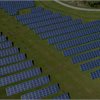
By Shannon Morris-Williams | Fonterra has signed two long-term power purchase agreements with solar developers in as many days, backing more than 170MW of new renewable generation in Canterbury.
New Zealand faces $26b energy infrastructure challenge, report warns
Mon 15 Jun 2026
By Shannon Morris-Williams | New Zealand will need an additional $26 billion of investment in energy infrastructure over the next 30 years to meet its decarbonisation goals, with a new report warning that policy certainty is critical to unlocking the renewable generation needed to power a low-carbon economy.
LNG imports might not be needed for 'dry year' security: redacted report
11 Jun 2026
By Oli Lewis | The need for imported liquefied natural gas to provide security of supply in a dry year is low, according to newly released modelling, with some scenarios featuring higher levels of renewable generation requiring no gas imports at all.
Liebreich: Electrify first, insure second
11 Jun 2026
New Zealand is having an argument about gas while the rest of the world is building an electric future. That, in essence, is the challenge Michael Liebreich left behind after a visit to Wellington last week.

Lodestone launches virtual rooftop solar scheme
10 Jun 2026
A new virtual solar scheme launching in Hawke's Bay aims to make locally generated renewable electricity accessible to households and businesses that cannot install rooftop panels on their own properties.

Labour on overturning LNG: ‘we’d need to see the contract’
9 Jun 2026
By Pattrick Smellie | An incoming Labour government later this year would need “to look at the contract” before deciding whether it would be bound by the current government’s commitment to a user-pays funded liquefied natural gas terminal.

Importing LNG would raise costs and emissions: it’s a terrible decision for New Zealand
9 Jun 2026
COMMENT: Today’s announcement from the Government is political smoke and mirrors, with electricity users’ wallets still set to bear the brunt of the proposed LNG facility, writes Christina Hood.
