
Labour on overturning LNG: ‘we’d need to see the contract’
9 Jun 2026

By Pattrick Smellie
An incoming Labour government later this year would need “to look at the contract” before deciding whether it would be bound by the current government’s commitment to a user-pays funded liquefied natural gas terminal.
Asked by Carbon News whether Labour would be bound by a contract that could be signed close to the date of the November 7 general election, Labour’s energy spokesperson, Megan Woods said: “Can’t say. We’d need to see the contract.”
Today’s LNG announcement repackaged the decisions announced in February, the only additional detail being that two parties are in the Request for Proposal process and that the government hopes to sign a contract “this year”.
The previous Energy Minister, Simon Watts, had targeted a contract signed this month, which would have made it difficult for an incoming Labour-led government to repudiate.
However, a contract that appeared to be signed in haste prior to an election could be another matter.
Labour, however, remains wary of being accused of repeating the ‘sovereign risk’ scare given to foreign investors when then Prime Minister Jacinda Ardern announced a ban on offshore oil and gas exploration, in 2018.
Woods also agrees with the problem that the LNG decision seeks to solve: the need for a thermal/fossil fuel to ‘firm’ the highly renewable NZ electricity system during sustained periods of dry winter weather, draining hydro lakes.
However, Labour believes the Huntly power station could fill the gap running on coal or bio-mass, with domestically produced torrefied wood pellets capable of doing the job.
The LNG announcement met with support from the country’s largest electricity users while renewables lobbyists insist it’s not a done deal yet.
Generator-retailers did not immediately issue statements and their share prices barely moved in the first two hours of trading on the NZX this morning.
A discussion document relating to a proposed new “Winter Energy Reliability Obligation”, more actively requiring generators to have dry year cover guaranteed was issued shortly after Brown’s announcement.
"The LNG terminal should effectively provide a soft cap on wholesale electricity prices during dry-year periods by ensuring additional fuel is available when hydro storage is low,” said the Major Electricity Users Group’s Jon Harbord.
It would also provide “an option for industrial and commercial gas users who continue to rely on gas," he said.
Rewiring Aotearoa’s Mike Casey said: “Nothing has been signed so there’s a chance the industry could convince the government LNG is not needed.”
“The government needs to recognise renewables, treated differently, absolutely can manage dry year risk in the longer term without burning fuels.”
Rewiring last week issued a report from economic consultants Sapere, showing that burning diesel and giving government grants for gas users to electrify would be cheaper than LNG.
The Greens’ co-leader Chloe Swarbrick said: “Luxon’s Government has committed to building a billion-dollar LNG import terminal without knowing how it will pay for it.”
The Greens have proposed a rooftop solar initiative capable of lending up to $150 million to households wanting to install solar generation panels, established as a government-backed lender supported by private sector partners.
“Power companies like Meridian have already been clear that we do not need this terminal,” said Swarbrick. “It is hard to see how the Energy Minister expects to convince the gentailers to volunteer to fund something they don’t see any economic or practical sense in.”
Total approximate costs for the facility are understood to be in the region of $1.4 billion, implying annual levy costs imposed on the largest generators as high as $145m, which Energy Minister Simeon Brown made clear today would not be disclosed as a levy at the level of the individual power company customer.
print this story
Story copyright © Carbon News 2026

Contact: New biodiversity goal may be 'highly problematic' for renewable projects
Fri 24 Jul 2026
By Oli Lewis | The goal of no net loss of indigenous biodiversity in the new resource management system may be highly problematic for renewable energy developments, Contact Energy says.

Biomass can free-up electrons to perform higher value roles – with multiple other benefits
Fri 24 Jul 2026
By Rob Mallinson | OPINION: New Zealand’s energy debate too often treats electricity as the universal solution.

Businesses told to plan ahead as energy risks mount
Thu 23 Jul 2026
By Shannon Morris-Williams | Switching to electricity and improving energy efficiency are becoming increasingly attractive investments in the face of rising costs – and companies can no longer afford a "business as usual" attitude to energy, according to a new report.
Only Genesis can invest in Huntly, Treasury told ministers
Thu 23 Jul 2026
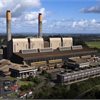
Treasury backed Crown investment in Genesis Energy because only Genesis could invest in Huntly Power Station, but argued the company had no special claim on building more renewable generation.

Green Party takes ‘electric election’ up a notch
Tue 21 Jul 2026
By Liz Kivi | The Green Party is promising to cut power bills and establish a publicly owned company, ‘Kiwipower,’ to deliver affordable renewable energy.

SEANZ urges Govt not to sign contract for LNG before the election
Tue 21 Jul 2026
The Smart Energy Alliance has penned an open letter to the Government urging ministers not to sign a binding agreement for an LNG import facility before November’s election.

Clock ticks on Gas Security Fund as Tariki developer reports ongoing losses
15 Jul 2026
By Oli Lewis | A Canadian company advancing a major gas storage project in New Zealand continues to report ongoing losses.

$3m Govt boost for Tauranga geothermal energy
14 Jul 2026
By Liz Kivi | Resources Minister Shane Jones has announced a $3 million grant for the Gas to Geoheat Tauranga Geothermal System Project as part of the Government's plan to double geothermal energy by 2040.

Batteries and full lakes flatten winter power peaks
14 Jul 2026
Large batteries and more strategic use of hydro generation are starting to flatten winter electricity price peaks, reducing reliance on expensive thermal generation.

NZ lagging in energy storage investment – report
14 Jul 2026
Investment in energy storage is maturing globally, with the need for resilient and flexible power driving demand for storage, but New Zealand has some catching up to do, according to a new report.
