ACT climate policy ‘disingenuous,’ says former top climate diplomat
15 Jun 2026
By Liz Kivi
ACT’s election campaign pledge to submit a new international climate target to the United Nations is “totally disingenuous", according to New Zealand’s former climate ambassador Kay Harrison.

ACT announced last week that it would resubmit New Zealand’s nationally determined contribution, or NDC, despite half of the 2030 NDC period having passed.
ACT’s agriculture spokesperson Andrew Hoggard wants the new NDC to use a ‘split gas approach’ that would treat long-lived gases such as carbon dioxide differently from methane, which is short-lived but very potent.
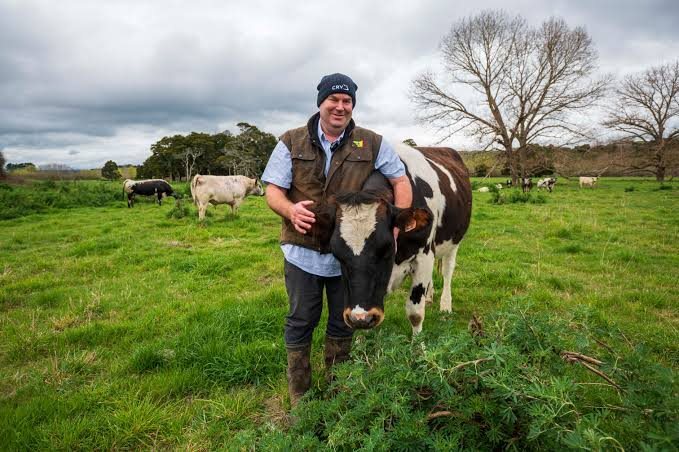
Half New Zealand’s climate emissions come from agriculture, mostly from biogenic methane from cattle, so the proposed target of ‘no additional warming’ for biogenic methane would favour the agricultural sector.
ACT said its climate policy was “science-based” and would put New Zealand's interests first.
“If the Paris Agreement cannot accommodate targets that reflect the real warming impact of New Zealand's emissions, then New Zealand should leave it,” said Hoggard.
“The Paris Agreement provides a pathway for New Zealand to issue its own Nationally Determined Contribution. ACT is campaigning to do that in the next term of Parliament so we can have a plan that is ambitious for New Zealand and reflects the science of climate change.”
However New Zealand had already set its own target – the same one Hoggard is proposing renegotiating.
Kay Harrison, who was New Zealand’s top climate negotiator for five years until her resignation in 2024, says the ACT Party is being “totally disingenuous” suggesting it would stay in the Paris Agreement if it could rewrite New Zealand’s target.
“They know full well that the Paris Agreement was designed to allow countries to set their own targets and cooperate with other countries if it was cheaper than doing it all at home. The Key government argued for that and we got it.
“What everyone agreed on in Paris was that countries can’t both be allowed to set their own targets and then backslide. ACT is signalling that it will leave the Paris Agreement – the world’s best hope at addressing climate change.”
Harrison said ACT was “playing to their support base” with virtue signalling that was unlikely to translate into action. “Diplomatically and in terms of our free trade agreements not really an option.
“Don’t forget – other countries have high agricultural emissions too and they’re not trying to backslide – Ireland and Uruguay for example.”
Last week, Treasury issued a downward revision of the cost of New Zealand’s NDC pledge to meet climate targets with offshore mitigation, predicting it could cost between $4.4 and $5 billion to buy the climate mitigation needed to meet New Zealand’s 84-96 million tonne emissions reduction shortfall for the 2030 target under the Paris Agreement.
Harrison says the Government should be viewing this as an opportunity for New Zealand businesses. “New Zealand could follow Japan’s example and use its advances in low emissions technologies as part of its cooperation with other countries to reduce emissions – good for industry, good for global emissions reductions and good for meeting our target.
“I would have thought supporting our innovative agriculture sector in selling its low-emissions advantages, while the country claims reductions towards our Paris target, would be something ACT and National would support.
“Instead ACT is proposing we follow the US and withdraw from the Paris Agreement.”
The US, under Donald Trump, is the only country to leave the Paris Agreement after joining, with the few other countries who have not ratified it including Iran and Libya.
Harrison says it’s important to remember that about a third of all global emissions come from countries like New Zealand, that individually emit less than 1%.
“Methane is a tremendously powerful and harmful greenhouse gas, around 30 times as powerful as CO2. Of course, we must eliminate as much fossil fuel use as possible too.”
Laura MacKay, acting executive director of Lawyers for Climate Action NZ, says ACT’s policy announcement reflects a fundamental misunderstanding of the global nature of climate change: “The very problem the Paris Agreement was designed to address."
She says there is no lawful pathway for New Zealand to weaken its existing Nationally Determined Contribution under the Paris Agreement.
“Article 4.11 permits adjustment of an existing NDC only 'with a view to enhancing its level of ambition' – never weakening it, and Article 4.3 requires each successive NDC to represent a progression beyond the current one. ACT is asking New Zealand to do the opposite of what the Agreement requires.
"And if Paris won't accommodate that approach, ACT has said New Zealand should leave. That would make New Zealand only the second country in history, alongside the United States, to ratify the Paris Agreement and then walk away from it.
“However, as the International Court of Justice confirmed in its July 2025 Advisory Opinion, every state has binding obligations to reduce emissions under customary international law and other treaties, whether or not it is a party to the Paris Agreement. There is no exit door from the international rules on climate."
Last month the New Zealand Government voted in favour of a United Nations resolution to recognise the landmark International Court of Justice climate ruling.
"Paris Agreement commitments are an essential element of both the EU-NZ and UK-NZ Free Trade Agreements. Weakening our NDC, let alone leaving Paris altogether, risks a material breach of those agreements and potential suspension of trade preferences. These are not actions our trading partners can be expected to ignore, meaning the farmers ACT claims to stand up for are the ones whose access to premium European and UK markets would be put at risk."
Hoggard told Carbon News that he was not worried that weakening the Paris Agreement target could put New Zealand in breach of its free trade agreements and affect farmers' access to export markets – such as the lucrative European market.
“Uruguay, which has a similar agricultural profile to New Zealand, secured a split gas approach to its emissions in 2017, and has since strengthened trade links, including with the EU. They're called nationally determined contributions because countries set them nationally, and Uruguay's example shows that a different approach is possible.”
However, Uruguay is different to New Zealand, seemingly on track to an ambitious 2030 carbon neutral goal, while New Zealand is off-track on several metrics.
ACT is also promising to revisit New Zealand’s Emissions Reduction Plans. “ACT will reset these around realistic targets, the split-gas approach, and genuine environmental outcomes rather than compliance with a framework designed for industrialised economies with fundamentally different emissions profiles to ours.”
The party also promised it would keep agriculture out of the ETS, repeating the contested claim that New Zealand’s farmers are “the most emissions-efficient” in the world.
“New Zealand dairy has a carbon footprint 46% lower than the global average. ACT opposes methane pricing because taxing the world's most emissions-efficient farmers won't change the climate. Putting a price on that isn't climate policy – it's a tax on the world's most efficient food producers, which makes your groceries more expensive while shifting production to countries that do it worse.”
Federated Farmers welcomed ACT’s campaign promise of a split-gas approach to both international Paris Agreement targets and its domestic emissions budgets.
"Federated Farmers has been calling for a split-gas approach for our Paris target and our carbon budgets for a long time," says Federated Farmers president Wayne Langford, who is also the organisation’s climate change spokesperson.
"The current Paris Agreement target is for a 50% reduction, across all gases, by 2030.
"This goes way beyond what the science says is required to achieve no further warming from methane emissions.
"Such a target creates a huge financial cost for New Zealand and unrealistic expectations for farmers."
print this story
Story copyright © Carbon News 2026