
Communities need to prepare for increased landslide risk
12 Jun 2026
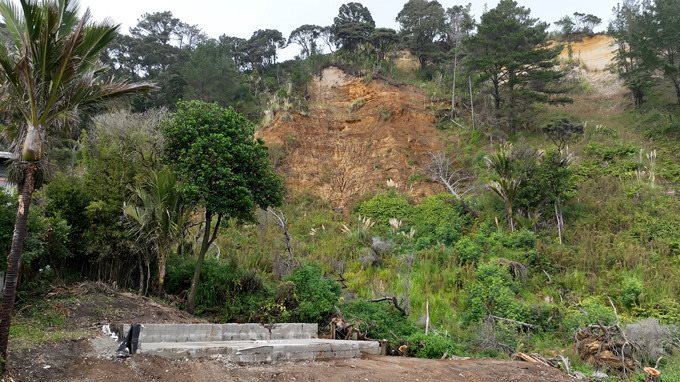
Media release: Te Whare Wānanga o Waitaha University of Canterbury | New UC-led research shows where future Cyclone Gabrielle-like storms could cause more landslides and how communities can reduce the risk.
In 2023, Cyclone Gabrielle triggered an estimated 800,000 landslides across the North Island, making it one of the most extreme landslide events ever recorded.
New research by Te Whare Wānanga o Waitaha | University of Canterbury (UC) and Earth Sciences New Zealand suggests that under a warmer climate, future storms similar to Cyclone Gabrielle could be even more extreme, triggering tens of thousands more landslides across parts of the North Island, and highlighting the need for targeted planning in vulnerable areas.
Published in Scientific Reports, the study examined landslide hazards in Tairāwhiti and Hawke's Bay under a +2°C warming scenario.
The researchers modelled how many landslides would have been triggered if Cyclone Gabrielle had occurred in this warmer climate.
As well as the number of landslides increasing dramatically, the results suggest these new landslides are likely to occur in areas already prone to slipping, intensifying the hazard in already vulnerable locations.
The research calls for action: map the riskiest slopes, avoid or restrict development there, prioritise funding in known hotspots, and integrate ‘silvopastoral approaches’ — planting trees within vulnerable areas to improve slope stability.
Lead author, UC PhD candidate Livio Dreyer, said the research will empower planning that protects communities in the future.
"By combining landslide observations from Cyclone Gabrielle with climate and landscape data, we were able to build a picture of which slopes are most hazardous and how that hazard could change in a warmer climate. This helps turn complex modelling into information that can support real-world planning."
Study co-author, Senior Lecturer Above the Bar Tom Robinson from UC's School of Earth and Environment, said the research provides a valuable tool for understanding the realities of climate change impacts.
"Cyclone Gabrielle clearly showed us how devastating these storms can be. This research uses the concept of a ‘storyline approach’ to take an event that communities have experienced and ask how it might behave in a warmer climate. That makes the technical aspects of future risk much easier to understand and, importantly, much easier to plan for."
Dr Kerry Leith from Earth Sciences New Zealand said the findings demonstrate the importance of using climate science to inform practical adaptation measures.
"We can't prevent extreme weather events from occurring, but we can reduce their consequences. Identifying high-risk areas and investing in targeted mitigation measures, including appropriate land management and vegetation cover, will help communities better withstand future storms."
The collaborative study, Increasing landslide susceptibility and intensity under climate change for Aotearoa New Zealand, was published in Scientific Reports. UC’s Associate Professor Marwan Katurji and Senior Lecturer James Williams were also part of the research and publication team.
print this story

Southern Ocean might be best place to fertilise for carbon dioxide removal
Fri 31 Jul 2026
Media release: Springer Nature | The Southern Ocean and parts of the Pacific near the equator may be the best places to fertilise if we want to remove the most carbon dioxide from the atmosphere while minimising the impact on the environment, according to international research.

Greenpeace calls for citizens assembly to reform electoral finance laws
Thu 30 Jul 2026
Media release | Greenpeace is calling on all political parties to support a citizens assembly to reform electoral finance laws in light of the alarming flood of political donations threatening to drown democracy in New Zealand.
Biochar market predicted to reach US$1.6 billion by 2035
Thu 30 Jul 2026
Media release: Transparency Market Research | Strong growth in the global biochar market will be driven by sustainable agriculture and carbon sequestration initiatives.

Culture shapes the meaning of sustainability, NZ study finds
Mon 27 Jul 2026
Media release: Bioeconomy Science Institute | Cultural context changes what sustainability means to people, a new New Zealand study finds.

New funding round opens for Auckland zero waste projects – $500k available
24 Jul 2026
Media release | Auckland Council is inviting applications for the 2026 Waste Minimisation and Innovation Fund (WMIF) with $500,000 available to support projects that reduce waste and increase recycling and reuse to help achieve Auckland’s goal of zero waste by 2040.
Turning waste into climate-resilient soils for communities
24 Jul 2026
Media release: University of Canterbury | Christchurch’s Red Zone is being used as a test bed to see whether biological wastes (biowastes) can help transform contaminated soil into climate-resilient soil.

Dry-year reliability obligation should fall on generators, not major electricity users – MEUG
23 Jul 2026
Media release | The Major Electricity Users' Group (MEUG) is urging the Government to redesign its proposed dry-year reliability obligation so responsibility for securing New Zealand's electricity supply rests with generators rather than major electricity users.

Greenpeace launches legal challenge against US$2.5bn expansion by Premier Beehive parent company JBS
23 Jul 2026
Media release | Greenpeace Netherlands has petitioned a Dutch court seeking to compel the world’s largest meat company JBS, to disclose information, in order to challenge its business policies in court. This includes its planned US$ 6 billion global expansion, of which almost half is earmarked for Nigeria.
Select committee report on resource management guts environmental protections
22 Jul 2026
Media release | Forest & Bird says the Environment Committee report on the biggest overhaul of resource management law in Aotearoa New Zealand in a generation is bad news for nature.

Open Letter: Exercise restraint on LNG import facility decision ahead of the election
21 Jul 2026
The Smart Energy Alliance respectfully urges the Government not to enter into a binding commercial agreement for a liquefied natural gas (LNG) import facility in the period immediately preceding the General Election.
