
The environment needs fixes now, says new director
5 Jun 2026
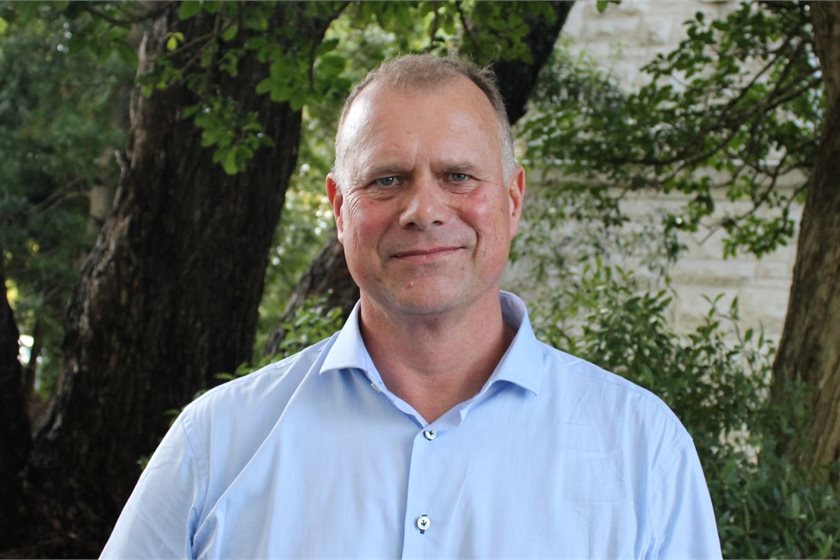
Media release: Auckland University | Innovative solutions to environmental problems are urgently needed, because our wellbeing depends on it, says Professor Dan Tompkins, the new director of the Centre for Climate, Biodiversity and Society, Ngā Ara Whetū, at the University of Auckland.
Environmental problems urgently require solutions, because our wellbeing depends on it, says Professor Dan Tompkins, the new director of the Centre for Climate, Biodiversity and Society, Ngā Ara Whetū, at the University of Auckland.
“Nature supports us in more ways than just food and housing – it’s food for the soul, but it’s also a finite resource that’s easier to damage than restore.
“We urgently need to find better ways to protect and restore the environment, not just for its sake, but for our sake.
“The environment and human society are interdependent: Nature shapes us, just as much as we shape it,” says Tompkins.
A former Honorary Professor of Zoology at the University of Otago, he comes to the top job at Ngā Ara Whetū from a role as science director at Predator Free 2050.
The 55-year-old brings a blend of academic knowledge and practical know-how to his new position.
“All through my career, I’ve been driven by the need for better ways to improve the environment and society.
“Sometimes, I’ve felt frustrated that research and knowledge hasn’t been used as well as it could be, so my focus is on bringing all the elements together to maximise the impact that research can have on the ground.”
Shifting with his family from Dunedin to Auckland is a big move, but Tompkins says the new role was “something I passionately wanted to do”.
Ngā Ara Whetū harnesses the expertise of academics across the University, so it offers scope to develop the complex solutions that are needed to look after the environment – and humans, he says.
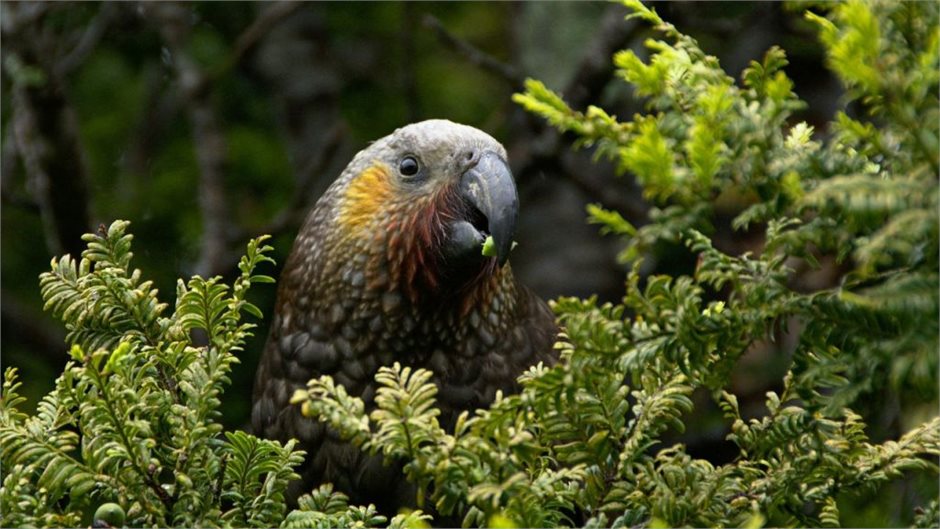 |
| Above: Dan Dan Tompkins is proud of helping bring back native birds through his work at Predator Free 2050. Photo: Tomas Sobek. |
Tompkins’ childhood home among the relatively unspoilt hills, lakes and rivers of Derbyshire, England, instilled a deep appreciation for the natural world, he says.
That inspired him to complete an honours degree in Natural Sciences at Cambridge University in 1992, and a doctorate in Zoology at the University of Oxford in 1996.
His doctoral research led him to the rainforests of Borneo, where a tiny bird, the swiftlet, was under threat, due to commercial harvesting of its nests for a traditional Chinese remedy, bird’s nest soup.
“My field site was a 70-metre-high limestone cavern, with about two million birds and four million bats.
“The floor was like an Indiana Jones movie, with cockroaches, rat snakes and giant poisonous centipedes.”
During his time in Borneo, he recommended ways to harvest the swiftlets’ nests more sustainably.
Since then, his research has helped identify drivers of diseases affecting native wildlife, predict the impacts of climate change on conservation management in New Zealand, and support global policy development on new environmental technologies.
In 2016, Tompkins became involved in the project he is most proud of so far – helping eradicate mammalian predators across more than 100,000 hectares of New Zealand.
“It took courage to do things differently and use a bottom-up approach to research and conservation.
“I was focused on the hurdles people were facing on the ground and trying to empower them to have the greatest impact.
“Predator Free 2050 has already made a huge difference – the native birds started coming back within a few years.”
In his new role, Tompkins is similarly focused on bringing together academic expertise, mātauranga Māori, and community and sector insights to solve the environmental problems that urgently need to be addressed.
“Research has to be linked to making a critical difference,” he says.
Associate Professor Maria Armoudian and Professor Jacqueline Beggs have both resigned from their positions as Ngā Ara Whetū co-directors, but remain with the University.
print this story

New funding round opens for Auckland zero waste projects – $500k available
Fri 24 Jul 2026
Media release | Auckland Council is inviting applications for the 2026 Waste Minimisation and Innovation Fund (WMIF) with $500,000 available to support projects that reduce waste and increase recycling and reuse to help achieve Auckland’s goal of zero waste by 2040.

Turning waste into climate-resilient soils for communities
Fri 24 Jul 2026
Media release: University of Canterbury | Christchurch’s Red Zone is being used as a test bed to see whether biological wastes (biowastes) can help transform contaminated soil into climate-resilient soil.

Dry-year reliability obligation should fall on generators, not major electricity users – MEUG
Thu 23 Jul 2026
Media release | The Major Electricity Users' Group (MEUG) is urging the Government to redesign its proposed dry-year reliability obligation so responsibility for securing New Zealand's electricity supply rests with generators rather than major electricity users.

Greenpeace launches legal challenge against US$2.5bn expansion by Premier Beehive parent company JBS
Thu 23 Jul 2026
Media release | Greenpeace Netherlands has petitioned a Dutch court seeking to compel the world’s largest meat company JBS, to disclose information, in order to challenge its business policies in court. This includes its planned US$ 6 billion global expansion, of which almost half is earmarked for Nigeria.

Select committee report on resource management guts environmental protections
Wed 22 Jul 2026
Media release | Forest & Bird says the Environment Committee report on the biggest overhaul of resource management law in Aotearoa New Zealand in a generation is bad news for nature.

Open Letter: Exercise restraint on LNG import facility decision ahead of the election
Tue 21 Jul 2026
The Smart Energy Alliance respectfully urges the Government not to enter into a binding commercial agreement for a liquefied natural gas (LNG) import facility in the period immediately preceding the General Election.

Tauranga secures international funding to support rangatahi climate action
16 Jul 2026
Media release: Tauranga City Council | Tauranga has been selected as one of 300 cities worldwide to receive funding through the Bloomberg Philanthropies Youth Climate Action Fund, creating new opportunities for local rangatahi to turn their climate action ideas into reality.

University launches worldwide search for nature-focused researchers
15 Jul 2026
Media release | As governments and businesses around the world grapple with climate change and biodiversity loss, Waipapa Taumata Rau, University of Auckland is launching an international search for ten PhD researchers to help shape a more nature positive economy.

New entrant seeks to expand exploration portfolio
14 Jul 2026
Media release | Resources Minister Shane Jones has welcomed further investment interest in New Zealand's petroleum sector, with a recent new entrant seeking to expand its exploration interests in the offshore northern Taranaki Basin.

Fifth new petroleum application targets Taranaki
8 Jul 2026
Media release: New Zealand Government | An application targeting frontier deepwater in the Taranaki Basin marks the fifth permit application to prospect or explore for petroleum since the removal of the exploration ban, Resources Minister Shane Jones says.
