
Planned coal mine borders internationally significant wetland
30 Apr 2026
By Liz Kivi
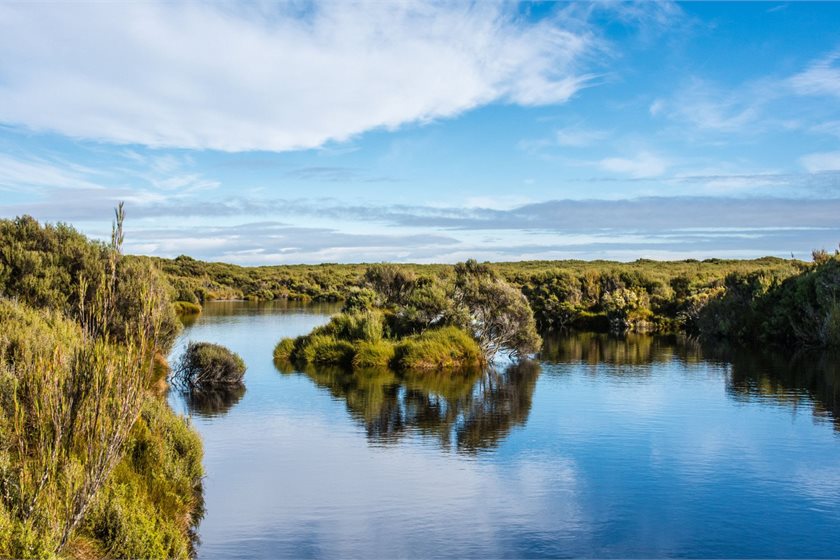
Victorian Hydrogen, the company behind plans for a huge coal-to-urea project, has applied for a permit to explore for coal next to an internationally significant wetland in a sensitive catchment in Southland.
Last week the Australian-based company announced it is developing a new $3 billion fertiliser operation in Southland, aiming to mine about 3.5 million tonnes of unprocessed coal each year for a urea fertiliser plant, which it will apply for under fast-track legislation.
Pacific Fertilisers, a wholly-owned subsidiary of Victorian Hydrogen, has applied for a coal exploration permit for a 3,161-hectare area bordering Awarua-Waituna Wetland.
Awarua-Waituna is one of the largest remaining wetland complexes in New Zealand, and is “important for its biological diversity and cultural values”, according to the Department of Conservation.
It was the first New Zealand wetland to be protected under the Ramsar Treaty, an intergovernmental treaty adopted in 1971 to protect internationally significant wetlands.
Chelsea McGaw, regional conservation manager, Otago and Southland Forest & Bird, told Carbon News the wetland and lagoon complex provides habitat for more than 80 bird species, numerous moths, native fish, and rare plant life.
“The proposed permit borders the Waituna Wetlands, an ecologically and internationally significant area that holds Ramsar status. Waituna was New Zealand’s first wetland system recognised under the Ramsar Convention, reflecting its outstanding biodiversity and the vital role it plays in supporting a wide range of species.”
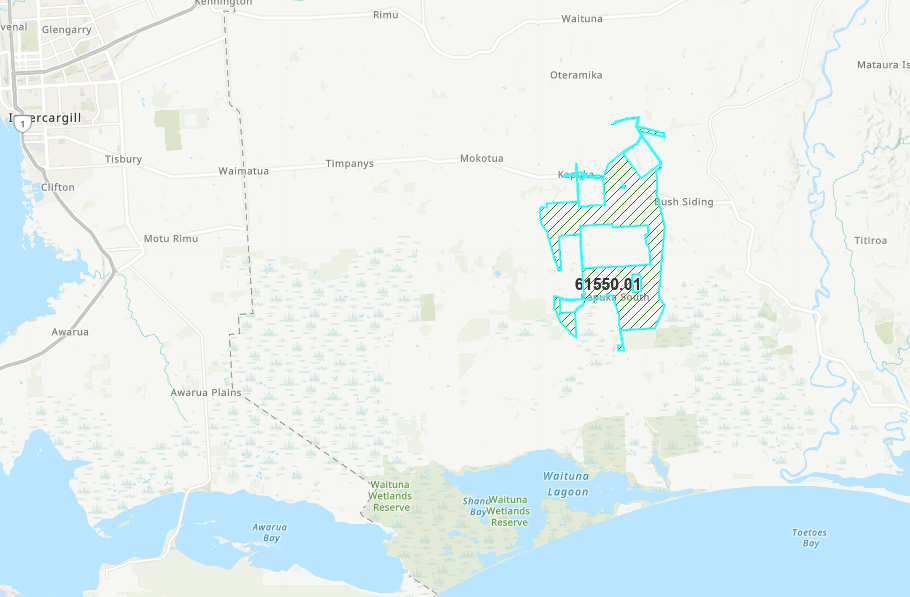 |
| Above: Shading shows the area where Victorian Hydrogen has applied for a permit to explore for coal. IMAGE: New Zealand Petroleum and Minerals website |
Wetland under ‘significant pressure’
Lignite, the coal which Victorian Hydrogen is planning to strip mine for its fertiliser plant, is poor-quality ‘brown’ coal with a low energy content and high moisture levels, releasing more greenhouse gas than regular black coal during processing. Air and water pollution in the sensitive Waituna Catchment are also a concern for the project’s opponents.
"This environment is already under significant pressure from surrounding farmland, and introducing a new development alongside it risks compounding that stress. Any additional pressure on this fragile system could place the ecosystems and wildlife that depend on it at serious and increasing risk,” says McGaw.
The wetland is already under threat from climate change, and was damaged by fire in 2022 when 1370ha were burned. DOC announced it was showing positive signs of recovery earlier this year.
The wetland is also the site of one of the Government’s nature credits pilots, announced last year, with farmland restoration aiming to reap credits.
Rehabilitation
In announcing the project last week, Victorian Hydrogen executive director Allan Blood said the company was dedicated to “transparent engagement” with stakeholders, including local iwi, Ngāi Tahu rūnanga, councils, farmers and landowners across the exploration area.
Blood also said that mining operations will be designed to minimise disruption, with progressive rehabilitation and more-than-fair compensation for affected landowners.
“There will be no requirement to acquire farms. Mining will occur in long, narrow strips affecting only a small portion of land at any one time. Land will be rehabilitated progressively, and any loss of productivity will be fully compensated by a multiple. We hope that the project will be seen as a substantial additive to annual farm income.”
Blood is claiming the project will be zero emissions, however a sustainable energy expert told Carbon News that would be “extremely unlikely if not impossible.”
Victorian Govt too 'woke' about coal
Blood has complained that the Victorian state government blocked his plan for a similar coal-to-urea plant in Australia, which is why he came to New Zealand. “It’s purely an ideology against coal.”
He told Sky News that the New Zealand Government had welcomed him “with open arms”.
“The Government have been unbelievably welcoming. We’ve already applied for and been given priority over the coal that we want. We’ve done more in New Zealand in the last five to six months than we did in Victoria in the last five to six years.”
Blood said the Australian project had had backing from a Chinese multinational and he had spent “over $40 million” trying to get the project underway before giving up and moving it to New Zealand.
Blood also told The Country that the “very wokey green Labor lefty government” had gone “idealogically crazy” and blocked the previous project.
“Anything to do with coal is a four-letter word, regardless of environmental outcome, which is stupid.”
He claimed the plan for the Victorian project would have been net-negative emissions.
Blood said he had had three meetings with Resources and Regional Development Minister Shane Jones, who had a “go-getter” attitude. “I find him very progressive.”
Fertiliser supply crunch coming?
New Zealand agriculture is heavily reliant on synthetic fertiliser, with its use growing 600% since the 1990s. The country uses a significant amount of imported fertiliser made from fossil gas, with about 500,000 tonnes now imported every year.
However supply chains for synthetic fertiliser, as well as for the fuel needed to make it, are expected to be severely impacted by supply chain disruption due to the Iran war.
Ballance Agri-Nutrients, which operates the Kapuni ammonia-urea plant in Taranaki, is also facing gas supply pressure as domestic production declines.
print this story
Story copyright © Carbon News 2026

KiwiSaver investments in fossil fuel production up 30% to $5b
Fri 31 Jul 2026
By Liz Kivi | New Zealanders' retirement savings are increasingly split between rapidly growing investment in clean energy leaders and rising exposure to fossil fuel expansion, with funds still chasing investments in areas "of concern" that Kiwis say they want to avoid.

Legislation to block climate lawsuits gets select committee green light
Fri 31 Jul 2026
By Liz Kivi | The Justice Select Committee has reported back on the Government’s controversial legislation to halt climate lawsuits, with the majority of the committee recommending passing it without amendment.
Batteries and flexible electricity use could save NZ $20b by 2050
Fri 31 Jul 2026
By Oli Lewis | Rapid expansion of batteries and flexible electricity use could save energy users between $5.4 billion and $20.8b through to 2050, new modelling suggests.
Govt launches loan scheme to help businesses transition from gas
Fri 31 Jul 2026
Businesses looking to reduce their reliance on natural gas can now apply for government-backed loans under a new scheme designed to help fund energy transition projects, with the Crown guaranteeing up to 80% of eligible loans and unlocking an estimated $1.2 billion in lending.

Commission's report fails to recognise biophysical limits
Fri 31 Jul 2026
By Mike Joy | OPINION: The Climate Change Commission’s latest report does a great job of revealing how badly we have failed to reduce our emissions.

Media round-up
Fri 31 Jul 2026
In our round-up of climate coverage in local media: New Zealand cows are set to emit far more climate pollution than the government projected; Labour vows to keep billions in conservation costs off councils if elected; and protections for hoiho around Otago Peninsula are to be made permanent.
Govt’s first post-ban offshore exploration permit draws backlash
Thu 30 Jul 2026
By Shannon Morris-Williams | The Government has approved the first offshore petroleum exploration permit since repealing the 2018 ban. But lawyers say the decision raises 'serious' legal questions, as seemingly at odds with guidance from the country's highest court.
NZ Steel closes in on first heat from electric arc furnace
Thu 30 Jul 2026
By Oli Lewis | The first truckloads of scrap steel are being delivered to New Zealand Steel as the company works through the final stages of a significant emissions reduction project.

Rail revival key to reducing transport emissions: new strategy
Thu 30 Jul 2026
By Shannon Morris-Williams | Future is Rail has launched an election manifesto setting out a national strategy for the incoming Government to rebuild New Zealand's passenger and freight rail network, with proposals ranging from overnight train services to nationwide electrification.

Upton: Environmental information is critical national infrastructure
Thu 30 Jul 2026
By Oli Lewis | New Zealand has a once-in-a-generation opportunity to ensure environmental management decisions are based on shared, high-quality data.
