
Environmental groups launch legal action over Govt's 'tick-box approach' to conservation land
8 Apr 2026
By Liz Kivi
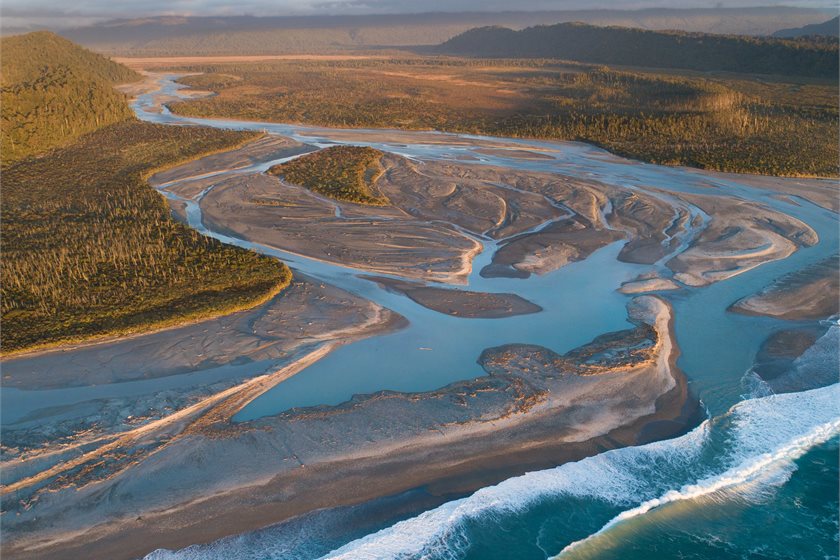
Forest & Bird and the Environmental Defence Society are taking the Government to court over decisions about the future of publicly-owned land on Te Tai Poutini/the West Coast.
The environmental organisations have filed judicial review proceedings in the High Court, claiming the Government took a ‘tick‑box approach’ to reviewing stewardship land.
They claim that the Minister’s 11 December 2025 decisions failed to protect some of the most ecologically significant public conservation land, including parts of Te Wāhipounamu South West New Zealand World Heritage Area, and were made without the transparency or legal reasoning required under the Conservation Act.
The case is challenging 99 of the Conservation Minister’s 576 decisions, covering more than half of the 644,000ha of stewardship land that was reviewed.
“Stewardship land is vital public conservation land that includes some of New Zealand’s most important ecosystems – ancient forests, rare wetlands, wild rivers, and the last refuges of threatened species,” says Forest & Bird’s Canterbury West Coast regional conservation manager, Nicky Snoyink.
Around 30% of public conservation land is held as stewardship land – more than 2.7 million hectares or 9% of New Zealand’s total land area. Many of these areas are home to threatened species and high-priority ecosystems.
“The minister’s decisions leave high‑value places vulnerable despite years of expert ecological assessment, public submissions, and clear evidence of their outstanding conservation importance,” says Snoyink.
“The Denniston Plateau should have been protected as a scientific reserve because of its extraordinary ecological values. Instead, it has also been left as stewardship land with a massive fast-track coal mining expansion looming over it, which would totally destroy Denniston’s ecosystems.
“The Waitaha Forest should have been added to Westland Tai Poutini National Park, but instead was left in the weakest possible conservation category, with no explanation.
“Then, in late March, a fast-track panel’s draft decision approved a previously declined hydro scheme on the Waitaha which would dewater a spectacular and near-pristine gorge which is worthy of national park status.”
Snoyink says the court action focuses on parcels of the highest ecological importance, where the consequences of inaction are the most serious.
“After four years of work by two expert panels, a full public submission process, and hundreds of pages of advice from the Department of Conservation, the Minister released a simple list of ‘proceed’ or ‘do not proceed’ decisions with no reasons at all.
“For decisions affecting hundreds of thousands of hectares of public land, that is simply not good enough.”
The current reclassification process was initiated in 2021 for West Coast stewardship land, and was intended to be followed by further reviews across the country.
The organisations say the Minister’s approach treated every decision as a binary choice. “The minister does not appear to have undertaken a careful evaluation of conservation values and consideration of alternative classifications. Forest & Bird, along with many submitters, put forward alternative options, but there is no indication the Minister considered any of these options.
“The minister appears to have applied the same tick‑box approach across all decisions, even where the law required a more careful assessment. That raises serious questions about whether the correct statutory criteria were applied,” Snoyink says.
A key concern relates to nationally significant areas that were recommended for higher protection by the National Panel and supported by DOC. The National Panel recommended 72,800 hectares for National Park addition, yet only 4,298 hectares were referred to the New Zealand Conservation Authority.
“This was a once‑in‑a‑generation opportunity to secure real protection, but the minister’s decisions have left most of those areas in limbo, and in many cases, at risk,” says Snoyink.
“Public conservation land is for people and for nature – these are our wild places, we need to safeguard them for future generations.”
print this story
Story copyright © Carbon News 2026

'Electricity election': Labour promises $160m SolarSaver scheme funded by gas investment cuts
Today 11:45am
By Oli Lewis | Labour is promising to reprioritise $160 million from the Gas Security Fund to pay for its new SolarSaver policy, designed to accelerate the roll-out of household solar.

Experts sound alarm over escalating climate impacts
Today 11:45am
By Shannon Morris-Williams | Scientists are warning climate impacts are accelerating across our region after a World Meteorological Organization report found last year was the South-West Pacific's second-warmest on record, with impacts including rising seas, marine heatwaves and extreme weather.

Energy Minister completes overhaul of EECA board
Today 11:45am
By Oli Lewis | The board of the Energy Efficiency & Conservation Authority (EECA) has been completely overhauled since the last election, with Energy Minister Simeon Brown responsible for all six appointments.

‘We sure as hell ain't sending billions offshore’: Luxon on Paris target
Today 11:45am
By Liz Kivi | Prime Minister Christopher Luxon has again said he won’t “send billions offshore” to meet New Zealand’s international climate target.
Pūkaki consent puts dry-year rules in spotlight
Today 11:45am
Meridian Energy’s approval to draw Lake Pūkaki below its normal operating range has exposed a gap in New Zealand’s electricity security arrangements.

Seymour ‘imploring’ council to go easy on foresters is abuse of authority: EDS
Tue 7 Jul 2026
By Liz Kivi | The Environmental Defence Society says that Regulation Minister David Seymour’s attempt to influence Gisborne District Council to ‘go easy’ on forestry companies in enforcing environmental laws is a clear abuse of ministerial authority.

Greens announce water policy, including nitrogen fertiliser phase-out
Tue 7 Jul 2026
By Liz Kivi | The Green Party announced its water policy yesterday, promising to phase out synthetic nitrogen fertiliser, as well as destructive fishing methods, if the party is elected in November.

Swarbrick slams $50m critical minerals funding as 'Trump's war machine' subsidy
Tue 7 Jul 2026
By Shannon Morris-Williams | The Green Party has criticised the Government's investment into two West Coast critical minerals projects, claiming the funding could ultimately support the United States defence industry rather than New Zealand's clean energy transition, while Shane Jones dismissed opponents as "flat earth idiots".

Faster consenting, harder trade-offs
Tue 7 Jul 2026
Faster consenting is starting to produce results, but this week's decisions show speed has not removed the harder trade-offs around electricity security, conservation, ecology and climate liability.

Weakening Clean Car Standard would hurt EV uptake, industry warns
Tue 7 Jul 2026
By Shannon Morris-Williams | Electric vehicle advocates say weakening the Clean Car Standard would reduce access to new EV models, undermining New Zealand's place in global supply chains and slowing the country's transition to lower-emissions transport.
