
Gisborne $29.7m recovery funding bid awaits Government decision
27 Mar 2026
By Zita Campbell, Local Democracy Reporter
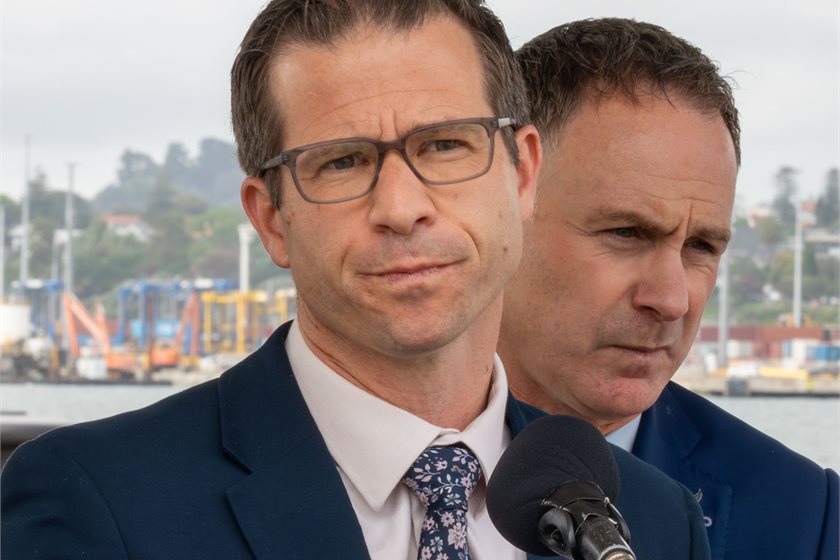
Gisborne leaders are awaiting the Government’s response to a $29.7 million funding bid for a joint agency/iwi-led recovery plan after January’s severe weather event.
The severe rain devastated northern parts of the East Coast, with the aftermath likened to “a war zone”.
Regional leaders sent a funding bid to Emergency Management and Recovery Associate Minister Chris Penk on February 26.
Gisborne Mayor Rehette Stoltz told Local Democracy Reporting they were grateful to have received the Government’s contribution so far, which included donations to the Mayoral Relief Fund and reallocation for woody debris clean-up.
“This has directly supported initial relief to whānau whose homes were impacted by the weather event and efforts towards clean-up in the communities.”
However, more funding support was essential to enable these communities to recover, Stoltz said.
Penk said the Government had not yet decided on the funding request, but it was being “carefully” considered.
Stoltz said the council would continue its work to draw on resources and co-ordinate with public sector and government agencies to support the needs of families and restore infrastructure.
The letter was co-signed by representatives from Te Runanganui O Ngāti Porou (Tronp), the council and the region’s economic development and tourism agency, Trust Tairāwhiti.
It stated the region needed support to contribute to outcomes identified in the national infrastructure plan.
“Resilient infrastructure supports wellbeing, drives productivity and economic growth, and helps achieve broader social and environmental goals,” the letter reads.
According to the joint agency/iwi-led recovery model sent to Penk, the funding bid covers $8.1m for community wellbeing, $13.5m for environmental resilience, $6.2m for the primary sector – land management, and $1.9m for economic growth.
The governance would require commitment by key partner agencies, the council, Trust Tairāwhiti and Tronp.
According to the letter, when the minister visited the region on February 16, he had heard about what each group was working through after the severe weather event in Pōtaka, Wharekahika, Te Araroa, Horoera, Awatere and Rangitūkia on January 23.
The event impacted the “heart of Ngāti Porou communities”, the letter reads.
The Tronp relationship accord was considered “a key component to support the affected hapū, marae, and landowners in their recovery”.
Without support for environmental resilience, “our rivers will continue to flood and cause irreparable damage to communities and whenua Māori”.
The affected areas were remote and Māori community-based, with the per-unit cost of recovery materially higher because of travel time, a shortage of trades, freight premiums and limited ability to use insurer-appointed contractors.
“Without targeted intervention, a short-term weather event becomes long-term economic scarring through avoidable business closures, employment loss and reduced primary production continuity,” the letter reads.
It also stated 30,000ha of Māori land with an annual economic return of $10m risked becoming “uneconomic” with further compounding access challenges already affecting East Cape.
According to a council document, the wellbeing component would cover iwi/hapū-led recovery personnel, navigation support, community-led or marae-led response and recovery planning, and temporary housing/future housing.
For environmental resilience, the bid included the de-risking of rivers, river management, landslide investigation and management, waste, debris, sediment and silt control, and roading (local and state highways).
The report said that through dedicated community leads, work was underway to strengthen community-led recovery approaches. These aligned with the response and recovery leadership framework, which promotes community leadership supported by agencies and partners.
“All organisations involved are working collaboratively while remaining mindful of each other’s capability and capacity to ensure a co-ordinated approach.”
LDR is local body journalism co-funded by RNZ and NZ On Air.

print this story

Labour promises to repeal bill to block climate lawsuits
Fri 3 Jul 2026
By Liz Kivi | The Government bill aiming to block climate lawsuits passed its first reading under urgency after a heated debate in Parliament last night, with the Labour Party promising it will repeal the bill if elected in November.

Taranaki offshore wind developer eyes mid-2030s commissioning after law change
Fri 3 Jul 2026
By Oli Lewis | The first offshore wind farm in New Zealand could be commissioned by the mid-2030s, with its developer saying a new permitting framework has bolstered investor confidence.
Confidence in tackling climate risks remains low
Fri 3 Jul 2026
By Shannon Morris-Williams |New Zealanders have little faith in the country's ability to tackle climate risks, with a new poll finding fewer than one in three are confident the country can reduce the impacts of climate change, while many are calling for stronger Government leadership on climate hazards.

EECA seeks answers on NZ's future fuel mix
Fri 3 Jul 2026
By Shannon Morris-Williams | The Energy Efficiency and Conservation Authority is looking for specialists to assess the role future low-emissions fuels could play in New Zealand’s energy system.

Australia is at least ten years ahead of us on solar. It’s time we caught up.
Fri 3 Jul 2026
By Ed Harvey | OPINION: Starting this week, millions of households across New South Wales, South Australia and Southeast Queensland will have access to three hours of free electricity every single day.

West Coast Conservation Board chair concerned over loosening commercial concessions
Fri 3 Jul 2026
By Vihan Dalal, Local Democracy Reporter | The West Coast Conservation Board chairman Mike Legge has raised concerns with a move by the Government to amend the Conservation Act to loosen how commercial concessions are granted on conservation land.

Media round-up
Fri 3 Jul 2026
In our round-up of climate coverage in local media: Getting the most impact from the Government's investment in school solar; NZ needs an objective assessment of LNG imports and renewable storage options; and while greener suburbs are healthier on all kinds of metrics, achieving them isn’t straightforward.

Offshore renewable energy bill passes, opening path for developers
Thu 2 Jul 2026
By Oli Lewis | Feasibility permits for offshore wind developments could be issued within months after the Government passed a long-awaited law to establish a regulatory regime.

Ombudsman upholds complaint PM’s office ‘unreasonably withheld’ climate law briefing
Thu 2 Jul 2026
By Liz Kivi | The Ombudsman has upheld a complaint that the Prime Minister’s office unreasonably held information, as Parliament is set to read – under urgency – the climate bill at the centre of the scandal.
High Court upholds forestry directors' environmental liability
Thu 2 Jul 2026
By Shannon Morris-Williams | The High Court has dismissed appeals by a forestry company, its directors, and a landowner, against enforcement orders over environmental damage in a Gisborne forest, reinforcing that company directors can be personally liable for environmental breaches.
