
Empty emergency reserve forces $6.1m flood repair loan
2 Mar 2026
By Kira Carrington, Local Democracy Reporter
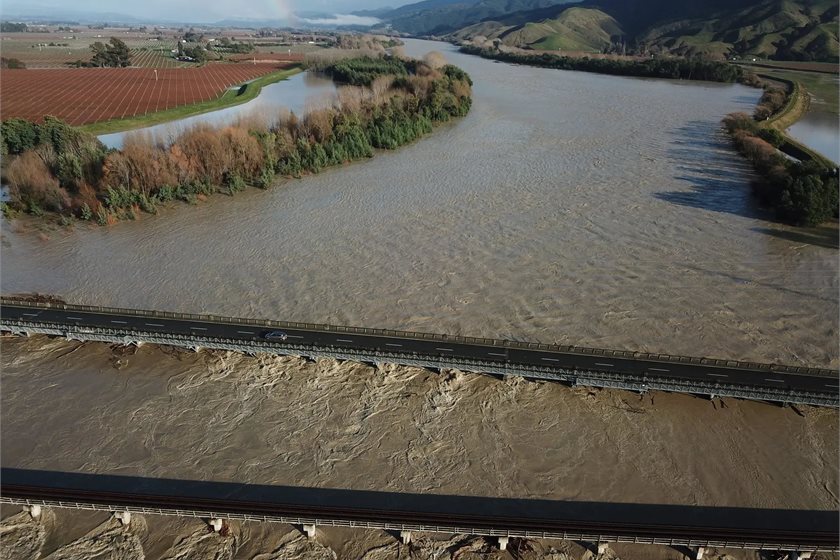
A depleted emergency fund has forced Marlborough to borrow $6.1 million to repair damage from last year's floods.
Councillors voted unanimously to take out the loan after a report on the damage of last June and July’s flood events at Marlborough District Council’s Infrastructure and Community Facilities Committee meeting on Thursday.
Council senior rivers operations engineer Gregor Punzel told councillors the June event only caused minor to moderate damage to river infrastructure such as stopbanks, berms and drainage, but the impact was made worse by the July event two weeks later.
“[There was] not enough time in between the weather events to do the repairs that were needed.”
The total cost of flood repairs was an estimated $11.5m, he said.
“[We’ve] already spend about $1m and that includes also the emergency response like the pumping [water out of properties],” he said.
“A contingency allowance of $2.9m, or in other words 25%, should be in there as well.”
The total repair works would require an estimated 75,000 tonnes of rock, Punzel said. Both priority A and priority B repairs would need to be completed by this winter.
“The berms remain very vulnerable and could have catastrophic consequences in another flood,” Punzel said.
Council chief financial officer Geoff Blake said $1m of the repair bill could be funded through the Local Authority Protection Programme, the council’s insurer for underground and flood protection assets.
The National Emergency Management Agency could fund another $4.4m, reducing the council’s bill to $6.1m.
While that $6.1m would usually come out of council’s Emergency Events Reserve, Blake said the reserve had become so depleted that using it to fund these repairs would put the reserve millions of dollars in the red.
Blake said staff recommended the council take out a loan funded by the River Land Lease Reserve, with no impact on rates. Blake said the council should opt for a shorter five-year loan with a yearly payment of $1.4m.
“I think that we think about the shortest term possible,” Blake said.
“Without a doubt there are going to be more of this, so we need to make sure that we're not creating a financing headache for a longer term.”
The River Land Lease Reserve was big enough to service the loan if it was carefully managed from now on, Blake said, but it would draw the fund away from other water infrastructure such as pipes.
“I would argue that our river protection is a water infrastructure as well,” he said.
An estimated 300,000 to 400,000 tonnes of rock would be needed for infrastructure projects, including the Spring Creek stopbank, over the next two years, Blake said.
Councillor David Croad said the report was “sobering”, noting Marlborough had about 300km of stopbanks.
“We've got a big network that we're responsible to look after, and these events are becoming more severe and more regular,” Croad said.
Councillor Scott Adams said the need for a loan showed the importance of replenishing the Emergency Events Reserve. The reserve’s funding could be threatened by the incoming rates cap.
“This [loan] paying it off over five years [would be a] 1.28% increase in rates if was a rate-funded loan,” Adams said.
“So [the] big picture shows an emergency event reserve is highly important to have in these days to come. And they will come, there will be more of them.”
Replenishing the reserve would add up to 0.5% to rates each year from 2027 to 2034, as set in the Long Term Plan.
June’s event was the third largest flood event on record for the Wairau River and the Taylor River and the largest flood event for the Awatere River, Punzel said.
“The Awatere River at the time was a 1-in-100-year event ... and the Taylor River was a 1-in-10-year event,” Punzel said.
This was the third major flood event in five years, Punzel said.
“[It] makes the question of what is a 1-in-100-year event,” he said.
LDR is local body journalism co-funded by RNZ and NZ On Air.

print this story

KiwiSaver investments in fossil fuel production up 30% to $5b
Fri 31 Jul 2026
By Liz Kivi | New Zealanders' retirement savings are increasingly split between rapidly growing investment in clean energy leaders and rising exposure to fossil fuel expansion, with funds still chasing investments in areas "of concern" that Kiwis say they want to avoid.

Legislation to block climate lawsuits gets select committee green light
Fri 31 Jul 2026
By Liz Kivi | The Justice Select Committee has reported back on the Government’s controversial legislation to halt climate lawsuits, with the majority of the committee recommending passing it without amendment.
Batteries and flexible electricity use could save NZ $20b by 2050
Fri 31 Jul 2026
By Oli Lewis | Rapid expansion of batteries and flexible electricity use could save energy users between $5.4 billion and $20.8b through to 2050, new modelling suggests.
Govt launches loan scheme to help businesses transition from gas
Fri 31 Jul 2026
Businesses looking to reduce their reliance on natural gas can now apply for government-backed loans under a new scheme designed to help fund energy transition projects, with the Crown guaranteeing up to 80% of eligible loans and unlocking an estimated $1.2 billion in lending.

Commission's report fails to recognise biophysical limits
Fri 31 Jul 2026
By Mike Joy | OPINION: The Climate Change Commission’s latest report does a great job of revealing how badly we have failed to reduce our emissions.

Media round-up
Fri 31 Jul 2026
In our round-up of climate coverage in local media: New Zealand cows are set to emit far more climate pollution than the government projected; Labour vows to keep billions in conservation costs off councils if elected; and protections for hoiho around Otago Peninsula are to be made permanent.

Govt’s first post-ban offshore exploration permit draws backlash
Thu 30 Jul 2026
By Shannon Morris-Williams | The Government has approved the first offshore petroleum exploration permit since repealing the 2018 ban. But lawyers say the decision raises 'serious' legal questions, as seemingly at odds with guidance from the country's highest court.
NZ Steel closes in on first heat from electric arc furnace
Thu 30 Jul 2026
By Oli Lewis | The first truckloads of scrap steel are being delivered to New Zealand Steel as the company works through the final stages of a significant emissions reduction project.

Rail revival key to reducing transport emissions: new strategy
Thu 30 Jul 2026
By Shannon Morris-Williams | Future is Rail has launched an election manifesto setting out a national strategy for the incoming Government to rebuild New Zealand's passenger and freight rail network, with proposals ranging from overnight train services to nationwide electrification.

Upton: Environmental information is critical national infrastructure
Thu 30 Jul 2026
By Oli Lewis | New Zealand has a once-in-a-generation opportunity to ensure environmental management decisions are based on shared, high-quality data.
