
Climate 'dream team' launches foundation targeting 100 million tonnes in emissions cuts
25 Feb 2026
By Shannon Morris-Williams
The New Zealand Climate Foundation, which has the ambitious aim of cutting 100 million tonnes of greenhouse gas emissions by 2035, had its official launch on Monday.
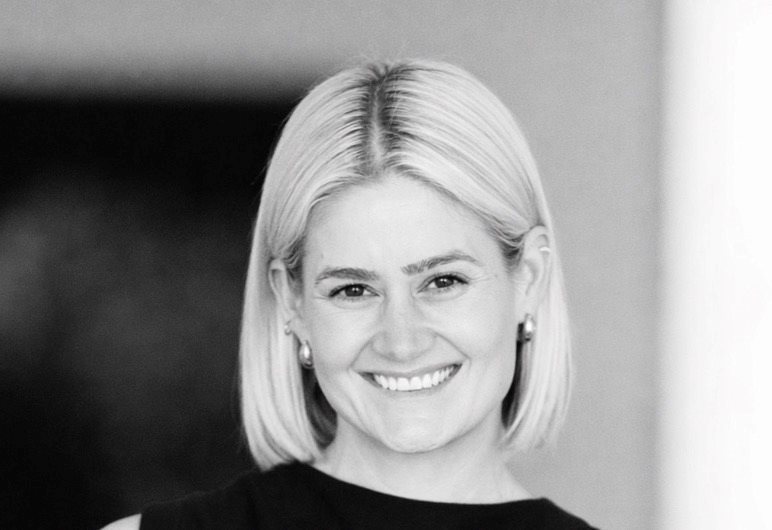
Led by chief executive Izzy Fenwick and chief advisor Dr Christina Hood, with former Climate Change Minister James Shaw as board chair, the organisation is aiming to act as "a focused catalyst" for accelerating proven climate solutions, mobilising capital and strengthening policy settings to drive faster emissions cuts this decade.
According to its website, the foundation is structured around four pillars – activate proven climate solutions; mobilise philanthropic capital; safeguard integrity and ambition; and strengthen system conditions.
“We identify where actions to reduce emissions are most achievable this decade and where progress is constrained,” the organisation says. “We then work to remove those constraints by supporting delivery, mobilising capital, and strengthening policy and market settings.”
Fenwick will run the organisation as CEO. Fenwick also serves on the board of The Aotearoa Circle, a public–private partnership focused on restoring New Zealand’s natural capital and supporting sustainable prosperity. She is a fellow of the NEXT Foundation and a young fellow with India’s Observer Research Foundation.
Fenwick is often in demand as a dynamic speaker at events and sees herself as carrying on the legacy of her father, the late Sir Rob Fenwick, an environmentalist who founded organic compost company Living Earth.
In announcing the foundation on LinkedIn, Fenwick said "2026 is for climate".
"Over the last few years – here in New Zealand and around the world – we’ve seen climate science undermined, climate ambition weakened, and climate language softened, avoided, or removed entirely," she wrote.
“We’ve also seen some of the most severe climate-related weather events on record.
“This year has to be different. Our window to act in ways that will materially change our trajectory is narrowing. And the window to do it in ways that are also economically beneficially is even narrower."
She wants to see action, ambition, and rapid emissions reductions this year.
"The impacts of our changing climate are showing up – economically, environmentally, and socially – every day, here and around the world.
“We can make a difference. We do have the solutions – many of which are also economically beneficial. What we don’t have is the time to delay.
“That’s why, for me, 2026 truly is the year of climate action. My focus now is helping ensure Aotearoa moves faster on the climate solutions we already know will have the biggest impact.”
Fenwick said the foundation was largely the brain child of Dr. Christina Hood, a climate policy expert and public commentator with over 20 years’ experience in climate policy, energy, and carbon pricing.
Hood was formerly the head of the Paris-based International Energy Agency’s Environment and Climate Change Unit, and is currently the head of Compass Climate. She will serve as the foundation’s chief advisor.
Dr Brenda Leeuwenberg has been named as the foundation’s general manager. She brings more than 25 years’ experience leading complex programmes and operations across public, private and not-for-profit settings.
"I am so excited to be working with this incredible team, on this vital mahi, at a time when it has never been more necessary,” Leeuwenberg said on LinkedIn.
“I'm also in awe on a daily basis at the passion, power and intellect of Izzy Fenwick and Christina Hood – my job is to enable theirs, and that feels like a useful thing to be doing.
“There are literal and figurative fires on all fronts – and as Izzy says, 2026 is for climate. For action, ambition and rapid emissions reductions. Let's get to work."
Climate change mitigation specialist Francesca Eggleton has also joined the foundation.
“Our plan is to activate climate solutions that deliver material emissions reductions at the pace and scale the climate emergency actually demands," she wrote in a post on Linkedin.
“For those of us who have worked on climate change for over a decade across government and industry, there is an obvious need for this independent, non partisan climate voice and change agent in Aotearoa New Zealand.”
The foundation’s board of directors include former Green Party co-leader and former Climate Change Minister James Shaw, who has been named as chair, country director for The Nature Conservancy Abbie Reynolds, founding board member of Co-Aotearoa Tori McNoe, chief executive of the Institute of Directors Kirsty Patterson, and business leader and governance specialist Andrew Williams.
print this story
Story copyright © Carbon News 2026

NZ First promises $1 billion for offshore oil and gas
Today 11:30am
By Liz Kivi | New Zealand First wants to “drill baby drill,” and has made an election campaign promise of $1 billion to survey New Zealand’s offshore basins to extract oil and gas, in an announcement at the party’s campaign launch on Sunday.

Govt changes risk weakening climate policy, officials warn
Today 11:30am
By Shannon Morris-Williams | The Government is pushing ahead with plans to remove health and life insurers from New Zealand's climate disclosure regime despite official advice that the move risks undermining the effectiveness of the reporting system anyway.

NZ’s complex problems require visionary solutions, not quick fixes. Here’s how we can govern for the future
Today 11:30am
By Jonathan Boston, Te Herenga Waka — Victoria University of Wellington As New Zealand heads toward another general election, political attention is naturally focused on the issues touching people’s lives right now.

New legislation to bar climate torts proves polarising for submitters
Fri 17 Jul 2026
By Liz Kivi | Opponents of legislation to block climate lawsuits say it could seriously damage investor confidence, while supporters of the same legislation argue that not passing it could be “devastating” for the New Zealand economy.
Climate adaptation plans welcomed, but funding remains the missing piece
Fri 17 Jul 2026
By Oli Lewis | Experts are welcoming a proposal to make climate adaptation planning mandatory, but warn the plans may be ineffective without clarity around who will pay to implement them.

Conservation bill could put development ahead of protection, commissioner warns
Fri 17 Jul 2026
By Shannon Morris-Williams | Parliamentary Commissioner for the Environment Simon Upton says the proposed law changes could give economic development greater weight than conservation, undermining the purpose of the Conservation Act.

Sustainable Business Council listed on submission supporting climate torts bar
Fri 17 Jul 2026
By Liz Kivi | Business New Zealand’s submission supporting legislation to block climate lawsuits raised eyebrows this week for listing the Sustainable Business Council as seemingly in support of the controversial law change.

The arms race to climate calamity
Fri 17 Jul 2026
COMMENT: Both Australia and New Zealand are justifying spending millions of dollars on high-end killing machines by hyping the so-called China threat, while downplaying the very real threat of climate change to the Pacific region, writes Jeremy Rose.

Media round-up
Fri 17 Jul 2026
In our round-up of climate coverage in local media: The Prime Minister’s Office asked Z Energy to hand-deliver climate law briefing, the official watchdog warns of ‘catastrophic consequences’ if the electricity sector can’t adapt to a rush of rooftop solar, and angry customers are complaining about SolarZero contracts.

Government running out of time to lock in LNG import terminal deal before election
Thu 16 Jul 2026
By Oli Lewis | Procurement for a floating LNG import terminal in Taranaki is well advanced, the Government says, but the clock is ticking to sign contracts before the election.
