
Tairāwhiti needs proper Govt support to heal the land – not empty announcements for political optics
24 Feb 2026
OPINION: The Government’s answer to Tairāwhiti’s severe erosion crisis – that the region apply for modest, contestable funding rounds – while rejecting the region's own land transition business case, leaves our long-term resilience hanging in the balance, writes Manu Caddie.
The Government East Coast MP Dana Kirkpatrick recently claimed that the Government’s latest $27.8 million allocation to the Hill Country Erosion Programme (HCEP) is “particularly significant” for Tairāwhiti – but that claim is frankly offensive. Does she think Tairāwhiti residents are stupid?
First, this is not a new initiative. The Hill Country Erosion Programme has been running since 2007. This is simply another funding round of an existing national scheme. There is no new policy, no new framework, and no targeted response specific to Tairāwhiti’s uniquely severe erosion crisis.
Second, the headline number is misleading. The $27.8 million is spread over four years – less than $7 million per year for the entire country. That funding must be shared across councils nationwide. It is contestable. There is no guarantee Tairāwhiti will receive more than it did previously.
In the 2023–2027 round, Gisborne District Council received just $900,000 over four years – approximately $225,000 per year in Crown funding. Councils are required to match the funding dollar-for-dollar, meaning local ratepayers had to find another $900,000 simply to unlock that support.
For one of the most erosion-prone regions in Aotearoa, that level of investment is negligible. While any support is useful, this level is not material in the face of the problems the East Coast now faces.
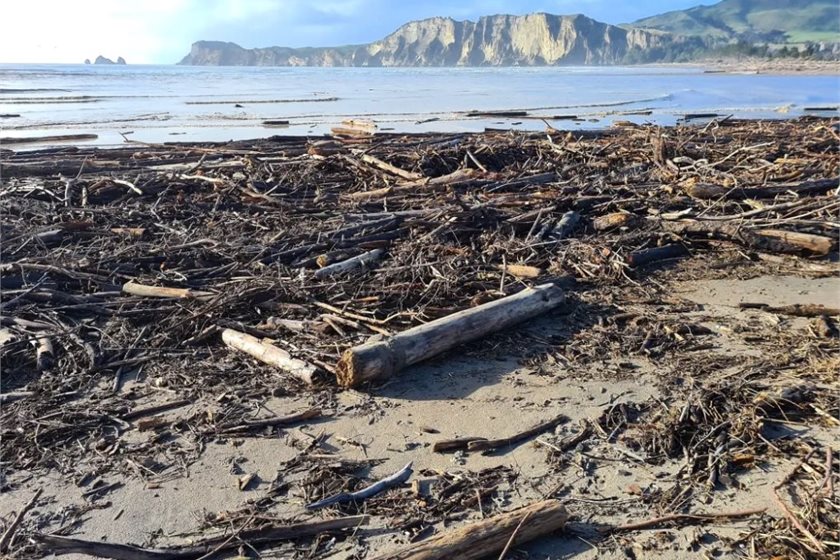
Tairāwhiti’s steep mudstone hill country generates some of the highest sediment yields recorded in the world. As we all know, recent cyclones caused widespread slope failures, forestry debris blockages, stripped farmland and sediment-laden rivers. Infrastructure damage ran into the billions.
Against that backdrop, less than one million dollars spread over four years is not a transformative response. It is not even close.
Over the past 18 months, regional stakeholders – councils, iwi, farming representatives, forestry interests and community leaders – worked collaboratively on a comprehensive Land Use Transition business case.
That proposal sought $359 million over the next decade to:
-
retire the most erosion-prone land from high-risk production
-
establish permanent native cover at scale
-
support diversified, lower-impact land uses
-
plan at catchment scale rather than farm-by-farm
-
reduce long-term disaster recovery costs.
It recognised a basic truth: a significant proportion of land in Tairāwhiti is fundamentally unsuitable for continued use as pasture or pine plantations in a climate-intensified future.
The business case was practical, cross-sector and regionally led. Last month the Government declined to support it.
In that context, presenting $900,000 over four years as “particularly significant” is disingenuous and dishonest, traits this MP and her colleagues are becoming well known for.
The HCEP is a national, contestable programme. Councils must compete for a limited pool of funding. Every dollar requires local matching.
Tairāwhiti does not have the rating base of larger urban regions. Expecting ratepayers here to co-fund erosion mitigation at scale effectively caps what can be achieved.
The comparison is stark:
-
$359 million over ten years requested for structural transition.
-
No guarantees of getting anything, and likely less than $1 million over four years previously delivered through HCEP.
One addresses root causes. The other funds a fraction of incremental mitigation.
If the Government truly accepts Tairāwhiti faces some of the highest erosion risk in the country, proportional investment of a much larger total allocation to land use transition should follow. Instead, the region competes for a small slice of a national fund that averages under $7 million per year.
The political framing suggests this funding will safeguard Tairāwhiti’s long-term resilience.
It will not.
The programme funds farm plans, limited planting and incremental stabilisation. Useful tools – but nowhere near the scale required to address systemic landscape failure.
Calling this funding “particularly significant” for Tairāwhiti creates the impression of decisive action. In reality, it maintains the status quo: modest, contestable funding rounds while rejecting the comprehensive transition plan developed by the region itself.
Tairāwhiti does not need headlines. It needs proportional, sustained commitment from the Crown to match local contributions as clearly outlined in the transition business case.
Until the scale of investment matches the scale of risk, these pathetic announcements are not solutions. They are political optics.
 |
Manu Caddie is a co-founder of Mana Taiao Tairāwhiti, a group of Tairāwhiti residents that organised a petition in January 2023, prior to Cyclone Gabrielle, seeking Gisborne District Council support for stricter land use rules and an independent inquiry into land use practices in the region. He has subsequently been involved in the Transition Advisory Group established by GDC following the Ministerial Inquiry into Land Use in Tairāwhiti.
print this story
Story copyright © Carbon News 2026

Seymour ‘imploring’ council to go easy on foresters is abuse of authority: EDS
7 Jul 2026
By Liz Kivi | The Environmental Defence Society says that Regulation Minister David Seymour’s attempt to influence Gisborne District Council to ‘go easy’ on forestry companies in enforcing environmental laws is a clear abuse of ministerial authority.
High Court upholds forestry directors' environmental liability
2 Jul 2026
By Shannon Morris-Williams | The High Court has dismissed appeals by a forestry company, its directors, and a landowner, against enforcement orders over environmental damage in a Gisborne forest, reinforcing that company directors can be personally liable for environmental breaches.

Govt opens first ETS forestry permit ballot
22 Jun 2026
Applications have opened for the first ballot under new ETS forestry rules, with up to 7,500 hectares of exotic forestry on marginal land on offer for landowners to register in the Emissions Trading Scheme in the first of two annual rounds, totalling up to 15,000ha a year.
Nature-based solutions – such as forestry – crucial for carbon removal
5 Jun 2026
COMMENT: Transitioning from erodible pasture to well-managed forest can yield substantial environmental benefits, writes James Treadwell.
Govt ramps up war on wilding pines with $79m boost
25 May 2026
By Shannon Morris-Williams | The Government is ramping up efforts to contain the spread of wilding pines with a $79 million funding boost aimed at protecting farmland, biodiversity hotspots, tourism landscapes and water catchments across New Zealand.
Govt presses ahead with forestry rule changes despite opposition
14 May 2026
By Shannon Morris-Williams | The Government is pushing ahead with changes to commercial forestry rules despite most submitters opposing the proposals, with critics warning the reforms will weaken councils’ ability to manage erosion and forestry slash risks in vulnerable regions such as Tairāwhiti.

Drop in ETS forestry registrations
5 May 2026
By Liz Kivi | ETS forestry registrations have dropped off this year, with the new mandatory emissions return period, new land-use rules, and carbon price volatility all meaning participants aren’t rushing to register forestry in the emissions trading scheme.
Tairāwhiti deserves better than weakened forestry rules
5 May 2026
OPINION: The government's proposed amendments to forestry standards, released yesterday, ignore the hard lessons learned in our region and ignore the voices that have fought hardest to protect it, writes Manu Caddie.

Wilding conifers continue to plague Southland
17 Apr 2026
By Matthew Rosenberg, Local Democracy Reporter | Fast-spreading conifer trees are causing headaches in Southland as inconsistent funding continues to hinder control efforts.
Wellington planting nears one million trees
30 Mar 2026
By Shannon Morris-Williams | Greater Wellington’s parks restoration programme will hit one million native trees this year, with the first dams to rewet peat wetlands in Queen Elizabeth Park now completed after a years-long effort to bring these ecosystems – and their carbon sequestering superpowers – back to life.
