
Explosive risk brings caution call on LNG
16 Feb 2026
By Craig Ashworth, Local Democracy Reporter
Community energy lobbyists say a Liquified Natural Gas terminal in Taranaki must be built far from homes to protect locals from the risk of catastrophic explosions.
The Government plans to build an import terminal for liquefied natural gas (LNG) in Taranaki to fill the gap left by the region’s emptying gas fields.
Minister of Energy Simon Watts said shipping-in LNG would end the “dry year risk” when hydroelectricity lake levels drop, causing energy price spikes.
Natural gas is chilled to -160°C, turning it liquid for ocean tanker transportation.
It’s then pumped ashore for ‘gasification’: heating and expanding 600-fold back into gas, ready for distribution via existing pipelines.
Taranaki Energy Watch said highly explosive LNG is too dangerous near homes and workplaces.
Spokesperson Sarah Roberts said the risk of leaks was greatest during transfer to shore.
If a small leak ignited and ruptured a storage tank the resulting blast would be catastrophic for New Plymouth, she said.
“Even with the smallest of these LNG proposals, the storage tanks could hold 20 times the energy of the huge explosion that decimated so much of Beirut.”
More than 200 people died and 7000 were injured when ammonium nitrate blew up at Beirut’s port in 2020.
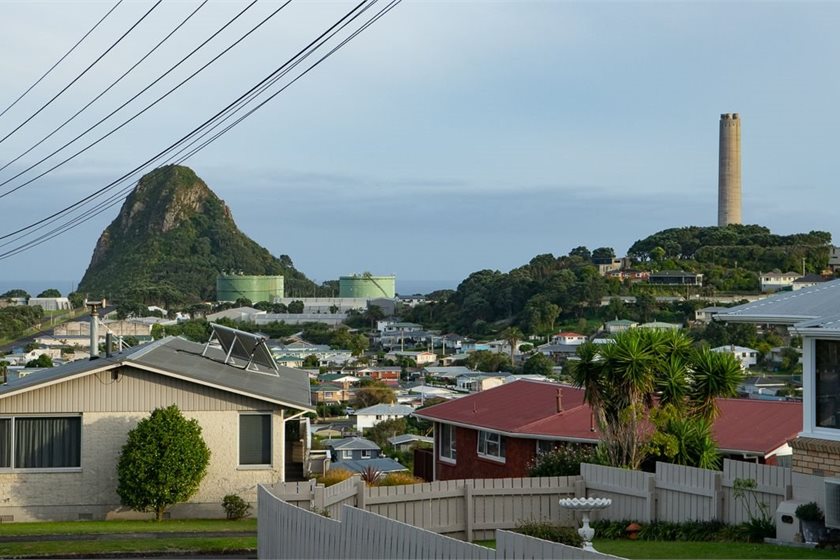
“The suburbs of Moturoa, Paritūtū and Blagdon are most at risk if LNG lands at Port Taranaki.”
Roberts said a Floating Storage and Regasification Unit moored away from land and connected to existing offshore gas pipelines would be safer and cheaper.
“They are locking in gas, making us pay for it, without showing it works environmentally or economically."
"But if they are deadset on this bad idea, don't put it alongside us at New Plymouth’s port.”
The energy minister said LNG was safely handled, converted to gas, and transported in many countries.
Watts said he expects to sign a contract for the LNG terminal in the middle of the year.
The minister wouldn’t discuss the Government’s shortlisted proposals, citing commercial sensitivities.
But he said there were a range of ways to build and operate an LNG terminal.
“It is very possible that an LNG import facility in New Zealand will be ship-based – a floating storage and regasification unit, or floating storage unit.”
The Government was talking regularly with the LNG terminal at Port Kemblar in New South Wales and had spoken with the Singaporean terminal.
“All the accelerated delivery solution proposals are located in and around Taranaki,” Watts confirmed.
Climate Justice Taranaki spokesperson Tuhi-Ao Bailey said that made Port Taranaki the most likely site, with Pātea or one of three offshore production stations also possible.
“Both ports have lots of Māori and low-income residents who’ve already suffered years of boom-and-bust industry, and impacts of industrial chemical exposure,” Bailey said.
Bailey is also Taranaki iwi's representative on the Policy and Planning committee at Taranaki Regional Council, which owns Port Taranaki.
She said locals shouldn’t bear the risk of “an unaffordable, gas-emitting, highly explosive LNG plant, likely right next to a marine reserve and popular beach in the middle of our city.”
“New Plymouth is the sunniest place in the country.”
“The government instead should be investing in decentralised and affordable solar power, and building energy efficiency, public transport and local economies.”
Taranaki iwi extends along the back of the Port industrial area, from Paritūtū around the coast.
Its environmental management plan says: “Taranaki Iwi supports, and will advocate for, clean technology initiatives and activities that reduce greenhouse gas emissions”
Te Kāhui o Taranaki tumu whakarito Damon Ritai said the iwi agency required more research and due diligence before commenting on the LNG terminal.
Port Taranaki mana whenua Ngāti te Whiti and their wider Te Ātiawa iwi are also yet to comment.
Watts said the Government would design an import model bringing in "large shipments only when needed" which would later become a "fuel source for industrial, commercial and residential users".
A levy on power companies would pay the cost of perhaps a billion dollars for the LNG plant.
That will hit power bills, but the Government said the hike would be balanced out by stabilised energy prices.
The Ministry of Business Innovation and Employment advised the terminal would effectively cap gas prices.
Watts has promised modest household savings, calculated at less than a dollar a week.
LDR is local body journalism co-funded by RNZ and NZ On Air.

print this story
Government running out of time to lock in LNG import terminal deal before election
Today 11:45am
By Oli Lewis | Procurement for a floating LNG import terminal in Taranaki is well advanced, the Government says, but the clock is ticking to sign contracts before the election.

Pacific coral reefs face mounting climate threat – experts
Today 11:45am
By Shannon Morris-Williams | Coral reef scientists are warning that climate change is accelerating the decline of reef ecosystems across the Pacific, with rising ocean temperatures, marine heatwaves and sea-level rise threatening both biodiversity and the communities that depend on them.

Rich nations inflate climate finance as NZ urged to act
Today 11:45am
By Shannon Morris-Williams | Rich countries have overstated the value of climate finance delivered to developing nations by around US$100 billion in 2024, Oxfam says. The non-profit is urging New Zealand to increase its climate finance while applauding the country's strategy of allocating finance as grants rather than loans.

Climate law introduced requiring adaptation plans and reducing Commission's role
Wed 15 Jul 2026
By Oli Lewis | The Government has introduced legislation to amend the Climate Change Response Act (CCRA), which includes stripping the Climate Change Commission of one of its core roles, adds a new requirement for councils to produce adaptation plans for higher-risk areas, and updates ETS settings.
Clock ticks on Gas Security Fund as Tariki developer reports ongoing losses
Wed 15 Jul 2026
By Oli Lewis | A Canadian company advancing a major gas storage project in New Zealand continues to report ongoing losses.

Planetary Facts dashboard aims to make environmental costs visible
Wed 15 Jul 2026
By Shannon Morris-Williams | Consumers can now compare the environmental impacts of everyday products with a new online dashboard designed to do for sustainability what nutrition labels have long done for food.
Climate change is here and we’re all paying for it
Wed 15 Jul 2026
By Raewyn Peart | COMMENT: Another week, another storm. Just days ago, Kaikōura saw two months of rain fall within 48 hours, the most recent in a long line of adverse weather events.

Quarry land swap gains habitats, loses area for rare native trees
Wed 15 Jul 2026
By Justin Wong, Local Democracy Reporter | A proposed land swap could add better-quality natural habitats to the public conservation estate but at the expense of handing over parts of Belmont Regional Park that features rare native trees to expand Lower Hutt’s Belmont Quarry, according to a Department of Conservation (DOC) report.

What’s next for Sams Creek after failed mining bid?
Wed 15 Jul 2026
Max Frethey, Local Democracy Reporter | A controversial gold mining application at Sams Creek has been declined, leaving question marks hanging over the future of the land.

Climate remains top priority for Pacific leaders
Tue 14 Jul 2026
By Shannon Morris-Williams | Major regional events in Vanuatu and Fiji this month have underscored the Pacific's continued focus on climate action, with locally led innovation and sustainable farming highlighted as critical tools for tackling the region's environmental challenges.
