
Key orange roughy population on verge of collapse, govt considers closure
9 Jul 2025
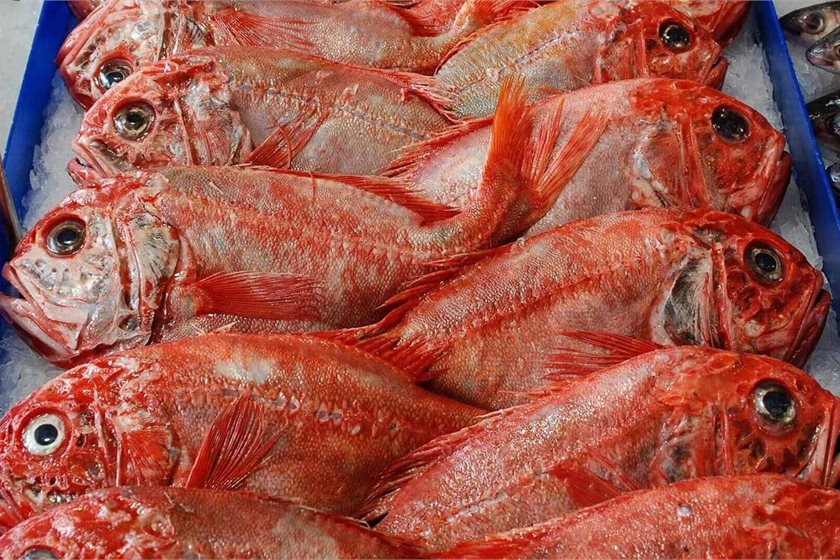
Media release - Deep Sea Conservation Coalition | New data reveals that New Zealand’s main orange roughy fishery, accounting for half of the country’s total catch, is on the brink of collapse, with one model showing it may have reached that point already, and the government’s considering closing it.
The scientific report from the Ministry for Primary Industries (MPI), released last week, indicates that the fishery, known as East and South Chatham Rise (ESCR) is in a dire state, with over 80% of the original orange roughy population wiped out. The stock assessment puts the population at 8-18% of its original size (10% is generally considered the collapse of a fishery)
Meanwhile, a Fisheries NZ consultation document indicates the government is considering closing the fishery, which has never been closed before.
“This data is consistent with what environmentalists have been saying for years - that bottom trawling has pushed this species to the brink,” says Greenpeace Aotearoa spokesperson Ellie Hooper on board the Rainbow Warrior which has just been on the Chatham Rise.
“It’s clear that this fishery needs to be closed, and that key spawning habitats - seamounts and features - need to be protected from bottom trawling for sustainable fish populations.”
The wider Chatham Rise fishery has recently been under scrutiny after it was revealed a bottom trawler, which was confirmed as fishing for orange roughy, hauled up 6 tonnes of protected stony coral in a single trawl at the end of last year.
“What we’re seeing is a perfect storm of poor fishery management: a stock driven to the brink of collapse by overfishing, the loss of key spawning grounds through heavy trawling on seamounts, and the wholesale destruction of ancient coral ecosystems,” said Karli Thomas of the Deep Sea Conservation Coalition.
“This is a fishery that’s been so overfished it’s not predicted to recover for at least a generation - and that’s just the fish population” says Barry Weeber of Environment and Conservation Organisations of Aotearoa (ECO).
“Those same bottom trawlers destroy corals that can be hundreds, even thousands of years old, and will take many lifetimes to recover. If we want a healthy ocean and fisheries for the next generation, we need to change the way we fish”
This same (ESCR) Chatham Rise orange roughy fishery lost its Marine Stewardship Council ‘sustainable’ tick in 2023 after a stock survey revealed declining catch rates instead of the projected stock recovery, and the stock assessment was declared invalid.
The Environmental Law Initiative is taking the Minister of Oceans and Fisheries to court over the mismanagement of the wider Chatham Rise orange roughy fishery. The case will be heard in the High Court, Wellington on 7-9 July 2025.
print this story

New funding round opens for Auckland zero waste projects – $500k available
Today 12:00pm
Media release | Auckland Council is inviting applications for the 2026 Waste Minimisation and Innovation Fund (WMIF) with $500,000 available to support projects that reduce waste and increase recycling and reuse to help achieve Auckland’s goal of zero waste by 2040.

Turning waste into climate-resilient soils for communities
Today 12:00pm
Media release: University of Canterbury | Christchurch’s Red Zone is being used as a test bed to see whether biological wastes (biowastes) can help transform contaminated soil into climate-resilient soil.

Dry-year reliability obligation should fall on generators, not major electricity users – MEUG
Thu 23 Jul 2026
Media release | The Major Electricity Users' Group (MEUG) is urging the Government to redesign its proposed dry-year reliability obligation so responsibility for securing New Zealand's electricity supply rests with generators rather than major electricity users.

Greenpeace launches legal challenge against US$2.5bn expansion by Premier Beehive parent company JBS
Thu 23 Jul 2026
Media release | Greenpeace Netherlands has petitioned a Dutch court seeking to compel the world’s largest meat company JBS, to disclose information, in order to challenge its business policies in court. This includes its planned US$ 6 billion global expansion, of which almost half is earmarked for Nigeria.

Select committee report on resource management guts environmental protections
Wed 22 Jul 2026
Media release | Forest & Bird says the Environment Committee report on the biggest overhaul of resource management law in Aotearoa New Zealand in a generation is bad news for nature.

Open Letter: Exercise restraint on LNG import facility decision ahead of the election
Tue 21 Jul 2026
The Smart Energy Alliance respectfully urges the Government not to enter into a binding commercial agreement for a liquefied natural gas (LNG) import facility in the period immediately preceding the General Election.
Tauranga secures international funding to support rangatahi climate action
16 Jul 2026
Media release: Tauranga City Council | Tauranga has been selected as one of 300 cities worldwide to receive funding through the Bloomberg Philanthropies Youth Climate Action Fund, creating new opportunities for local rangatahi to turn their climate action ideas into reality.

University launches worldwide search for nature-focused researchers
15 Jul 2026
Media release | As governments and businesses around the world grapple with climate change and biodiversity loss, Waipapa Taumata Rau, University of Auckland is launching an international search for ten PhD researchers to help shape a more nature positive economy.

New entrant seeks to expand exploration portfolio
14 Jul 2026
Media release | Resources Minister Shane Jones has welcomed further investment interest in New Zealand's petroleum sector, with a recent new entrant seeking to expand its exploration interests in the offshore northern Taranaki Basin.

Fifth new petroleum application targets Taranaki
8 Jul 2026
Media release: New Zealand Government | An application targeting frontier deepwater in the Taranaki Basin marks the fifth permit application to prospect or explore for petroleum since the removal of the exploration ban, Resources Minister Shane Jones says.
