
Water crisis on the horizon?
26 May 2025
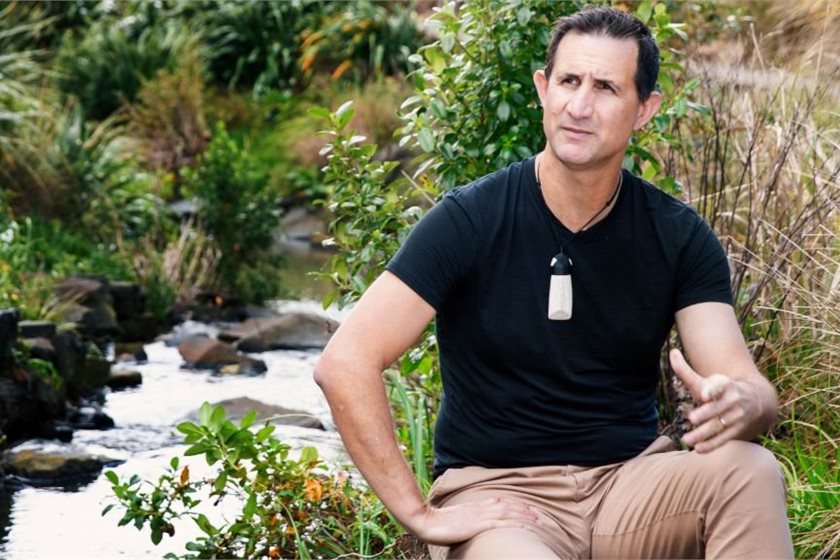
Media release | Sewage contaminating Auckland oyster farms highlights the “dire state” of water infrastructure in Aotearoa, says University of Auckland Associate Professor Daniel Hikuroa.
On 29 May, Hikuroa will join a panel of local and international experts discussing the state of water in New Zealand and globally.
With climate change causing more frequent extreme rainfall in some areas, Hikuroa says lakes, rivers and the sea are suffering from contamination with everything from sewage to industrial runoff.
“After heavy rain, it’s not unusual for swimming to be categorised as unsafe at more than 60 beaches in Auckland. That’s due to sewage mixing with stormwater washing off our roads and roofs and overflowing into the sea.
“We’ve had decades of underinvestment in water infrastructure, whether that’s getting freshwater to houses or wastewater and stormwater systems.
“It’s not just a problem in Auckland. Throughout the country, it’s pretty much broken or not working as intended in the majority of places,” says Hikuroa.
Central and local government urgently need to invest in upgrading “woefully outdated” water infrastructure, he says.
Changing our attitude to water is vital to shift the realities New Zealand faces, particularly as climate change hits, says Hikuroa.
He upholds a traditional Māori view of water as a sacred taonga - something to be treasured.
“Water is often framed as a property right and a commodity.
“We need to think of water as a taonga, as something to have a relationship with, and then different realities can start to happen.”
Hikuroa says sadly in some areas, intensive land use is draining waterways for irrigation and contaminating rivers, lakes and eventually the sea with sediment and excess nutrients.
Forestry can also lead to sediment washing into waterways, smothering aquatic and marine life, he says.
Massive amounts of forestry slash – leftover wood – is washing into rivers and onto beaches.
“Forestry slash, exposed disrupted soil and heavy rainfall is a terrible recipe for disaster, which we have already experienced with the devastation caused by Cyclone Hale and Gabrielle in places like Gisborne.”
The panel discussion – A Coming Water Crisis: Science, Politics, and Solutions – will also feature University of Auckland Professor Dame Juliet Gerrard, who was chief science advisor to the Prime Minister from 2018 to 2024; University of Auckland antimicrobial resistance expert Professor Naresh Singhal; and Lund University’s Dr Filippo Verre, whose research focuses on the geopolitics of water.
The discussion will be moderated by Associate Professor Maria Armoudian, who is director of the University of Auckland Centre for Climate, Biodiversity and Society and of the Sustainability Hub.
A Coming Water Crisis: Science, Politics, and Solutions will open with drinks and nibbles at 4pm on Thursday 29 May at Old Government House, 24 Princes Street, Auckland. The panel discussion will be from 4.30pm to 5.30pm. All are welcome to the free event - register here.
print this story

Fifth new petroleum application targets Taranaki
Wed 8 Jul 2026
Media release: New Zealand Government | An application targeting frontier deepwater in the Taranaki Basin marks the fifth permit application to prospect or explore for petroleum since the removal of the exploration ban, Resources Minister Shane Jones says.
Government supporting Wairarapa farmers after heavy rain
Mon 6 Jul 2026
Media release | The Government is working closely with farmers and rural communities in the Wairarapa to assess the impacts of recent heavy rain, which has damaged local roads and bridges and caused significant erosion on hillside farms.
Tarakihi on verge of extinction: Stock collapse exposes major fisheries management failings
3 Jul 2026
Media release: Environmental Defence Society | Fisheries NZ is consulting on new sustainability measures for the country’s two tarakihi stocks.
New report sounds alarm on risks of unregulated radioactivity from deep-sea mining
3 Jul 2026
Media release | A groundbreaking scientific report released today by the Deep Sea Mining Campaign exposes a critical, unaddressed threat to global ocean health: the mobilisation of naturally occurring radioactive materials by proposed deep sea mining operations.
Next Govt must restart action on plastic pollution
1 Jul 2026
Media release - Zero Waste Aotearoa | Plastic Free July begins with an urgent call to put plastic pollution back on the political agenda. Plastic Free July is a worldwide campaign to reduce plastic waste and eliminate single use plastics.
Fed Farmers back National’s plan to slash solar red tape
30 Jun 2026
Media release | Federated Farmers says the National Party's commitment to make small-scale solar projects a permitted activity is exactly the commonsense farmers need.

What whale poo reveals about survival in warming seas
30 Jun 2026
Media release: University of Auckland | During his morning runs, Rod Keogh had no doubt that the whale poo he saw washed up on the beach had value. Science has finally caught up with him.

The Reality of Everything: A sold-out symposium at VUW
25 Jun 2026
Media release: Victoria University of Wellington | What do rising grocery bills, soaring insurance premiums, food producers under pressure, and growing international instability have in common? According to organisers of The Reality of Everything Symposium in Wellington, they are all part of a much bigger story – one that New Zealanders urgently want to understand.

New map highlights mining threat associated with controversial conservation reforms: Greenpeace
24 Jun 2026
Media release | Greenpeace has launched an interactive online map exposing the overlap between known deposits of minerals the Government has deemed "critical" and the public conservation land that would be easier to sell off and exploit under the Government's Conservation Amendment Bill.

Sustainability profession ‘comes of age’ – but pressure remains beneath the surface
24 Jun 2026
Media release: Sustainable Business Council | New research shows the sustainability profession in Aotearoa New Zealand has firmly established itself at the centre of business strategy – but ongoing pressures around capability, career pathways and pay are threatening to stall its progress.
